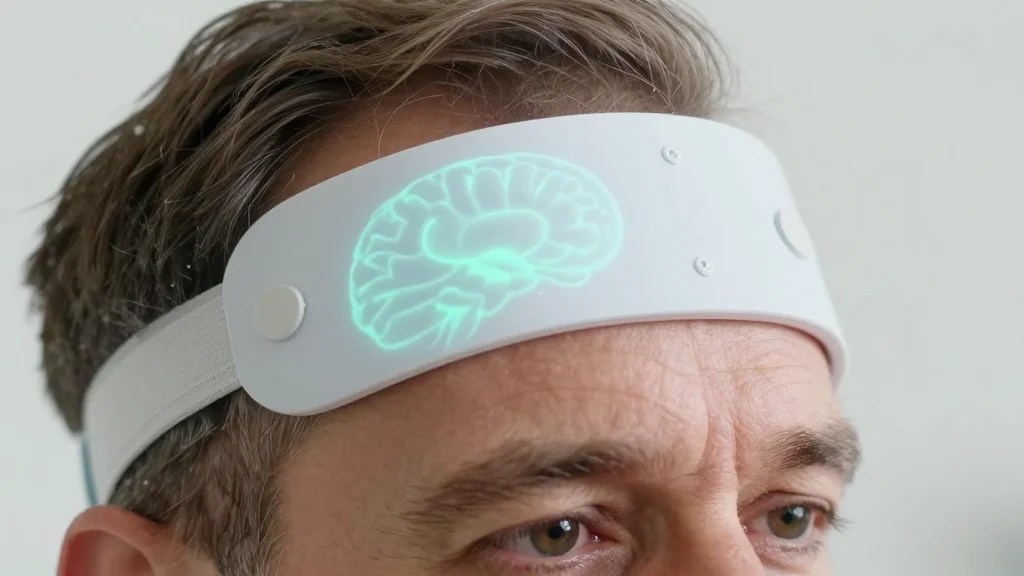
Noninvasive Brain Stimulation Reduces Parkinson’s Motor Symptoms in New Trial
Why It Matters
The technique offers a potentially safer, lower‑cost option to alleviate movement deficits, expanding treatment choices for the majority of Parkinson’s patients who cannot access invasive surgery.
Key Takeaways
- •Temporal interference cut motor scores 70% vs 15% sham.
- •20‑minute session improved tremor and bradykinesia for one hour.
- •Targets subthalamic nucleus non‑invasively with scalp electrodes.
- •30 early‑mid stage patients in double‑blind crossover trial.
- •No serious adverse events; safety similar to sham.
Pulse Analysis
Parkinson’s disease remains a therapeutic challenge, with deep brain stimulation (DBS) the only proven method to directly modulate basal‑ganglia circuitry. DBS, however, requires neurosurgery, carries infection and hemorrhage risks, and is accessible to fewer than three percent of patients worldwide due to cost and clinical complexity. As the global market for neuro‑stimulation expands, clinicians and investors alike are seeking non‑invasive modalities that can reach deep structures without opening the skull.
Temporal interference stimulation (TIS) leverages two high‑frequency electric fields that intersect within the brain, producing a low‑frequency envelope capable of influencing neuronal firing. In the recent eBioMedicine pilot, researchers used individualized MRI‑based models to position scalp electrodes so the interference peak aligned with each participant’s subthalamic nucleus. The double‑blind crossover design showed a 70% response rate—defined by a clinically meaningful drop in Unified Parkinson’s Disease Rating Scale scores—compared with 15% for sham, and the benefit persisted for the full hour of observation. Importantly, adverse events were limited to mild scalp sensations, mirroring the sham experience.
If subsequent multicenter trials confirm durability across diverse populations, TIS could reshape Parkinson’s care by delaying or replacing DBS and reducing reliance on pharmacotherapy. Repeated sessions may extend symptom relief, and the external hardware could be integrated into home‑based tele‑medicine platforms, aligning with the broader shift toward personalized, outpatient neuromodulation. Stakeholders should monitor upcoming phase‑II studies, as regulatory pathways for non‑invasive brain‑stimulation devices are rapidly evolving, potentially unlocking a multi‑billion‑dollar market segment.
Noninvasive brain stimulation reduces Parkinson’s motor symptoms in new trial
Comments
Want to join the conversation?
Loading comments...