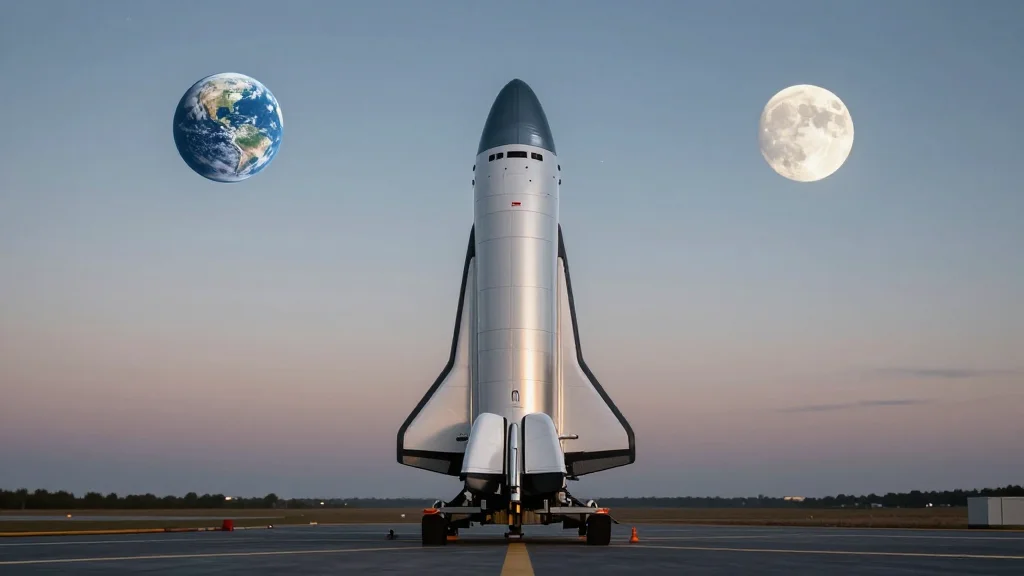
Not Everyone’s Gone To The Moon
Why It Matters
The expanding tally of lunar missions underscores intensifying geopolitical competition and rapid technological advances, reshaping the commercial and scientific landscape of cislunar space.
Key Takeaways
- •U.S. leads with 45 lunar missions; Artemis II launched April 1, 2026
- •USSR completed 22 missions from 1959‑1976
- •China counts ten missions, including accidental 1997 Hong Kong lunar flight
- •India achieved fourth soft landing with Chandrayaan‑3 in August 2023
Pulse Analysis
The United States’ sustained lunar presence, now at 45 missions, reflects a strategic commitment to dominate cislunar operations. Artemis II’s recent launch not only marks the first crewed flight beyond low Earth orbit since Apollo but also signals a broader commercial ecosystem emerging around lunar logistics, in‑space manufacturing, and resource extraction. As private firms and international partners line up for lunar contracts, the U.S. advantage hinges on integrating NASA’s deep‑space capabilities with a vibrant commercial supply chain.
China’s lunar trajectory illustrates a different model: rapid, state‑driven development combined with opportunistic commercial ventures. Since the 2007 Chang’e debut, China has amassed ten missions, leveraging advances in autonomous landing, rover technology, and even repurposing a misdirected Hong Kong satellite into a lunar flyby. This approach has accelerated China’s expertise in precision navigation and surface operations, positioning it as a credible contender for future lunar habitats and potential resource claims.
India’s recent Chandrayaan‑3 soft landing, the fourth globally, demonstrates how emerging space nations can achieve high‑impact milestones with modest budgets. By focusing on incremental technology—orbital science, impactor experiments, and a lightweight lander—India has generated valuable data for both scientific research and commercial applications such as lunar mapping. The collective progress of the USSR legacy, Japan’s successful soft landing, and the EU’s ion‑drive experiments further diversify the talent pool, suggesting that the next decade will see a multi‑polar race to establish sustainable lunar infrastructure, with profound implications for global supply chains and geopolitical influence.
Not Everyone’s Gone To The Moon
Comments
Want to join the conversation?
Loading comments...