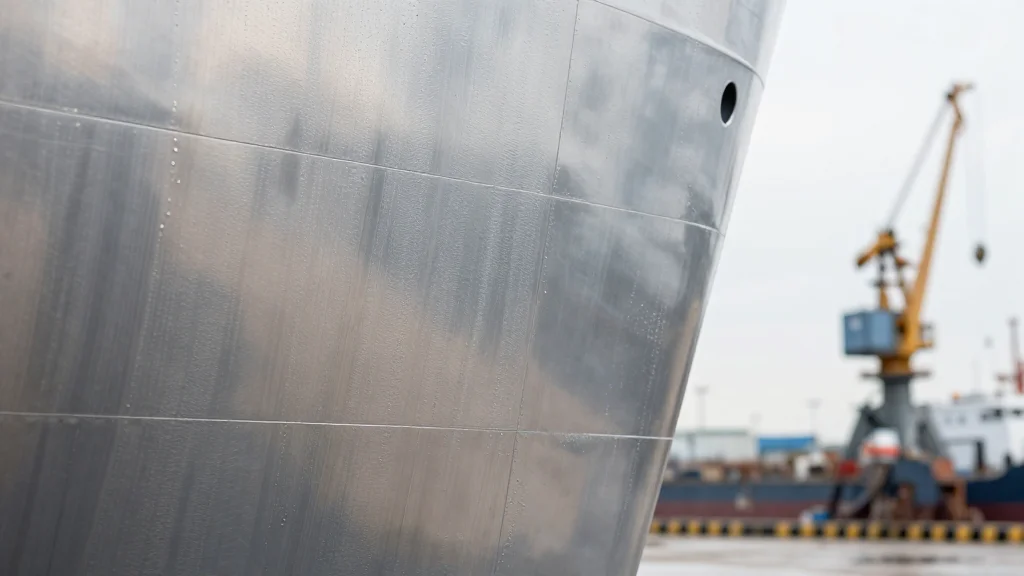
Nova Graphene Advances Graphene-Enhanced Marine Coatings Through New ITB Collaboration with Salt Separation Services
Why It Matters
The collaboration accelerates commercialization of graphene‑based marine coatings, offering ship owners longer‑lasting protection and potential cost savings, while positioning Canada as a leader in advanced maritime materials.
Key Takeaways
- •Nova Graphene partners with Salt Separation Services for graphene coatings
- •Collaboration funded under Canada’s ITB program with Seaspan Shipyards
- •CarbonEra™ coatings aim to boost marine durability and lifespan
- •Memorial University provides third‑party testing for performance validation
Pulse Analysis
Graphene’s exceptional strength, conductivity, and corrosion resistance have made it a promising additive for marine protective layers. By embedding graphene flakes into polymer matrices, manufacturers can create coatings that resist fouling, reduce drag, and extend service intervals. The global marine coating market, valued at over $10 billion, is actively seeking materials that lower maintenance costs and improve vessel efficiency, making graphene‑enhanced solutions like CarbonEra™ highly attractive to ship owners and operators.
Canada’s Industrial and Technological Benefits (ITB) program is designed to ensure that large defense and infrastructure contracts generate domestic innovation and jobs. Nova Graphene’s partnership with Salt Separation Services, a UK specialist in salt‑water treatment, aligns with the program’s goal of fostering cross‑border R&D while keeping critical expertise at home. Seaspan Shipyards provides a real‑world testbed, allowing the coating to be applied and evaluated on operational vessels. Meanwhile, Memorial University’s independent testing validates performance claims, adding scientific credibility that can ease regulatory approval and market adoption.
If successful, the CarbonEra™ platform could reshape maintenance cycles for commercial fleets, naval vessels, and offshore structures. Longer‑lasting coatings translate into fewer dry‑dock periods, reduced paint waste, and lower emissions from repainting activities. Early adopters may gain a competitive edge through improved fuel efficiency and lower total ownership costs. The collaboration also signals a broader trend of integrating advanced materials into traditional maritime sectors, suggesting that future shipbuilding projects will increasingly rely on high‑tech coatings to meet sustainability and performance targets.
Nova Graphene advances graphene-enhanced marine coatings through new ITB collaboration with Salt Separation Services
Comments
Want to join the conversation?
Loading comments...