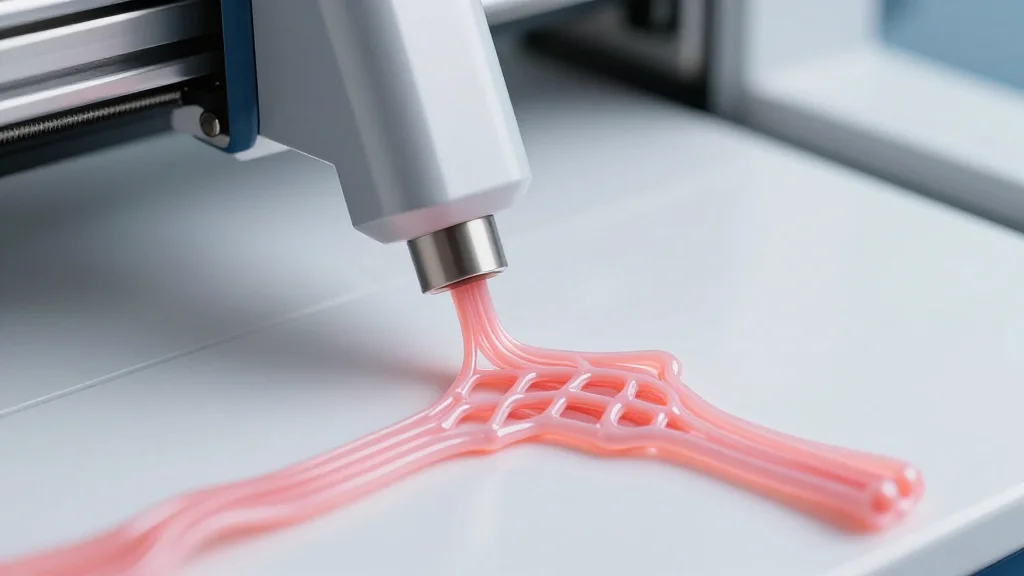
Novel Bioprinting Method Lays the Foundation for Personalised Regenerative Medicine
Why It Matters
The breakthroughs could accelerate market‑ready solutions for vision loss, infertility, and neurodegeneration, reshaping investment priorities across biotech and med‑tech sectors.
Key Takeaways
- •Italian team built a bio‑liquid retinal sensor array prototype
- •Hydrogel‑based extracellular vesicle therapy restores uterine function in animal models
- •Study of 600+ brains links ATP loss to Alzheimer’s ferroptosis
- •Findings point to new drug targets for vision, fertility, neurodegeneration
Pulse Analysis
The Italian consortium’s hybrid sensor merges silicon photonics with a biologically compatible liquid electrolyte, enabling direct conversion of light into electrical signals without living cells. By emulating the retina’s layered architecture, the device promises patient‑specific visual prosthetics that could be printed on demand, a prospect that aligns with the projected $5 billion global retinal‑implant market by 2030. Investors are watching closely as the technology moves from bench‑scale validation toward scalable manufacturing, potentially disrupting traditional ophthalmic device pipelines.
In parallel, a cell‑free regenerative gel infused with extracellular vesicles has demonstrated the ability to dissolve intrauterine adhesions and reactivate endometrial tissue in animal models. This approach sidesteps the complexities of stem‑cell sourcing and immunogenicity, offering a faster regulatory pathway for a condition that affects roughly 1‑2 % of women of reproductive age. The fertility‑tech sector, valued at over $30 billion, could see a new class of minimally invasive treatments that expand options beyond hormonal therapies and surgical lysis.
The third study, encompassing more than 600 post‑mortem brains, links systemic ATP depletion to ferroptotic cell death in Alzheimer’s pathology. This mechanistic insight opens avenues for drugs that replenish cellular energy stores or inhibit iron‑driven lipid peroxidation, both hot targets in neuro‑degenerative pipelines. With Alzheimer’s drug spending exceeding $10 billion annually, a shift toward metabolic rescue strategies could reshape R&D portfolios and attract capital toward next‑generation disease‑modifying therapies.
Novel bioprinting method lays the foundation for personalised regenerative medicine
Comments
Want to join the conversation?
Loading comments...