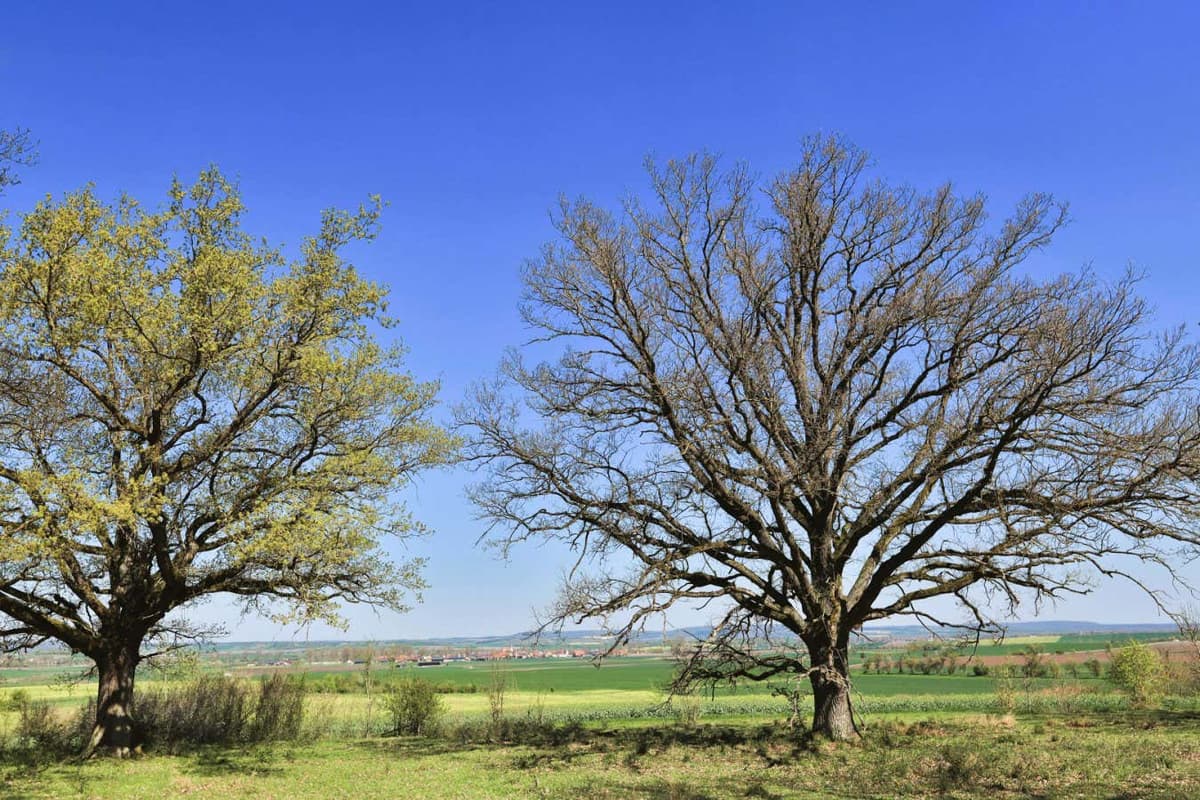
Oak Trees Use Delaying Tactics to Thwart Hungry Caterpillars
Why It Matters
The delayed bud burst provides a natural, cost‑free defense that could reshape forest pest‑management strategies and improve predictions of spring green‑up under climate change.
Key Takeaways
- •Oak buds open three days later after heavy caterpillar defoliation
- •Delay reduces leaf damage by roughly 55% in subsequent season
- •Study used 27,500 Sentinel‑1 pixels across 2,400 km² Bavaria
- •Findings suggest adaptive phenology beyond simple climate response
- •Other deciduous species may employ similar bud‑delay defenses
Pulse Analysis
The Würzburg team leveraged high‑resolution Sentinel‑1 radar data to track canopy condition at a 10‑meter pixel scale, allowing them to pinpoint individual oak trees that lost foliage during the 2019 gypsy‑moth surge. By comparing pre‑ and post‑outbreak imagery across 27,500 pixels, they quantified a consistent three‑day lag in bud burst for heavily defoliated trees. This methodological blend of remote sensing and ecological fieldwork offers a scalable template for monitoring plant‑insect dynamics across large landscapes.
Beyond the immediate timing shift, the study highlights a sophisticated plant defense that operates without chemical expenditure. While oaks also produce tougher leaves and volatile compounds to deter herbivores, the phenological delay proved more effective, cutting herbivory by more than half. Such a strategy aligns the tree’s developmental schedule with the life cycle of its primary pests, essentially starving the caterpillars before they can feed. The finding fuels a broader discussion about how deciduous species might synchronize growth phases to mitigate recurring threats.
The implications extend to climate‑modeling and forest management. Traditional phenology models often attribute spring green‑up solely to temperature cues, yet this research shows biotic stress can override climatic signals, causing forests to green later than expected. Incorporating pest‑induced phenological adjustments could refine forecasts of carbon uptake and biodiversity responses. For land managers, recognizing bud‑delay as a natural buffer suggests that preserving healthy oak stands may reduce reliance on chemical interventions, supporting more resilient forest ecosystems in a warming world.
Oak trees use delaying tactics to thwart hungry caterpillars
Comments
Want to join the conversation?
Loading comments...