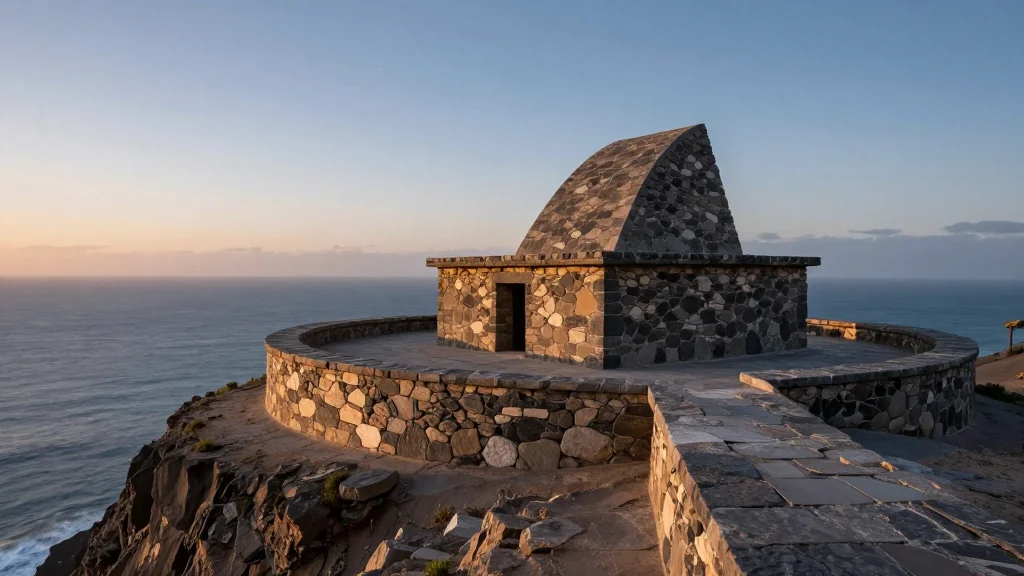
Oldest Astronomical Observatory in the Americas Discovered in Peru
Why It Matters
The observatory shows that complex astronomical systems existed in the Americas millennia before similar developments elsewhere, highlighting Caral’s early scientific innovation and its impact on resource management.
Key Takeaways
- •Two‑level stone observatory uncovered at Áspero, dating 3000‑1800 BC.
- •Aligns celestial observations with fishing cycles and valley agriculture.
- •Features oval platform and central huanca, indicating ritual astronomy.
- •Four construction phases reveal evolving ceremonial and observational functions.
- •Supports theory of early sustainable environmental management by Caral.
Pulse Analysis
The Caral civilization, flourishing between 3000 BC and 1800 BC, remains the oldest known complex society in the Americas. Situated along Peru’s Supe River and its coastal plain, Caran sites such as the monumental city of Caral and the satellite settlement of Áspero have repeatedly yielded evidence of sophisticated urban planning, monumental architecture, and long‑distance exchange. Recent excavations have expanded that narrative, uncovering a two‑level stone platform that functions as an astronomical observatory. This discovery adds a new dimension to the cultural repertoire of Caral, positioning it alongside other early world civilizations that integrated sky‑watching into daily life.
The Áspero observatory occupies a strategic ridge that commands a 180‑degree view of the Pacific horizon and the lower Supe Valley, allowing ancient observers to track sunrise, moonrise, and stellar positions. Its architecture evolved through four construction phases, culminating in an oval platform crowned by a vertical huanca stone—a hallmark of Andean ritual practice. By correlating celestial cycles with tidal patterns, Caran fishers could anticipate optimal harvesting windows, while inland farmers aligned planting schedules with seasonal markers. The dual ceremonial and practical functions underscore a holistic worldview where astronomy, economy, and religion were tightly interwoven.
The implications of this find ripple beyond Peruvian archaeology. It challenges the long‑held assumption that complex astronomical systems emerged later in Mesoamerica or the Old World, suggesting that the Americas possessed independent scientific traditions millennia ago. Comparative studies with sites such as Stonehenge or the Egyptian temples will likely focus on methodological parallels rather than direct influence. Moreover, the ongoing radiocarbon analysis promises a refined chronology that could recalibrate timelines for pre‑Columbian technological development. For scholars and investors in heritage tourism, the observatory enhances Áspero’s appeal as a destination that showcases humanity’s earliest attempts to read the cosmos.
Oldest astronomical observatory in the Americas discovered in Peru
Comments
Want to join the conversation?
Loading comments...