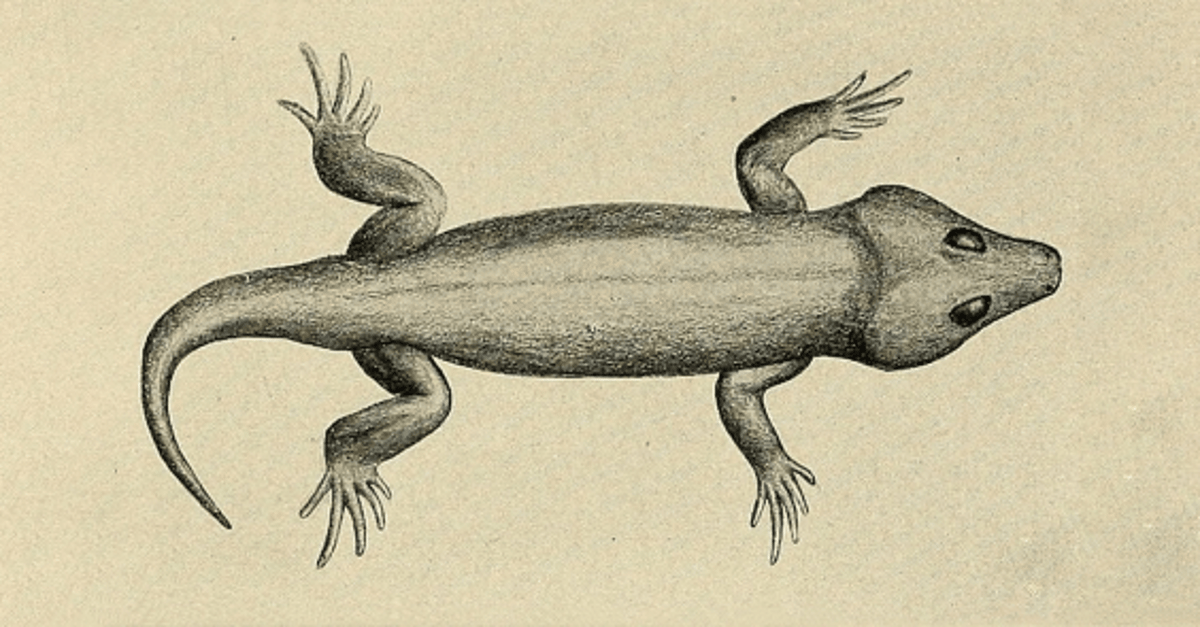
Oldest Reptile Mummy Sheds Light on the Ancient Art of Breathing
Why It Matters
The discovery reshapes our timeline for the evolution of efficient land‑based respiration, a key driver of vertebrate diversification. It also provides an unprecedented window into soft‑tissue anatomy of early amniotes, informing models of how terrestrial ecosystems developed.
Key Takeaways
- •*Captorhinus* shows earliest rib‑assisted (costal) breathing in vertebrates.
- •Fossil dates to ~289 million years, pushing protein preservation record 100 Myr.
- •Soft tissues, cartilage, and skin preserved, revealing reptile respiratory anatomy.
- •Study suggests rib‑breathing is ancestral to reptiles, birds, mammals.
- •Cave burial and mineral-rich fluids enabled exceptional mummification.
Pulse Analysis
The transition from water to land around 390‑365 million years ago required vertebrates to reinvent how they obtain oxygen. Early amphibians relied on gills or skin diffusion, but true terrestrial success hinged on a rib‑driven breathing apparatus that could expand and compress the chest cavity. Understanding when and how this costal breathing emerged is crucial because it underpins the metabolic capacity that allowed reptiles, birds and mammals to become active, endothermic predators and foragers.
The Oklahoma *Captorhinus* specimen offers a rare glimpse into that pivotal adaptation. Dating to roughly 289 million years ago, the fossil is unusually well‑preserved, retaining not only skeletal elements but also skin, cartilage and trace protein molecules—pushing the oldest known soft‑tissue preservation by a full 100 million years. Researchers employed high‑resolution CT scanning and geochemical fingerprinting to reconstruct the rib cage and shoulder girdle, confirming a side‑to‑side rib motion identical to that of modern lizards. This evidence positions costal breathing as the baseline respiratory strategy for early amniotes, predating the divergence of the major reptilian lineages.
The implications extend beyond paleobiology. By establishing a concrete anatomical baseline, the find refines evolutionary models of metabolic scaling, locomotor performance, and ecological dominance in the Permian era. It also demonstrates the potential of mineral‑rich cave environments to preserve delicate biomolecules, opening new avenues for extracting molecular data from deep time. As scientists continue to probe the fossil record for similar specimens, our grasp of how vertebrate respiration fueled the rise of complex terrestrial ecosystems will only deepen.
Oldest Reptile Mummy Sheds Light on the Ancient Art of Breathing
Comments
Want to join the conversation?
Loading comments...