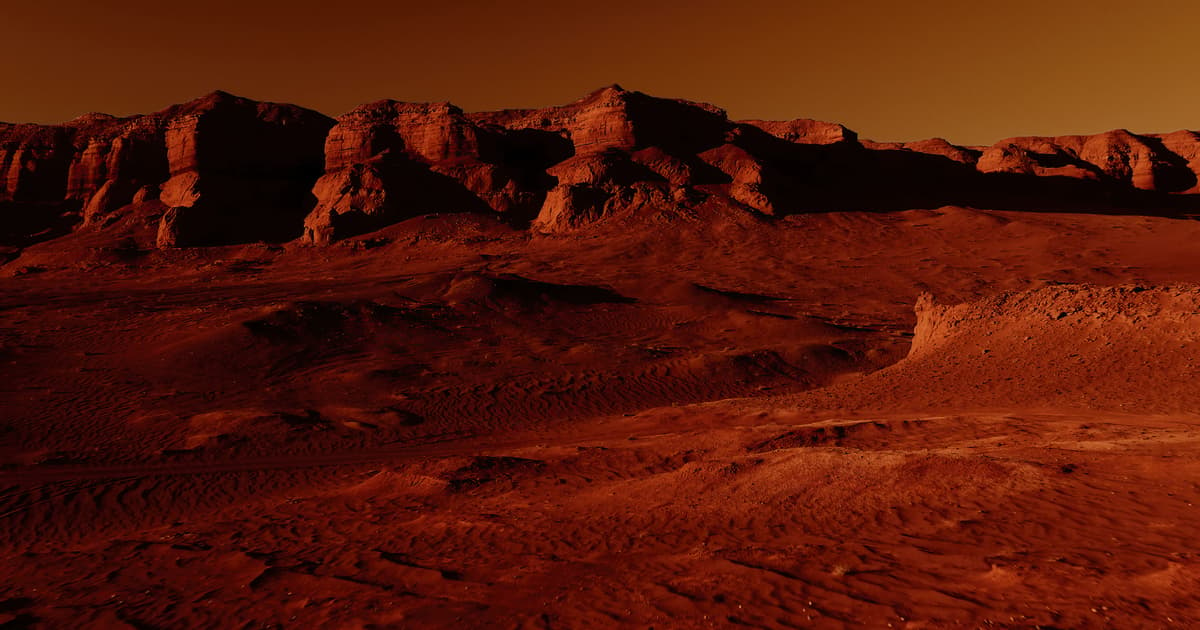
Olympus Mons on Mars Is a Volcano More than Two and a Half Times the Height of Everest, but Its Slopes Rise so Gradually over Hundreds of Kilometres that a Person Standing on It Might Not Realize They Were on the Tallest Volcano in the Solar System at All.
Why It Matters
Olympus Mons illustrates how planetary conditions shape volcanic architecture, offering key insights for comparative geology and future Mars exploration. Understanding its formation helps scientists predict volcanic activity on other low‑gravity worlds.
Key Takeaways
- •Olympus Mons rises ~22 km, 2.5× Everest’s height
- •Base spans ~600 km, area comparable to Arizona
- •Slopes average 2‑5°, about 5% grade
- •Mars’ low gravity and static crust enable its massive size
- •Potential future eruptions remain unruled, keeping the volcano active
Pulse Analysis
Olympus Mons is more than a curiosity; it is a benchmark for planetary volcanology. At 22 kilometres high and 600 kilometres across, the Martian shield volcano dwarfs Earth’s tallest peaks while maintaining a slope barely perceptible to the human eye. Its sheer scale challenges traditional notions of what a mountain looks like, prompting scientists to rethink how volcanic edifices are measured and compared across worlds. The volcano’s gentle gradient, roughly a five‑percent grade, masks an immense vertical gain that would be invisible without precise instrumentation.
The formation of Olympus Mons hinges on three Martian quirks: a lack of active plate tectonics, low surface gravity, and geological longevity. Without moving plates, volcanic hotspots remain fixed, allowing magma to accumulate in one spot for billions of years. Mars’ gravity—just 38 percent of Earth’s—means the same volume of lava can stack higher before collapsing under its own weight. Coupled with a long, uninterrupted eruptive history, these factors produced a colossal shield volcano built from fluid basaltic lava that spread outward rather than piling steeply, mirroring Earth’s Hawaiian islands but on a vastly larger canvas.
For explorers and scientists, Olympus Mons offers both a logistical challenge and a scientific goldmine. Its summit rises above most of the thin Martian atmosphere, creating near‑vacuum conditions that could affect future rover or human missions. The gentle slopes suggest a long, endurance‑type trek rather than technical climbing, yet the abrupt escarpments encircling the volcano present hazardous cliffs. Moreover, studying such an extreme volcanic structure informs models of exoplanet geology, where low‑gravity, tectonically quiet worlds may host similarly massive shield volcanoes. As missions probe deeper into Mars’ past, Olympus Mons remains a towering reminder that planetary environments dictate the limits of geological architecture.
Olympus Mons on Mars is a volcano more than two and a half times the height of Everest, but its slopes rise so gradually over hundreds of kilometres that a person standing on it might not realize they were on the tallest volcano in the solar system at all.
Comments
Want to join the conversation?
Loading comments...