Omitting Axillary Dissection Can Benefit Women with Breast Cancer
Why It Matters
Eliminating routine cALND spares thousands of women from chronic lymphedema and functional loss without sacrificing survival, prompting an immediate shift in breast‑cancer surgical standards.
Key Takeaways
- •SENOMAC trial enrolled 2,540 node‑negative breast cancer patients.
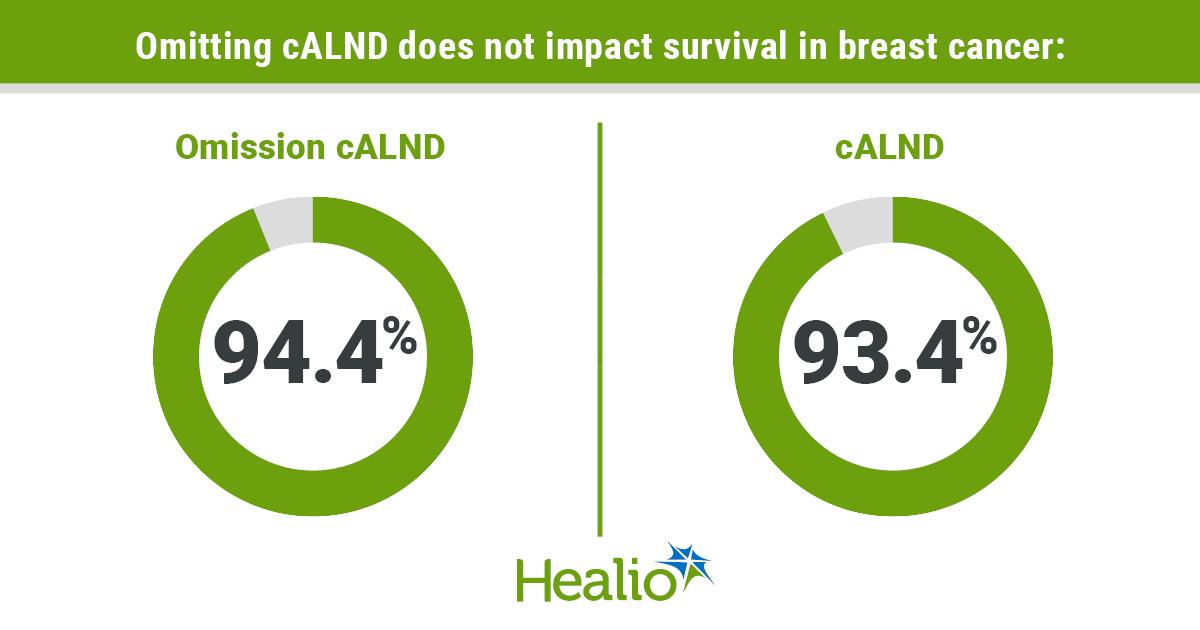
- •5‑year overall survival 94.4% without cALND vs 93.4% with.
- •Omission cut severe arm dysfunction from 12.6% to 3.6% at 5 years.
- •Findings apply to both mastectomy and lumpectomy patients.
- •T‑REX and SENOMAC‑ULTRA trials will test radiation and targeted surgery.
Pulse Analysis
Axillary management has long been a balancing act between oncologic control and postoperative morbidity. While completion axillary lymph node dissection (cALND) can ensure thorough staging, it frequently leads to lymphedema, pain, and reduced arm mobility—complications that diminish quality of life and increase health‑care costs. Earlier trials hinted at non‑inferiority of sentinel‑only approaches, but limited sample sizes and exclusion of mastectomy patients left clinicians hesitant to change practice.
The SENOMAC trial, presented at ASCO 2026, provides decisive evidence that for patients with one or two macrometastatic sentinel nodes, skipping cALND does not affect five‑year overall or breast‑cancer‑specific survival. Moreover, patient‑reported outcomes showed a dramatic reduction in severe arm symptoms, persisting through five years of follow‑up. These findings validate a less invasive paradigm, supporting guideline committees to recommend sentinel‑only surgery for a broader cohort, including those undergoing mastectomy—a group previously underrepresented in research.
Looking ahead, the T‑REX and SENOMAC‑ULTRA studies will explore whether targeted radiation or limited node removal can further refine axillary treatment. If these trials confirm comparable oncologic outcomes with even fewer interventions, the standard of care could shift toward a predominantly diagnostic role for axillary surgery, reserving extensive dissection for only bulky or clinically evident nodal disease. Such a transition promises not only better survivorship experiences but also measurable savings for health systems grappling with the long‑term costs of lymphedema management.
Omitting axillary dissection can benefit women with breast cancer
Comments
Want to join the conversation?
Loading comments...