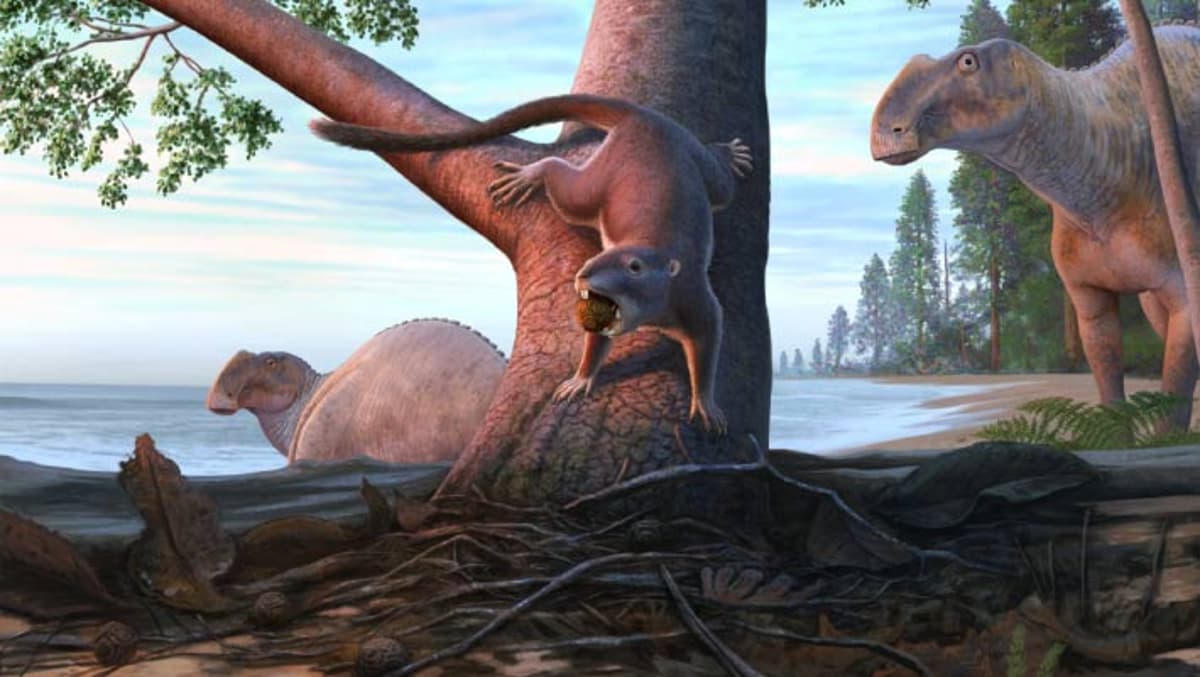
Omnivorous, Rodent-Like Mammal Lived in Dinosaurs’ Shadow on Pacific Coast
Why It Matters
The find fills a critical gap in the Late Cretaceous mammal record, showing how small, omnivorous traits helped mammals persist through the dinosaur extinction and informing North American paleobiogeography.
Key Takeaways
- •New species *Cimolodon desosai* discovered in Baja California
- •Fossil includes skull, jaws, femur, ulna—most complete Mexican Mesozoic mammal
- •Size comparable to a golden hamster, weighing ~100 g
- •Findings link Mexican fauna to Texas Terlingua assemblage
Pulse Analysis
The newly described *Cimolodon desosai* offers a rare window into the diversity of multituberculate mammals that coexisted with dinosaurs. While most Mesozoic mammals are known from isolated teeth, this specimen preserves cranial and post‑cranial elements, allowing researchers to reconstruct its locomotion, diet, and ecological niche with unprecedented precision. Its hamster‑like size and omnivorous habits illustrate the adaptive strategies that enabled small mammals to exploit both arboreal and terrestrial resources, a flexibility that proved vital when the Cretaceous‑Paleogene extinction reshaped ecosystems.
Beyond its anatomical significance, the fossil strengthens biogeographic connections between the western Mexican El Gallo fauna and the Terlingua assemblage of western Texas. Such affinities suggest that Late Cretaceous mammalian communities spanned a broader latitudinal range than previously documented, facilitating gene flow and dispersal across what is now the U.S.–Mexico border. This insight refines models of continental faunal exchange and helps paleontologists map migration corridors that existed before the formation of modern desert barriers.
From a broader evolutionary perspective, *Cimolodon desosai* underscores how modest body size and dietary generalism were key survival traits for mammals facing the end‑Cretaceous crisis. By thriving in the shadow of giant dinosaurs, these early mammals set the stage for the rapid diversification that followed the mass extinction. The study, published in the *Journal of Vertebrate Paleontology*, therefore not only enriches the fossil record but also deepens our understanding of the origins of modern mammalian resilience.
Omnivorous, Rodent-Like Mammal Lived in Dinosaurs’ Shadow on Pacific Coast
Comments
Want to join the conversation?
Loading comments...