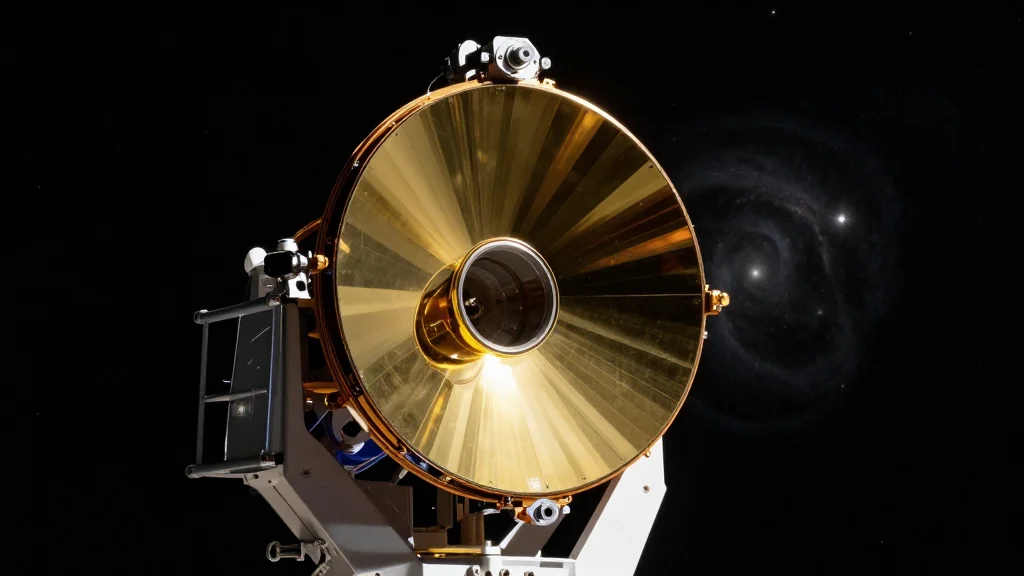
On the Hunt for Cosmic Dawn and the Universe's Very First Stars
Why It Matters
Understanding the birth of the first galaxies informs models of cosmic evolution, chemical enrichment, and the conditions that eventually led to habitable worlds. The data also guide future missions, such as the Square Kilometre Array, that aim to probe the universe’s earliest epochs.
Key Takeaways
- •JWST surveyed 150 sightlines, covering 0.6 sq deg, finding galaxy drop at 150‑200 Myr
- •Early galaxies are 30× smaller than Milky Way, yet form stars 20× faster
- •Population III stars remain elusive, identified by lack of oxygen emission lines
- •SKA will target redshifted 21‑cm line to complement JWST observations
Pulse Analysis
The latest JWST spectroscopic campaign pushes the observable frontier to a mere 150‑200 million years after the Big Bang, a period previously beyond reach. By stitching together 150 narrow sightlines across a sky area three times the size of a full moon, astronomers have mapped a steep downturn in the number of star‑forming galaxies, confirming theoretical predictions about the rapid emergence of the first luminous structures. This unprecedented dataset not only refines the timeline of cosmic dawn but also supplies a statistical foundation for testing models of early galaxy assembly and black‑hole seed formation.
These nascent galaxies are remarkably compact—roughly 60‑70 light‑years across, comparable to massive globular clusters—yet they churn out stars at rates twenty times that of our Milky Way. Their extreme star‑formation efficiency makes them prime candidates for hosting the elusive Population III stars, which are composed almost entirely of hydrogen and helium. Detecting these pristine objects hinges on spotting the absence of heavy‑element signatures, especially oxygen emission lines, a strategy that complements the broader approach of tracking the declining abundance of star‑forming galaxies with increasing redshift.
The implications extend beyond pure astrophysics. As the first supernovae explode, they seed the interstellar medium with heavier elements, setting the chemical stage for later generations of stars and, ultimately, planetary systems capable of supporting life. Upcoming facilities like the Square Kilometre Array will search for the redshifted 21‑cm hydrogen line, offering a radio‑frequency counterpart to JWST's infrared observations. Together, these complementary probes promise a holistic view of the universe’s earliest epochs, bridging the gap between the Big Bang and the conditions that made life possible.
On the hunt for cosmic dawn and the universe's very first stars
Comments
Want to join the conversation?
Loading comments...