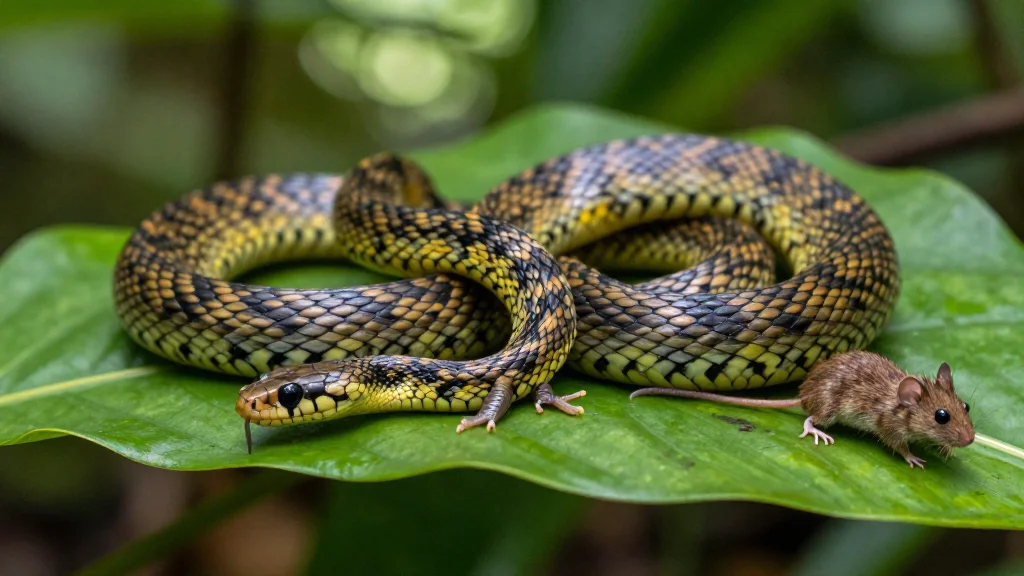
Ontogenetic Shifts and Trophic Differentiation Shape Dietary Diversity in Oxyrhopus False Coral Snakes
Why It Matters
Understanding how ontogeny and morphology drive dietary segregation clarifies mechanisms of niche partitioning among sympatric snakes, informing conservation and ecosystem management in the Neotropics.
Key Takeaways
- •Juvenile Oxyrhopus mainly eat reptiles; adults add mammals
- •Head width predicts maximum prey size across species
- •Male‑female diet overlap stays high despite size dimorphism
- •Most species show low interspecific dietary overlap, aiding coexistence
- •O. trigeminus and O. rhombifer juveniles share similar diets
Pulse Analysis
The dietary habits of snakes have long served as a window into predator‑prey dynamics, yet many tropical taxa remain understudied. In the recent Bahia survey, scientists quantified the stomach contents of several Oxyrhopus species and applied the Index of Relative Importance to rank prey items. Their analysis revealed a classic ontogenetic shift: juveniles, constrained by a smaller gape, specialize on reptiles, while adults—benefiting from broader heads—capture larger vertebrates such as rodents and small mammals. This correlation between head width and prey size underscores how morphology directly limits feeding opportunities in snakes.
Beyond individual growth stages, the study sheds light on community‑level interactions. High dietary overlap between males and females suggests that sexual size dimorphism does not translate into separate ecological niches, likely because both sexes exploit the same prey pool once size thresholds are met. Conversely, most species pairs displayed low Pianka overlap values, indicating that trophic differentiation reduces direct competition and facilitates the dense sympatry characteristic of Neotropical snake assemblages. The notable exception—shared juvenile diets of O. trigeminus and O. rhombifer—highlights a developmental window where interspecific competition may be strongest.
These findings have practical implications for biodiversity management. Recognizing that ontogenetic and morphological factors drive niche segregation helps predict how snake communities will respond to habitat alteration, prey depletion, or climate‑driven shifts in prey availability. Conservation strategies can thus prioritize preserving a mosaic of microhabitats that support both reptile‑rich juvenile foraging grounds and mammal‑laden adult hunting zones. Future research integrating stable‑isotope tracing and landscape‑scale modeling could refine our understanding of trophic networks, ensuring that Neotropical snake diversity remains resilient amid rapid environmental change.
Ontogenetic shifts and trophic differentiation shape dietary diversity in Oxyrhopus false coral snakes
Comments
Want to join the conversation?
Loading comments...