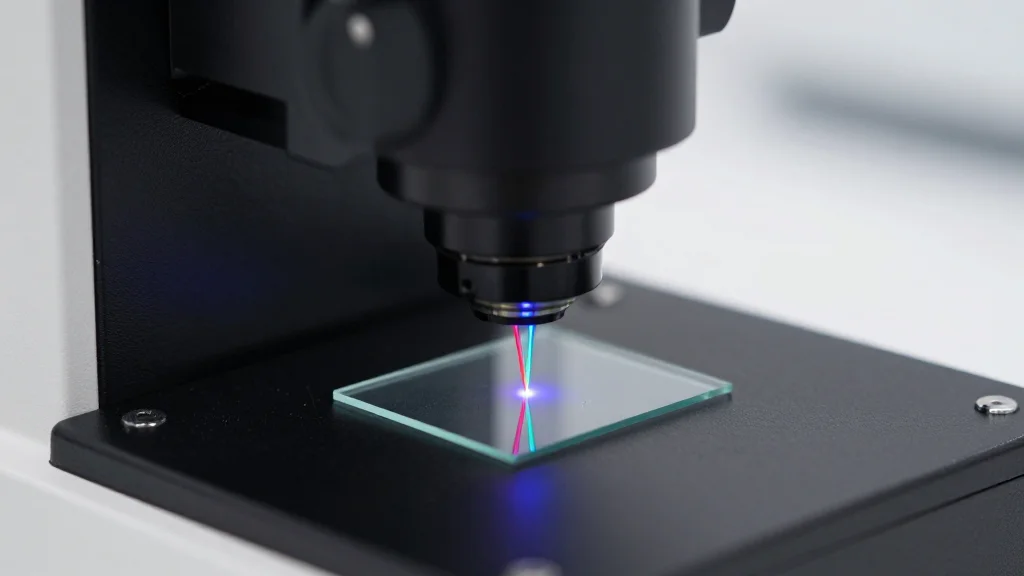
Optical Design Unlocks Direct Raman Detection of Ångström-Scale Ultrathin Molecular Layers at Interfaces
Why It Matters
It expands Raman spectroscopy to previously inaccessible ultrathin interfaces, enabling operando chemical analysis without altering the system. The capability promises faster catalyst optimization and deeper insight into battery and adhesion chemistry.
Key Takeaways
- •Time‑frequency engineered Raman suppresses substrate background by 10,000×.
- •No plasmonic nanostructures needed for ångström‑scale layer detection.
- •Enables operando monitoring of electrochemical and catalytic interfaces.
- •Internal local oscillator amplifies signal >10‑fold via interference.
- •Shows distinct Raman signatures for sub‑nanometer water layers.
Pulse Analysis
Traditional Raman spectroscopy has long relied on plasmonic hotspots or electronic resonance to amplify the faint vibrational signals of surface‑bound molecules. While effective, those enhancements often require nanostructured substrates that perturb the very interface under study, limiting the technique’s relevance for real‑world catalytic or electrochemical systems. The new time‑frequency engineered coherent Raman method sidesteps these constraints, delivering high‑sensitivity spectra without any artificial field enhancement, thereby restoring Raman’s status as a truly non‑invasive probe.
The technical core of the breakthrough lies in synchronizing three ultrafast pulses—a femtosecond pump, a femtosecond Stokes and a delayed picosecond probe—with asymmetric shaping. This precise temporal choreography suppresses the non‑resonant background from bulk substrates by roughly 10,000×. Rather than discarding the residual background, the researchers repurpose it as an internal local oscillator, allowing constructive interference that amplifies the coherent Raman signal by more than tenfold. The result is a directional, high‑contrast Raman emission that can be recorded from films only a few atoms thick, a scale previously thought unreachable without plasmonic assistance.
The implications for industry are immediate and far‑reaching. Operando monitoring of electrode surfaces during charge‑discharge cycles, real‑time tracking of intermediate species on heterogeneous catalysts, and nondestructive characterization of adhesion layers in microelectronics become feasible with a single, label‑free optical setup. By removing the need for custom nanostructured substrates, the technology lowers adoption barriers and accelerates R&D pipelines across energy, chemicals and semiconductor sectors. As companies chase higher efficiency and durability, the ability to interrogate interfaces at the Ångström level will likely become a competitive differentiator, spurring new instrumentation and service markets.
Optical design unlocks direct Raman detection of ångström-scale ultrathin molecular layers at interfaces
Comments
Want to join the conversation?
Loading comments...