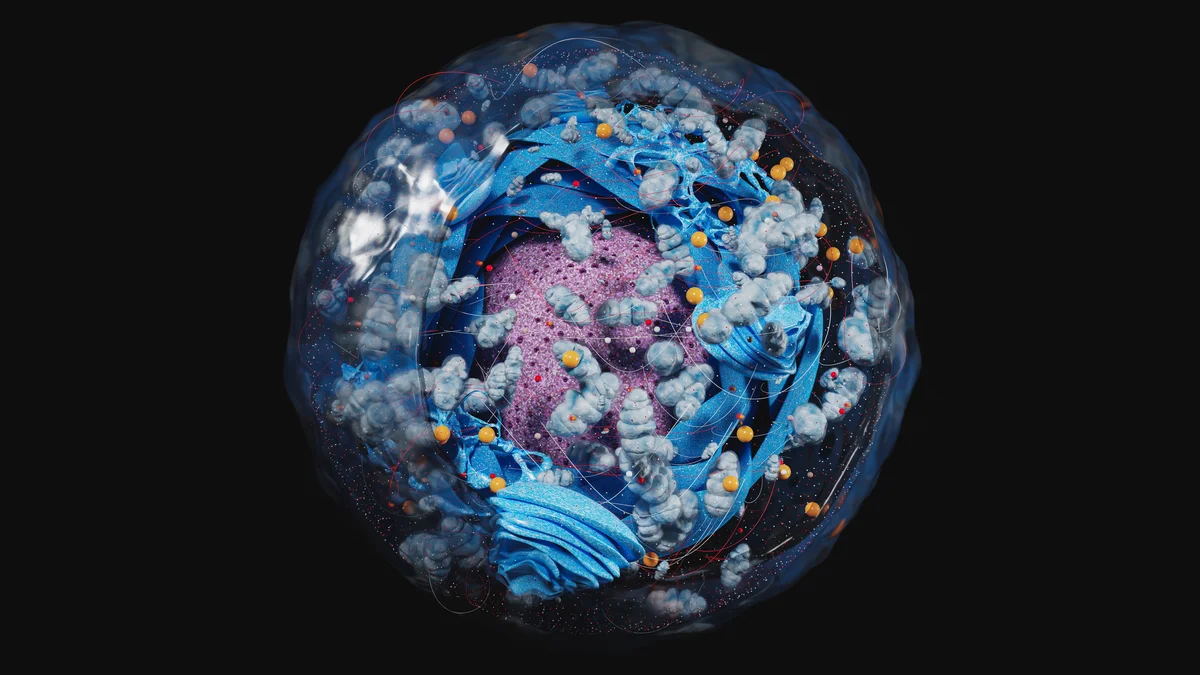
Origins of First Eukaryotes Linked to Contributions From Multiple Bacteria and Giant Viruses
Why It Matters
The expanded model highlights the role of microbial communities and viruses in driving cellular complexity, offering fresh insights for evolutionary biology and potential biotechnological applications.
Key Takeaways
- •Multiple bacterial lineages contributed genes to the last eukaryotic common ancestor
- •Myxococcota and Planctomycetota supplied metabolic and structural genes before mitochondria
- •Giant Nucleocytoviricota viruses likely served as vectors for early gene transfer
- •Horizontal gene transfer happened in successive waves spanning millions of years
- •Researchers leveraged MareNostrum supercomputers for large‑scale phylogenomic reconstruction
Pulse Analysis
The origin of eukaryotic cells has long been framed as a two‑player drama: an archaeal host engulfing an alphaproteobacterial partner that became the mitochondrion. This mitochondria‑first narrative has guided textbooks and research agendas for decades. In a recent Nature paper, Toni Gabaldón and his team at IRB Barcelona and the Barcelona Supercomputing Center challenged that simplicity by reconstructing the proteome of the last eukaryotic common ancestor (LECA) with unprecedented computational depth. Using the MareNostrum supercomputer, they screened tens of thousands of bacterial, archaeal and viral genomes, extracting only the most robust phylogenetic signals.
The analysis revealed a mosaic ancestry far richer than previously imagined. Gene families trace back not only to the alphaproteobacterial mitochondrial donor but also to Myxococcota, which contributed lipid‑metabolism enzymes, and Planctomycetota, a lineage noted for internal membrane compartments. Intriguingly, signatures from giant Nucleocytoviricota viruses suggest these massive viruses acted as conduits for horizontal gene transfer, shuttling genetic material among co‑existing microbes. Temporal modeling indicates that some bacterial contributions predate mitochondrial endosymbiosis, implying a series of gene‑exchange waves that gradually assembled the complex cellular toolkit of early eukaryotes.
By portraying eukaryogenesis as a prolonged, community‑driven process, the study reshapes how evolutionary biologists view the emergence of cellular complexity. It underscores the importance of microbial ecosystems—such as ancient mats and biofilms—in fostering genetic innovation through virus‑mediated exchange. The methodological breakthrough, combining massive phylogenomic datasets with high‑performance computing, opens new avenues for probing other deep evolutionary events. For biotech and synthetic biology, understanding the diverse genetic inputs that built the eukaryotic cell may inspire novel strategies for engineering modular, compartmentalized systems, echoing nature’s own incremental design.
Origins of First Eukaryotes Linked to Contributions from Multiple Bacteria and Giant Viruses
Comments
Want to join the conversation?
Loading comments...