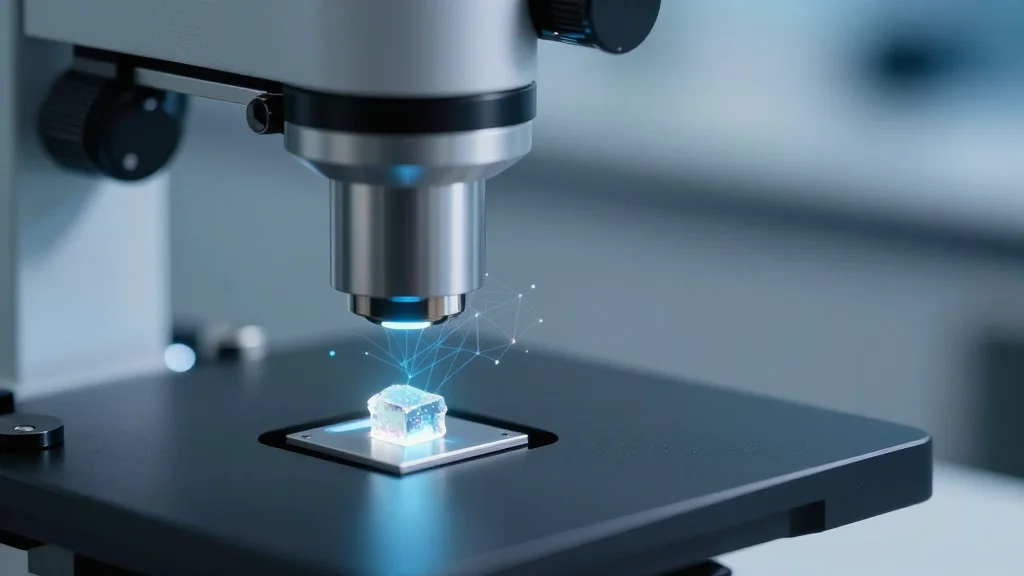
ORNL Work Explores AI-Guided Experiments That Adapt in Real Time
Why It Matters
Autonomous labs dramatically accelerate materials discovery while preserving scientific rigor, reshaping how research institutions allocate talent and resources. The technology promises faster innovation cycles for high‑impact sectors like renewable energy and electronics.
Key Takeaways
- •AI-driven closed-loop experiments reduce manual measurement steps
- •Real-time novelty detection flags unusual material behavior
- •AEcroscopy standardizes autonomous microscopy data acquisition
- •Gated active learning prevents AI from learning from outliers
- •Cross-facility loops integrate synthesis and microscopy for faster discovery
Pulse Analysis
The rise of AI‑guided experimentation marks a shift from repetitive data collection to intelligent discovery pipelines. At ORNL’s Center for Nanophase Materials Sciences, Liu’s closed‑loop framework equips scanning probe microscopes with pattern‑recognizing models that evaluate results on the fly. This real‑time feedback not only speeds up measurements but also uncovers subtle phenomena—like voltage‑dependent hysteresis linked to grain structure—that would be invisible in traditional workflows. By automating the decision‑making loop, researchers can explore larger parameter spaces without sacrificing reproducibility.
Beyond speed, trustworthiness remains paramount. Liu’s AEcroscopy platform enforces consistent data acquisition, processing, and logging, turning ad‑hoc scripts into reliable, repeatable protocols. Complementing this, the gated active‑learning framework acts as a safety valve, filtering out anomalous data that could mislead the model. These safeguards ensure that AI suggestions are explainable and that scientists retain ultimate control over experimental direction, mitigating the risk of chasing noise rather than genuine breakthroughs.
The broader vision extends to cross‑facility integration, where rapid microscopy decisions are coordinated with slower synthesis stages such as pulsed laser deposition. By synchronizing fast and slow instruments within a unified learning loop, the system continuously refines hypotheses across days or weeks of material growth. This holistic approach promises to compress the timeline from concept to functional device, offering a competitive edge to industries ranging from next‑generation solar cells to quantum materials. As autonomous labs mature, they will free researchers to focus on high‑level insight while machines handle the exhaustive, data‑heavy exploration.
ORNL Work Explores AI-Guided Experiments That Adapt in Real Time
Comments
Want to join the conversation?
Loading comments...