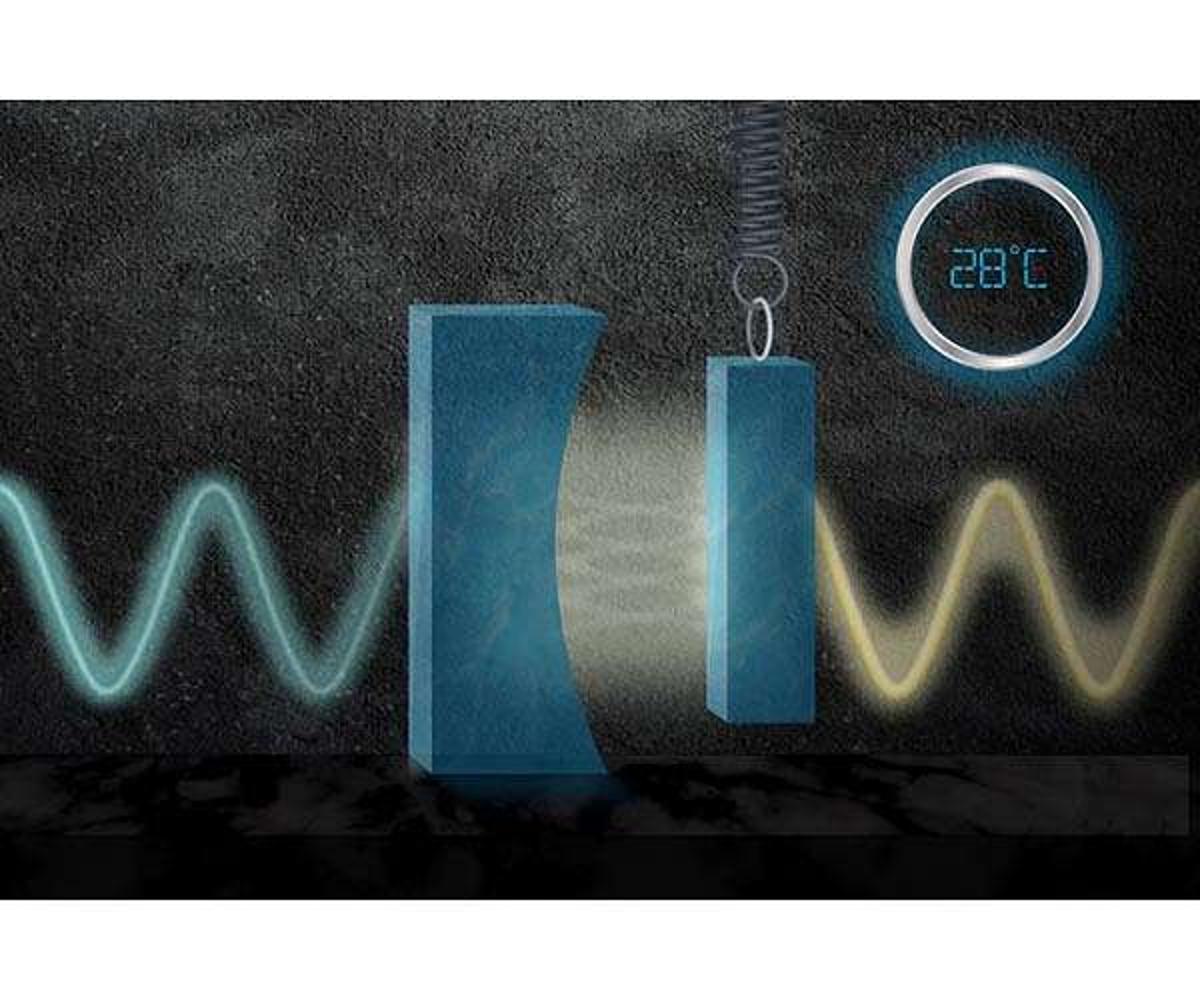
Oxford Physicists Reach Fourth-Order Quantum Squeezing With Trapped Ion
Why It Matters
The breakthrough makes previously inaccessible high‑order quantum interactions experimentally viable, accelerating development of next‑generation quantum sensors and simulators. Its platform‑agnostic nature could standardize advanced quantum operations across diverse hardware.
Key Takeaways
- •Oxford team achieved fourth-order quadsqueezing with a single trapped ion
- •Technique generates quadsqueezing 100× faster than conventional methods
- •Method uses combined non‑commuting forces to amplify interaction strength
- •Enables new quantum simulation, sensing, and computation capabilities
- •Approach compatible with multiple quantum hardware platforms
Pulse Analysis
Higher‑order squeezing has long been a theoretical curiosity, promising sensitivity gains beyond the limits of conventional squeezed states used in gravitational‑wave detectors like LIGO. While second‑order squeezing reshapes uncertainty in one quadrature, third‑ and fourth‑order variants—trisqueezing and quadsqueezing—reshape the quantum noise landscape in more complex ways, potentially unlocking ultra‑precise measurements and richer quantum information encoding. Until now, the intrinsic weakness of these interactions kept them out of reach for laboratory verification, limiting their practical impact.
The Oxford group sidestepped this barrier by exploiting the non‑commutativity of two engineered forces acting on a trapped ion’s motion. Rather than driving a fragile fourth‑order interaction directly, each force produced a simple linear effect; their combined action generated a composite term that amplified the desired quadsqueezing by orders of magnitude. This clever orchestration reduced the interaction time by a factor of over one hundred, allowing clear observation of the characteristic phase‑space patterns for second‑, third‑, and fourth‑order squeezing. The experiment also demonstrated dynamic tunability, switching between squeezing orders simply by adjusting frequencies and phases, showcasing unprecedented control over quantum state engineering.
Beyond the laboratory, this technique could become a cornerstone for quantum technologies that demand extreme precision. Faster, higher‑order squeezed states can enhance interferometric sensors, improve error‑corrected quantum computation, and enable more faithful simulations of lattice gauge theories relevant to high‑energy physics. Because the method relies on hardware components common to ion traps, superconducting circuits, and optomechanical systems, it offers a scalable route for industry to integrate advanced squeezing without bespoke infrastructure. As quantum hardware matures, the ability to readily generate and manipulate quadsqueezed states may define the next leap in measurement fidelity and computational power.
Oxford Physicists Reach Fourth-Order Quantum Squeezing With Trapped Ion
Comments
Want to join the conversation?
Loading comments...