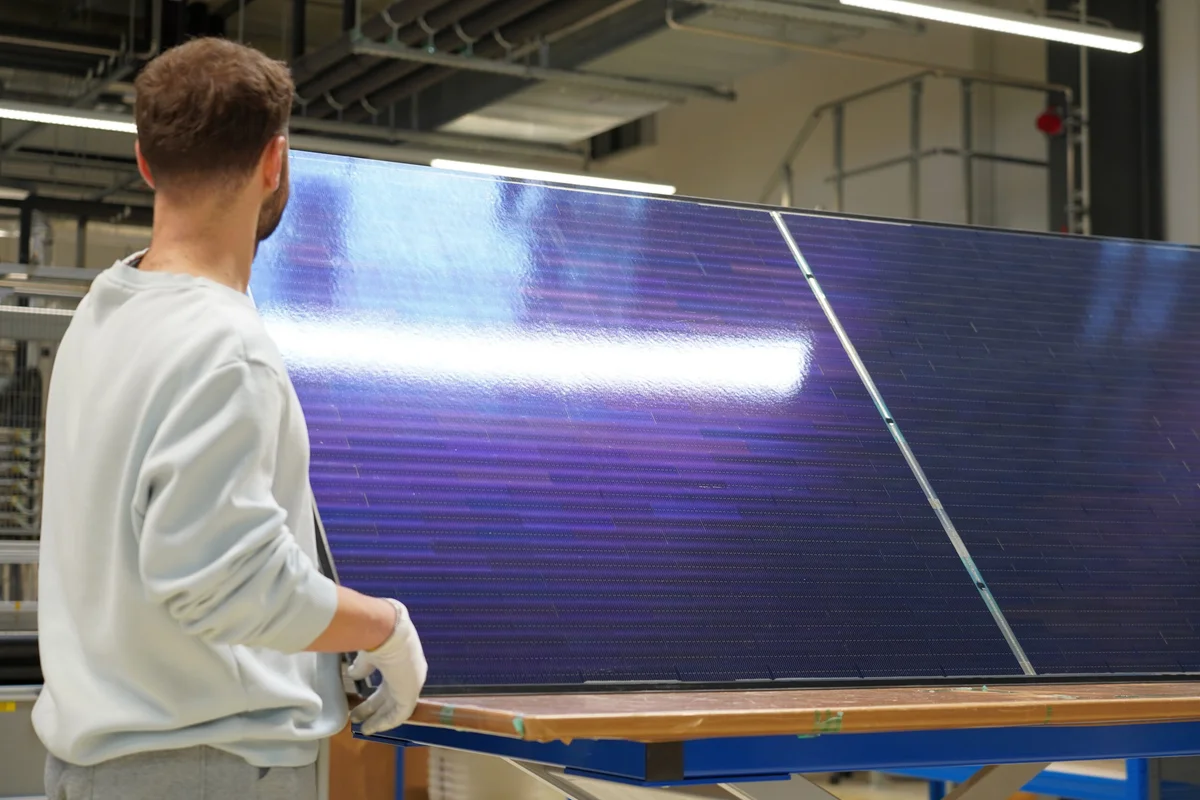
Oxford PV Achieves 25.6% Efficiency for Perovskite-Silicon Tandem Module Based on Shingled Design
Why It Matters
The efficiency jump brings perovskite‑silicon tandems nearer to commercial viability, promising higher energy yields and lower balance‑of‑system costs for utility‑scale and rooftop installations. Demonstrating a scalable, low‑temperature interconnection method accelerates industry adoption of next‑generation PV technology.
Key Takeaways
- •25.6% efficiency achieved with shingled perovskite‑silicon module
- •Shingle design removes busbars, copper, cuts resistive losses
- •Prototype includes 491 W rooftop and 546 W bifacial units
- •Oxford PV targets 26% launch this year, 27% by 2027
Pulse Analysis
Perovskite‑silicon tandem cells have long been hailed as the next leap in photovoltaic performance, marrying the high voltage of silicon with the superior light‑absorption of perovskite layers. Recent records have hovered in the mid‑20s, but the 25.6% efficiency demonstrated by Oxford PV and Fraunhofer ISE marks a decisive step toward commercial relevance. By integrating the Matrix Shingle architecture, the module not only reaches a new efficiency milestone but also addresses longstanding manufacturing bottlenecks such as busbar shading and copper interconnect complexity, which have traditionally inflated balance‑of‑system costs.
The Matrix Shingle approach re‑imagines module interconnection: cells are precision‑cut into narrow strips and overlapped like roof tiles, then bonded with electrically conductive adhesive. This eliminates inactive spacing, boosts active‑area utilization, and shortens current pathways, reducing resistive heating and improving reliability under partial shading. Crucially, the low‑temperature adhesive process avoids high‑heat soldering, mitigating thermal stress on the moisture‑sensitive perovskite layer and supporting longer module lifetimes. Because the design works with standard production cells, it dovetails with existing manufacturing lines, offering a clear path from prototype to high‑volume output.
For the solar industry, the breakthrough signals that tandem technology can soon compete on cost and durability with conventional silicon panels. Oxford PV’s roadmap—26% modules slated for release this year and >27% by 2027—aligns with utility‑scale developers’ demand for higher energy density without proportionally higher land use. Investors and OEMs are likely to accelerate funding into tandem‑compatible equipment, while policymakers may view the technology as a viable tool for meeting aggressive renewable‑energy targets. As the shingled design gains traction, the market could see a rapid shift toward higher‑efficiency, lower‑LCOE solar installations across residential, commercial, and utility sectors.
Oxford PV achieves 25.6% efficiency for perovskite-silicon tandem module based on shingled design
Comments
Want to join the conversation?
Loading comments...