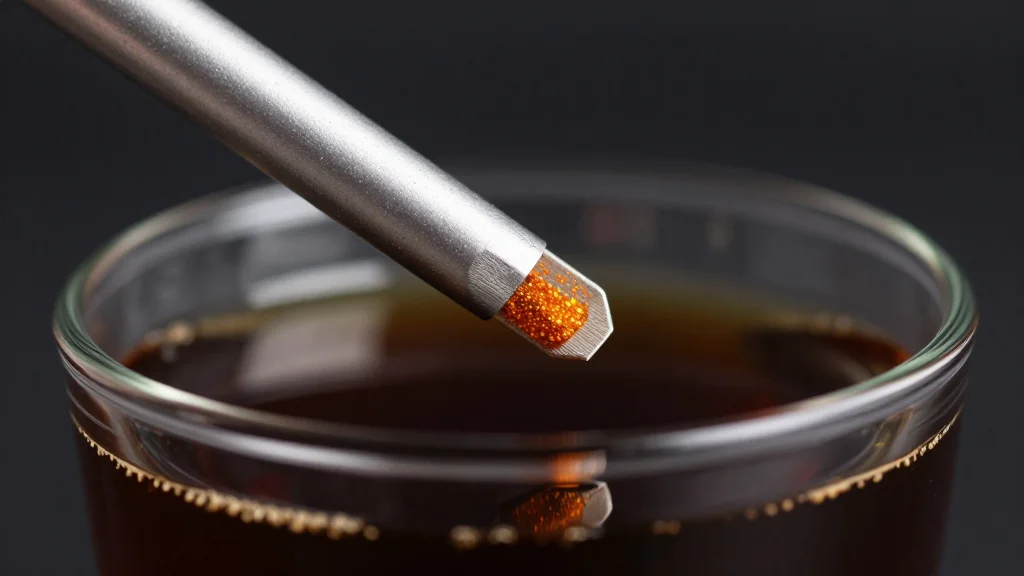
Oxide-Based Sensor Opens Door to Greener, Faster, More Accurate Quality Testing of Food
Why It Matters
The sensor offers the food industry a greener, low‑cost alternative for real‑time quality control, reducing reliance on expensive labs and hazardous chemicals. Its portable format could accelerate compliance testing and improve consumer safety across multiple product categories.
Key Takeaways
- •Strontium oxide, carbon black, and graphene oxide form conductive nanocomposite
- •Sensor detects theobromine at neutral pH, eliminating harsh alkalis
- •Portable design enables rapid on‑site testing of tea, coffee, and chocolate drinks
- •Interfacial alkaline microdomains open path for detecting weakly electroactive molecules
Pulse Analysis
The breakthrough stems from engineered interfacial chemistry, where a ternary nanocomposite creates micro‑alkaline zones at the electrode surface. By integrating strontium oxide with carbon‑based nanomaterials, researchers achieved a conductive matrix that boosts adsorption and electron transfer, allowing theobromine—a weakly electroactive molecule—to be oxidized reliably. This design sidesteps the need for high‑pH reagents, positioning the sensor as a greener alternative to conventional chromatography or mass‑spectrometry setups that demand costly equipment and skilled operators.
For food manufacturers, the implications are immediate. The sensor’s ability to work with minute sample volumes and deliver results in seconds means quality checks can move from centralized labs to production lines. Companies producing tea, coffee, chocolate beverages, or any theobromine‑containing product can now verify labeling accuracy, monitor flavor consistency, and safeguard against accidental over‑concentrations that could affect consumer health. The neutral‑pH operation also reduces chemical waste, aligning with sustainability goals and potentially lowering compliance costs associated with hazardous disposal.
Beyond food safety, the underlying technology offers a versatile platform for detecting a range of analytes, from pharmaceutical compounds to environmental toxins. The concept of interfacial alkaline microdomain engineering could be adapted to sense biomarkers in medical diagnostics or trace pollutants in water supplies. As the sensor moves toward commercialization, partnerships with portable device manufacturers and regulatory bodies will be crucial to translate laboratory performance into market‑ready solutions, heralding a new era of low‑cost, high‑precision analytical tools.
Oxide-based sensor opens door to greener, faster, more accurate quality testing of food
Comments
Want to join the conversation?
Loading comments...