
Why It Matters
Demonstrating scalable in‑situ resource utilization reduces launch mass and cost, making long‑term lunar habitation economically viable and accelerating commercial space‑infrastructure development.
Key Takeaways
- •Blue Origin's Air Pioneer extracts oxygen from Moon dust electrically.
- •Reactor also harvests iron, aluminium, silicon for construction.
- •Requires ~1 MW power, comparable to 400‑1,000 homes.
- •Enables on‑site propellant production, cutting Earth‑launch costs.
- •Supports Blue Origin’s vision of self‑sustaining lunar bases.
Pulse Analysis
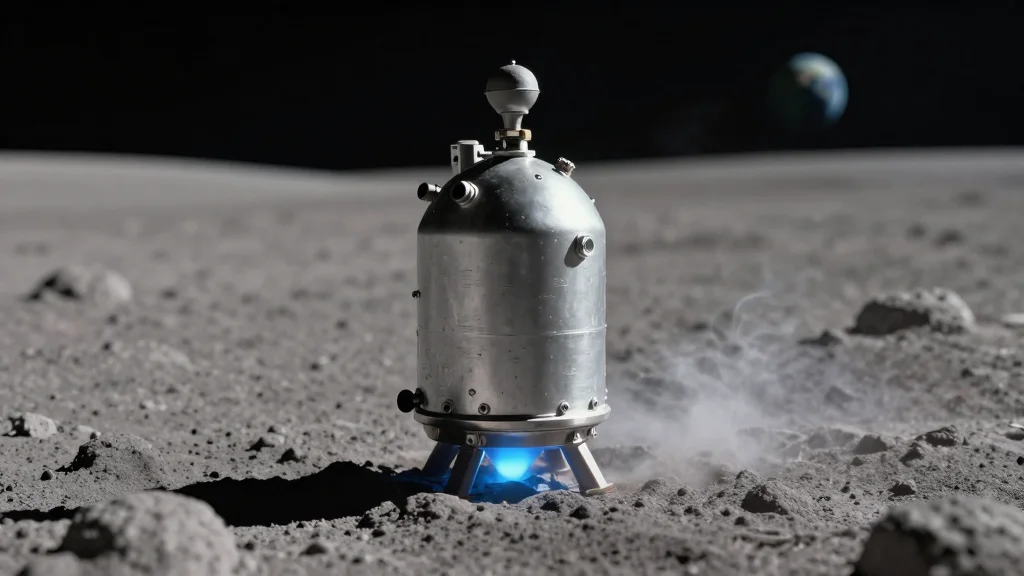
In‑situ resource utilization has long been the linchpin of sustainable space exploration, yet most demonstrations have remained confined to Earth‑based laboratories. The lunar regolith—comprising roughly 45 % oxygen bound to metal oxides—offers a ready‑made feedstock, but extracting it traditionally required bulky, high‑temperature furnaces unsuitable for transport. Blue Origin’s Air Pioneer sidesteps those constraints by using an electrochemical process that releases oxygen at relatively low temperatures, proving the concept in a compact prototype that could be shipped to the Moon. This breakthrough validates a core premise of long‑duration off‑world habitats: that essential life‑support gases can be produced where they are needed.
The reactor’s power draw of about one megawatt can be met with a modest array of lunar solar panels, an energy level comparable to supplying 400‑1,000 average U.S. homes. Beyond oxygen, the electrolysis also separates iron, aluminium and silicon—materials critical for building habitats, manufacturing electronics, and fabricating solar‑panel covers or glass windows on the Moon. By generating propellant‑grade oxygen on‑site, future landers could refuel without returning to Earth, dramatically lowering launch mass and mission cost. The multi‑product output positions Air Pioneer as a versatile ISRU node rather than a single‑purpose life‑support device.
Blue Origin’s announcement arrives as NASA’s Artemis program accelerates lunar lander contracts, creating a nascent market for commercial ISRU services. Competitors such as SpaceX, Lockheed Martin and emerging European firms are also investing in oxygen‑extraction technologies, but Blue Origin’s focus on a compact, solar‑powered unit could give it a logistical edge for early settlement phases. If the Air Pioneer scales to production levels envisioned for a permanent base, the economics of lunar construction and refueling could shift from Earth‑dependent supply chains to a self‑sustaining lunar economy, unlocking new commercial opportunities in habitat manufacturing, power generation and deep‑space propellant production.
Oxygen Made From Moon Dust For First Time
Comments
Want to join the conversation?
Loading comments...