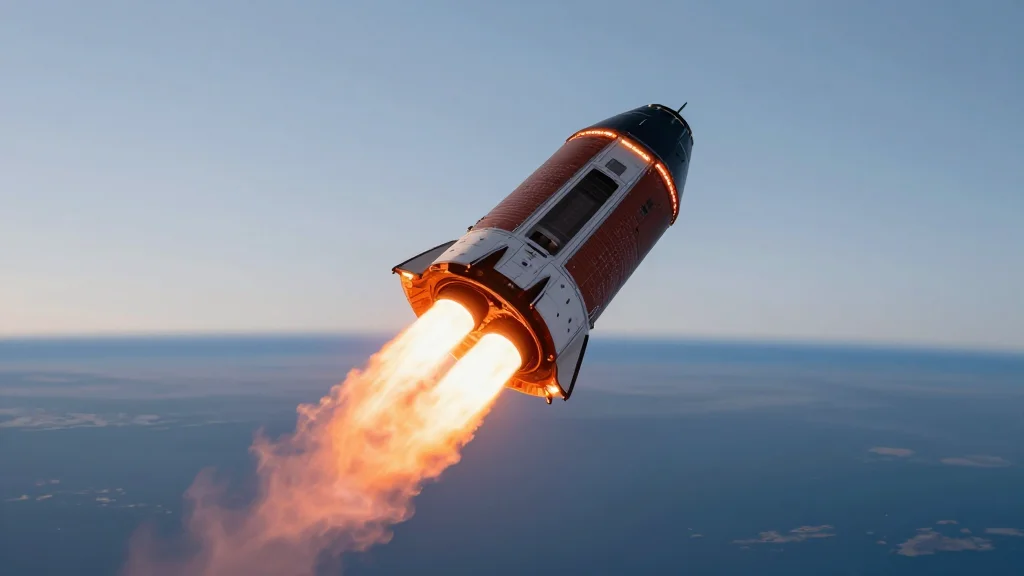
Parachutes: A Vital Part of Artemis II's Trip Home
Why It Matters
The parachute system is the final, mission‑critical barrier that guarantees crew survival, underscoring NASA’s commitment to safety as Artemis paves the way for deeper lunar exploration.
Key Takeaways
- •Orion uses 11 parachutes in four deployment stages.
- •Main parachutes each cover 11,000 sq ft, slowing craft to 17 mph.
- •Redundancy allows loss of one chute per type and still safe landing.
- •Deployment starts at 24,000 ft after heat shield slows to 350 mph.
- •Crew can manually trigger parachutes if flight software fails.
Pulse Analysis
Artemis II marks the first crewed flight of NASA’s new lunar program, and its success hinges on more than rockets and heat shields. After the Orion capsule endures the extreme thermal load of re‑entry, the parachute system takes over to trim a 25,000 mph velocity down to a manageable 17 mph for a Pacific Ocean splashdown. This transition from hypersonic flight to a soft water landing is a textbook example of how aerospace engineering blends high‑tech materials with proven aerodynamics to protect human life.
The Orion parachute architecture is a layered cascade of eleven canopies, each engineered for a specific speed regime. A forward‑bay‑cover parachute first clears the vehicle’s exterior, followed by two 23‑foot drogue chutes that stabilize the capsule and cut speed to roughly 150 mph. Three pilot chutes then pull the three massive main parachutes—each spanning 11,000 sq ft of nylon‑reinforced fabric—down to the final 17 mph descent rate. Redundancy is baked into every tier; the loss of one parachute of each type still leaves sufficient drag to ensure a safe landing, and astronauts retain a manual command capability should the automated sequence falter.
Beyond the immediate mission, Orion’s parachute system sets a benchmark for future crewed spacecraft, both NASA‑run and commercial. Demonstrating reliable, redundant descent technology reassures investors, policymakers, and the public that deep‑space travel can be conducted safely. As Artemis progresses toward lunar surface operations and eventually Mars, the lessons learned from Orion’s splashdown will inform design standards, risk assessments, and certification processes across the burgeoning space‑flight industry.
Parachutes: A vital part of Artemis II's trip home
Comments
Want to join the conversation?
Loading comments...