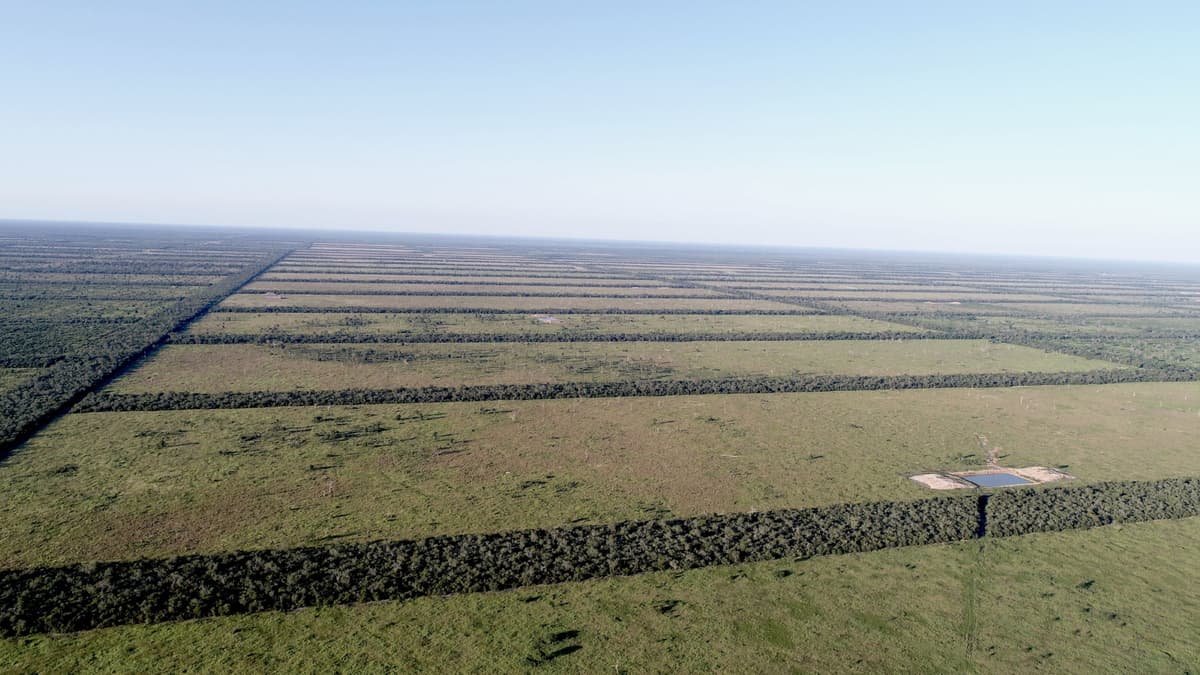
Paraguay Expanded a Reserve in the Gran Chaco. Why Is Deforestation Still Rising There?
Why It Matters
Continued deforestation threatens the world’s largest tropical dry forest, erodes biodiversity, and endangers uncontacted Indigenous peoples, exposing Paraguay to global criticism and potential loss of UNESCO biosphere status.
Key Takeaways
- •2011 expansion added 2.78 M ha, total reserve now ~7.5 M ha
- •Deforestation 5.2 M ha lost 2000‑2020 despite protection
- •Enforcement by MADES remains selective, exceeding 50% vegetation rule
- •Ayoreo communities lose forest resources and face disease exposure
- •UNESCO demands zoning plan; Paraguay response due by Sep 2026
Pulse Analysis
The Gran Chaco, spanning Paraguay, Bolivia and Brazil, is the planet’s largest tropical dry forest and a critical carbon sink. Its unique mix of savanna, gallery forest and wetlands supports jaguars, giant armadillos and over 400 bird species. Despite the 2011 biosphere‑reserve expansion, the region has lost more than 5 million ha in the past two decades, outpacing many Amazonian hotspots. Satellite monitoring by NGOs reveals that the primary drivers are extensive cattle pastures and soy‑linked cropland, which thrive under weak land‑use governance.
Paraguayan enforcement agencies, notably the Ministry of Environment and Sustainable Development (MADES), are at the heart of the protection gap. The 2011 decree mandates that landowners retain at least 50 % native vegetation, yet field reports and remote‑sensing data show systematic violations. Political inertia, rooted in the legacy of the Lugo administration and resistance from powerful agribusiness lobbies, has stalled legislative attempts to strengthen the reserve’s legal framework. A 2019 congressional bill that would have codified full‑scale protection failed to pass, underscoring the difficulty of translating policy into practice.
The stakes extend beyond trees. Indigenous Ayoreo‑Totobiegosode, many of whom live in voluntary isolation, rely on the forest for subsistence and cultural identity. As deforestation fragments their habitat, they confront food insecurity, loss of medicinal plants, and exposure to diseases for which they lack immunity. UNESCO’s recent call for a revised zoning plan and inclusive management strategy puts pressure on Paraguay to align with global conservation standards. Strengthening on‑the‑ground monitoring, incentivizing sustainable ranching, and securing Indigenous land rights are essential steps to halt the Chaco’s decline and preserve its ecological and cultural heritage.
Paraguay expanded a reserve in the Gran Chaco. Why is deforestation still rising there?
Comments
Want to join the conversation?
Loading comments...