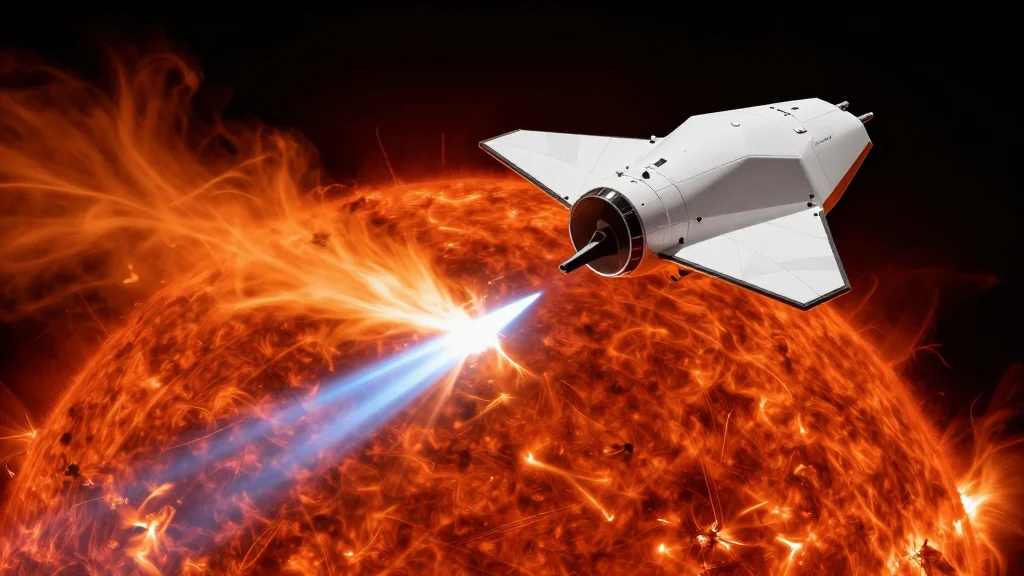
Parker Solar Probe Finds Unexpected Particle Jets in Solar Magnetic Reconnection

Why It Matters
The split in particle acceleration reshapes our fundamental understanding of magnetic reconnection, a cornerstone of plasma physics that governs not only solar eruptions but also astrophysical phenomena such as pulsar winds and accretion disks. By revealing that protons and heavy ions respond differently, the study forces a revision of theoretical models that have guided space‑weather prediction for decades. Accurate space‑weather forecasting is essential for protecting the modern technological infrastructure that underpins global communications, navigation, and power distribution. Improved models that account for the newly observed particle behaviors could enhance early‑warning systems, reducing the economic and societal costs of solar‑induced disruptions.
Key Takeaways
- •Parker Solar Probe recorded distinct proton and heavy‑ion jets during a magnetic reconnection event
- •Protons formed a dispersed, flashlight‑like beam; heavy ions traveled in a narrow, laser‑like stream
- •Findings published March 31 in the Astrophysical Journal challenge uniform‑acceleration theory
- •Results could refine space‑weather models that predict solar storm impacts on Earth
- •Future Parker flybys aim to capture more reconnection events under varied solar conditions
Pulse Analysis
The Parker Solar Probe’s latest observations arrive at a pivotal moment for heliophysics. For years, reconnection has been treated as a relatively uniform process in both observational and simulation work, largely because in‑situ measurements were limited to the Earth’s magnetosphere. By directly sampling the solar wind downstream of a reconnection site, Parker provides the first high‑resolution glimpse of how particle species separate in energy and direction. This nuance forces a shift from single‑fluid magnetohydrodynamic (MHD) models toward multi‑fluid or kinetic approaches that can capture mass‑dependent dynamics.
Historically, space‑weather forecasting has relied on bulk parameters—solar wind speed, magnetic field orientation, and overall particle density—to estimate storm potential. The new dual‑jet signature suggests that the composition of the particle stream, not just its bulk properties, may dictate how quickly and intensely a solar storm couples with Earth’s magnetosphere. Incorporating species‑specific acceleration into predictive algorithms could improve the timing and severity forecasts that power‑grid operators and satellite controllers depend on.
Looking ahead, the implications extend beyond Earth. As humanity plans crewed missions to the Moon and Mars, understanding the fine‑scale structure of solar particle events becomes a safety imperative. The Parker data may also inform the design of next‑generation solar probes and plasma laboratories, where reproducing the distinct acceleration pathways could unlock new regimes of controlled fusion research. In short, the unexpected particle jets not only rewrite a chapter of solar physics but also lay groundwork for more resilient space operations and deeper plasma science.
Parker Solar Probe Finds Unexpected Particle Jets in Solar Magnetic Reconnection
Comments
Want to join the conversation?
Loading comments...