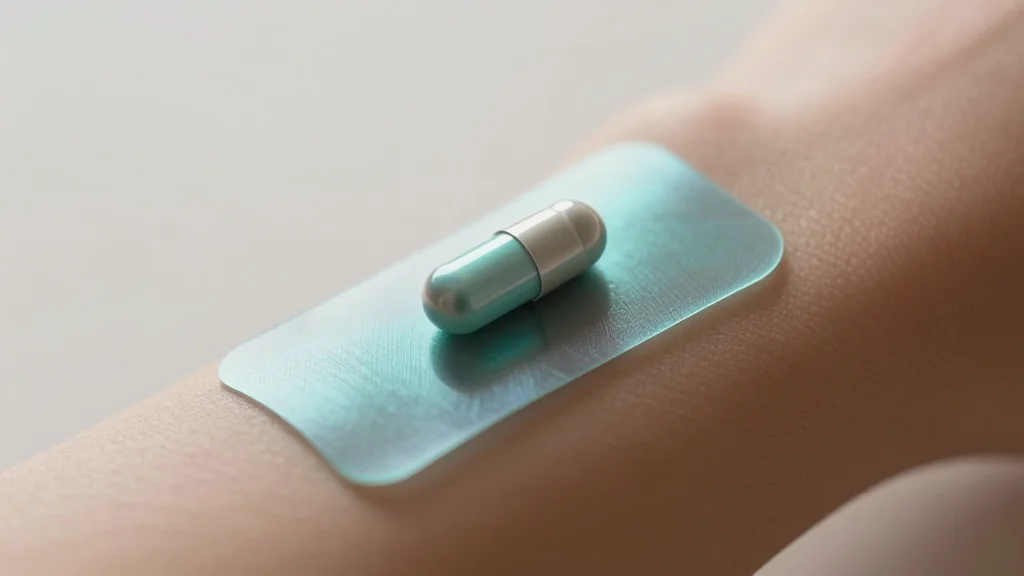
PEDOT: PSS for Implantable and Wearable Bioelectronics: From Material Engineering and Energy Storage to Clinical Translation
Why It Matters
PEDOT:PSS bridges flexible electronics and medicine, enabling next‑generation therapeutic and monitoring devices that can scale to clinical use. Overcoming its translational barriers could unlock multi‑billion‑dollar markets in personalized health tech.
Key Takeaways
- •PEDOT:PSS combines high conductivity with proven biocompatibility
- •Solvent doping and surfactants tune microstructure for superior performance
- •Nanocomposite formulations expand functionality for sensing and actuation
- •Clinical adoption limited by long‑term stability and batch consistency
- •Future work targets counter‑ion engineering and intelligent closed‑loop systems
Pulse Analysis
PEDOT:PSS has emerged as a cornerstone material for bioelectronic interfaces because its intrinsic conductivity rivals that of metals while remaining soft, stretchable, and compatible with living tissue. Researchers have refined its microstructure through solvent doping, which reorganizes polymer chains to lower resistance, and surfactant engineering, which improves film uniformity. Nanocomposite strategies—embedding carbon nanotubes, graphene, or metal oxides—further boost charge transport and introduce multifunctional capabilities such as catalytic activity or optical responsiveness. Plasma treatments add surface functional groups that enhance adhesion to biological substrates, paving the way for seamless integration with electrodes and scaffolds.
These material advances translate into tangible breakthroughs across the biomedical spectrum. In implantable devices, PEDOT:PSS enables high‑resolution neural probes that record and stimulate with minimal tissue damage, while electroceutical platforms leverage its electrochemical stability for chronic therapy. Wearable sensors exploit its flexibility to monitor glucose, lactate, or electrophysiological signals in real time, often powered by self‑charging supercapacitor architectures built from the same polymer. Moreover, smart drug‑delivery systems embed PEDOT:PSS coatings that release therapeutics on demand, responding to electrical cues or physiological triggers. Collectively, these innovations promise more accurate diagnostics, personalized treatment, and continuous health monitoring.
Despite the promise, clinical translation faces hurdles. Long‑term in vivo stability remains a concern, as polymer degradation can alter electrical properties and provoke immune responses. Batch‑to‑batch variability hampers regulatory approval, requiring stringent quality‑control protocols. To address these gaps, the field is exploring counter‑ion substitution to lock in conductivity, biomimetic surface functionalization for improved tissue integration, and closed‑loop architectures that combine sensing, actuation, and power generation within a single PEDOT:PSS platform. Successfully navigating these challenges could position PEDOT:PSS at the heart of a new generation of implantable and wearable medical technologies, driving growth in the digital health market.
PEDOT: PSS for Implantable and Wearable Bioelectronics: From Material Engineering and Energy Storage to Clinical Translation
Comments
Want to join the conversation?
Loading comments...