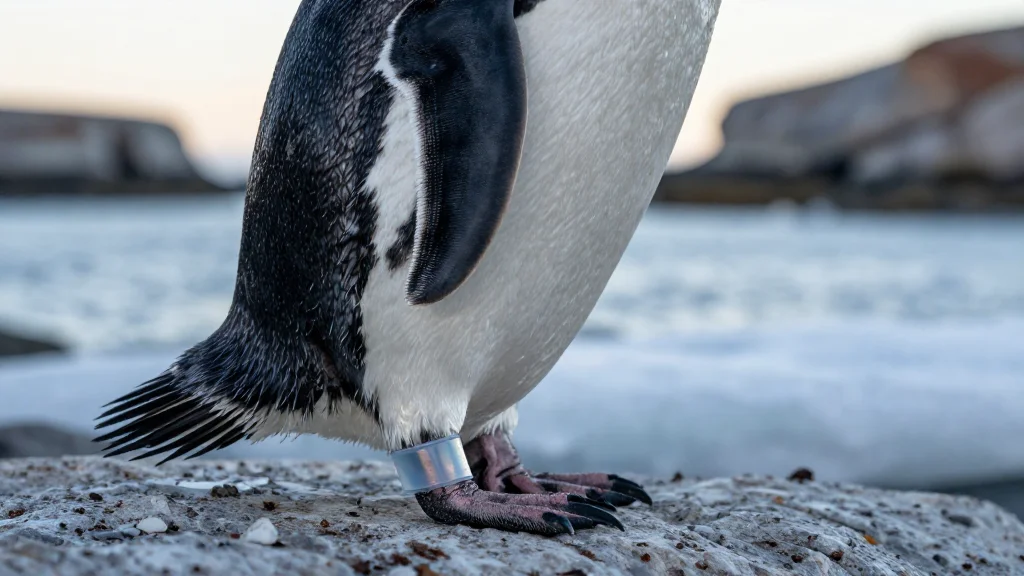
Penguins Become Marine Detectives, Thanks to Pollutant-Detecting Anklets
Why It Matters
The technique delivers real‑time, geographically detailed PFAS exposure data, empowering regulators and conservationists to address a worldwide contaminant threat while using a humane, scalable sentinel‑animal model.
Key Takeaways
- •91% of penguin bands detected at least one PFAS compound
- •Bands sampled 40 PFAS; nine different chemicals identified
- •Silicone samplers recorded exposure in 2‑9 days of deployment
- •Technique is low‑cost, humane, and suitable for remote marine areas
- •Plans to extend monitoring to cormorants and larger penguin colonies
Pulse Analysis
Per‑ and polyfluoroalkyl substances (PFAS) have become one of the most pervasive environmental challenges of the 21st century, lingering in water, soil, and food chains for decades. Traditional monitoring relies on water sampling or invasive tissue collection, which often miss transient hotspots and stress wildlife. By turning to sentinel species—organisms that naturally integrate environmental signals—scientists can obtain a continuous, ecosystem‑wide picture of contaminant distribution. Penguins, as top marine predators that traverse vast oceanic zones and return to fixed colonies, are uniquely positioned to serve this role, especially in remote regions like Patagonia where human access is limited.
The Argentine pilot study leveraged a simple silicone ankle band that acts as a passive sampler, absorbing PFAS from seawater, prey, and airborne sources during brief deployments of two to nine days. Analyzing 55 birds across three breeding seasons revealed PFAS presence in 91% of samples, uncovering nine distinct compounds, including legacy chemicals phased out decades ago and newer replacements still in use. This high detection rate, achieved with minimal handling and low material costs, demonstrates that such wearable samplers can capture both spatial and temporal variability in pollutant loads, offering a richer dataset than occasional blood or feather tests.
Beyond the immediate findings, the approach signals a shift toward scalable, humane wildlife monitoring that can inform policy and remediation strategies. Expanding the network to include cormorants, which dive deeper, and larger penguin colonies could map PFAS gradients across entire ocean basins. Regulators could use this granular data to target pollution sources, while conservation groups gain a compelling narrative—charismatic penguins literally wearing the evidence of chemical contamination—to rally public support. As PFAS regulation tightens globally, such sentinel‑based surveillance may become a cornerstone of environmental stewardship.
Penguins become marine detectives, thanks to pollutant-detecting anklets
Comments
Want to join the conversation?
Loading comments...