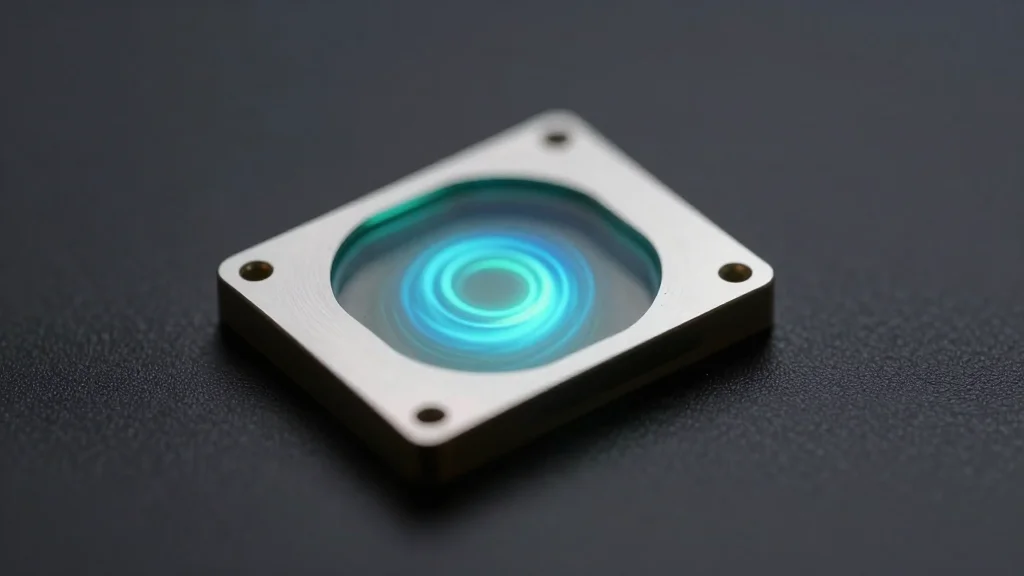
Physicists Create Hybrid Light-Matter Particles that Interact Strongly Enough to Compute
Why It Matters
By delivering ultralow‑energy, all‑light logic, the technology could dramatically cut power consumption and latency in AI hardware, accelerating the shift toward photonic and quantum‑ready computing architectures.
Key Takeaways
- •Exciton‑polaritons merge photon speed with strong matter interactions
- •All‑light switching achieved using only 4×10⁻¹⁵ joule per operation
- •Reduces need for electronic‑optical conversion in photonic AI chips
- •Scalable platform could enable on‑chip quantum computing primitives
Pulse Analysis
The push for ever‑faster artificial‑intelligence workloads has exposed the physical limits of electron‑based chips, whose resistance and heat generation become prohibitive at scale. Photonic computing—using light to carry and process information—offers a compelling alternative because photons travel at the speed of light and suffer minimal loss. However, photons naturally avoid interacting with each other, a shortfall that forces most photonic processors to revert to electronic circuits for logical operations, eroding the speed and efficiency gains.
The Penn research team tackled this dilemma by coupling photons with excitons in a monolayer semiconductor housed inside a nanocavity, creating exciton‑polaritons. These quasiparticles inherit the massless, high‑velocity nature of light while gaining the strong nonlinear interaction characteristic of matter. In laboratory tests, the polaritons switched optical signals using just 4 × 10⁻¹⁵ joule—orders of magnitude less energy than a typical LED pulse—demonstrating that truly all‑optical logic gates are feasible. The experiment also showed gate‑tunable behavior, meaning the interaction strength can be modulated on demand, a critical feature for building complex circuits.
If the technology matures, it could reshape the hardware landscape for AI and emerging quantum applications. Photonic AI chips would no longer need to translate optical data into electronic form for nonlinear activation functions, slashing latency and power draw across data centers. Moreover, the strong, controllable interactions of exciton‑polaritons open a pathway to integrate basic quantum‑computing primitives directly on silicon‑compatible platforms. Industry players are already investing in photonic interconnects; a scalable, low‑energy switching mechanism could accelerate commercial adoption, driving a new generation of ultra‑fast, energy‑efficient processors.
Physicists create hybrid light-matter particles that interact strongly enough to compute
Comments
Want to join the conversation?
Loading comments...