Physicists Create New Family of Schrödinger-Cat States
Why It Matters
The ability to program arbitrary nonclassical oscillator states could boost error‑resilient quantum computing and open new experimental windows on the quantum‑classical boundary, expanding the toolbox for next‑generation quantum hardware.
Key Takeaways
- •Oxford team creates programmable superpositions of nonclassical oscillator states
- •Method uses trapped‑ion internal‑state entanglement and mid‑circuit measurement
- •Generated states show Wigner negativity, confirming genuine quantum interference
- •Potential to improve error‑resilient quantum computing beyond simple qubits
- •Enables new platform for studying quantum‑classical boundary
Pulse Analysis
Quantum superposition lies at the heart of modern quantum science, yet most laboratory demonstrations focus on two‑level systems such as qubits. Schrödinger‑cat states extend this concept by placing a harmonic oscillator—an entity that can occupy many energy levels—into a superposition of distinct wave packets. Traditional cat states rely on coherent‑state components that closely mimic classical motion, limiting the range of quantum features that can be explored. By moving beyond coherent states, researchers can probe richer forms of quantum interference and test the limits of decoherence.
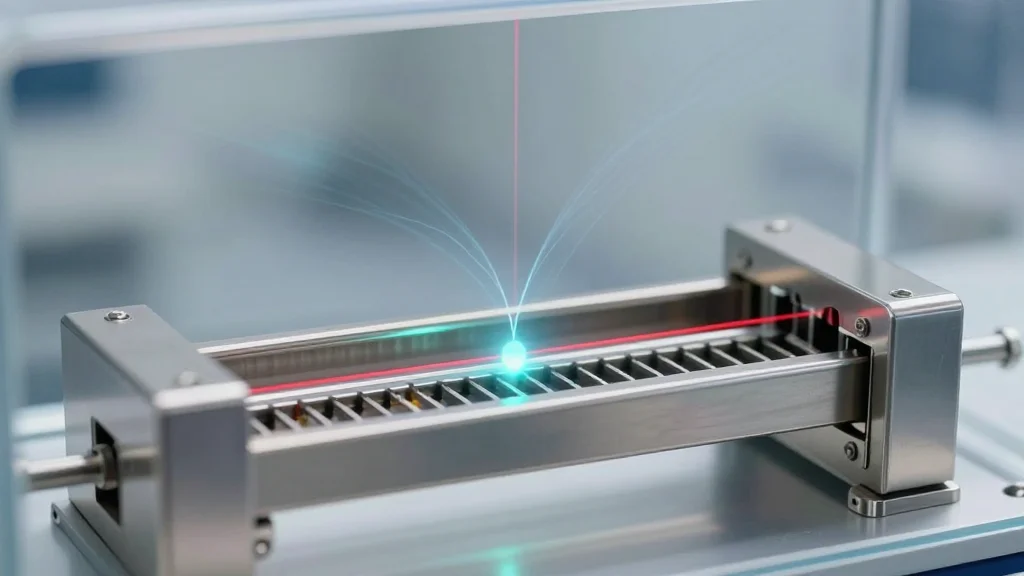
The Oxford group achieved this leap by leveraging a trapped‑ion platform where the ion’s internal electronic state serves as a qubit while its motion behaves as a quantum harmonic oscillator. Engineered interactions first entangle the two degrees of freedom; a carefully timed mid‑circuit measurement of the internal state then collapses the motion into a chosen superposition of nonclassical components, such as squeezed or trisqueezed states. By tuning laser parameters, the team could control the size, rotation and separation of each component, effectively sculpting the quantum state’s shape. Direct reconstruction of the Wigner function displayed pronounced negativity—an unmistakable hallmark of nonclassicality—validating the method’s precision.
Beyond fundamental interest, these programmable oscillator states promise practical advantages for quantum technologies. Their multi‑level structure can encode more information per physical carrier and, when combined with tailored error‑correction codes, may offer greater resilience to noise than binary qubits. Moreover, the ability to generate arbitrary nonclassical states provides a versatile testbed for exploring quantum thermodynamics, precision metrology, and the elusive transition from quantum to classical behavior. As theorists and experimentalists collaborate to quantify the “quantumness” of these states, the approach could become a cornerstone for next‑generation quantum processors and sensors.
Physicists create new family of Schrödinger-cat states
Comments
Want to join the conversation?
Loading comments...