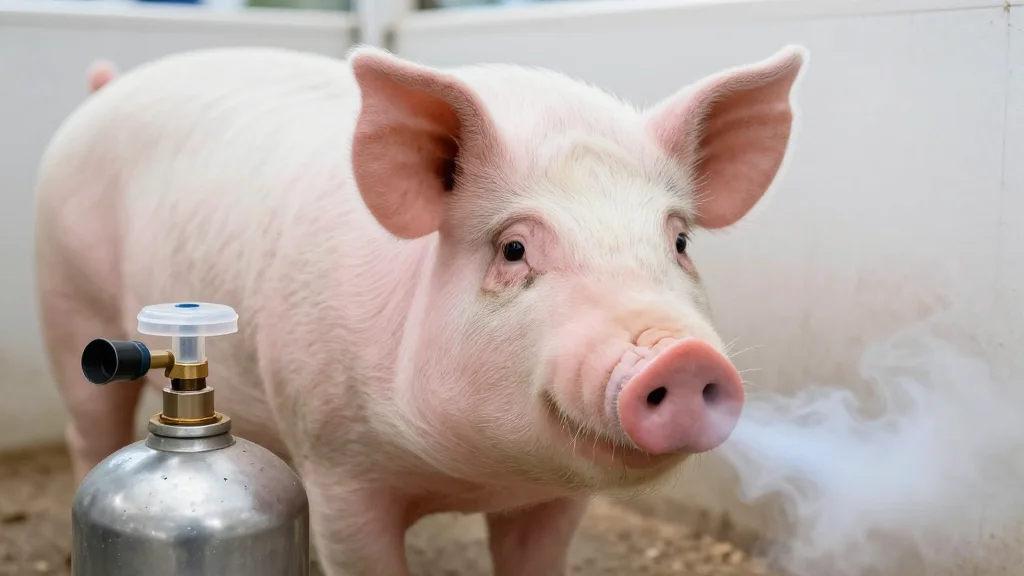
Pig Stunning Options Raise Welfare and Processing Tradeoffs
Why It Matters
Processors must balance animal‑welfare expectations with product quality and retrofit costs; the findings highlight that alternative gases are not a simple replacement for CO₂.
Key Takeaways
- •Argon stunning cuts aversion but doubles loss‑posture time
- •Helium requires lifting pigs, complicating conveyor design
- •Both argon and helium increase drip loss, hurting processing yield
- •Existing CO₂ systems would need costly retrofits for argon use
- •Walking pigs during lairage can mitigate drip loss with argon
Pulse Analysis
Consumer scrutiny and tightening regulations are pushing meat processors to re‑examine how pigs are stunned before slaughter. Traditional carbon‑dioxide (CO₂) stunning, while widely adopted, triggers strong aversive reactions that raise animal‑welfare concerns. The PigStun project, presented at the 2025 Reciprocal Meat Conference, evaluated argon and helium as alternatives, aiming to identify a method that eases pig discomfort without sacrificing throughput.
The experimental data revealed a nuanced trade‑off. Argon and helium reduced the immediate aversion seen with CO₂, but they prolonged the time pigs remained upright after gas exposure and increased excitation movements. These physiological stresses lowered the 45‑minute post‑mortem pH and markedly raised drip loss, a key indicator of water‑holding capacity that directly affects cooking yield, tenderness and overall palatability. Helium’s low density also forced a redesign of the stunning chamber, requiring pigs to be lifted into the gas, whereas argon and CO₂ rely on a descending gondola system. Such engineering changes add complexity and capital expense, especially for existing plants.
For the industry, the implications are clear: adopting argon or helium is not a plug‑and‑play solution. Existing facilities would face significant retrofitting costs to accommodate longer stun times and altered chamber dynamics, while new builds could integrate these gases more seamlessly. However, the potential welfare gains may justify investment if regulators tighten standards or retailers demand higher humane‑slaughter certifications. Ongoing comparative trials, standardized welfare metrics, and innovative gas‑flow designs will be essential to reconcile animal‑welfare improvements with the need for consistent meat quality and economic viability.
Pig stunning options raise welfare and processing tradeoffs
Comments
Want to join the conversation?
Loading comments...