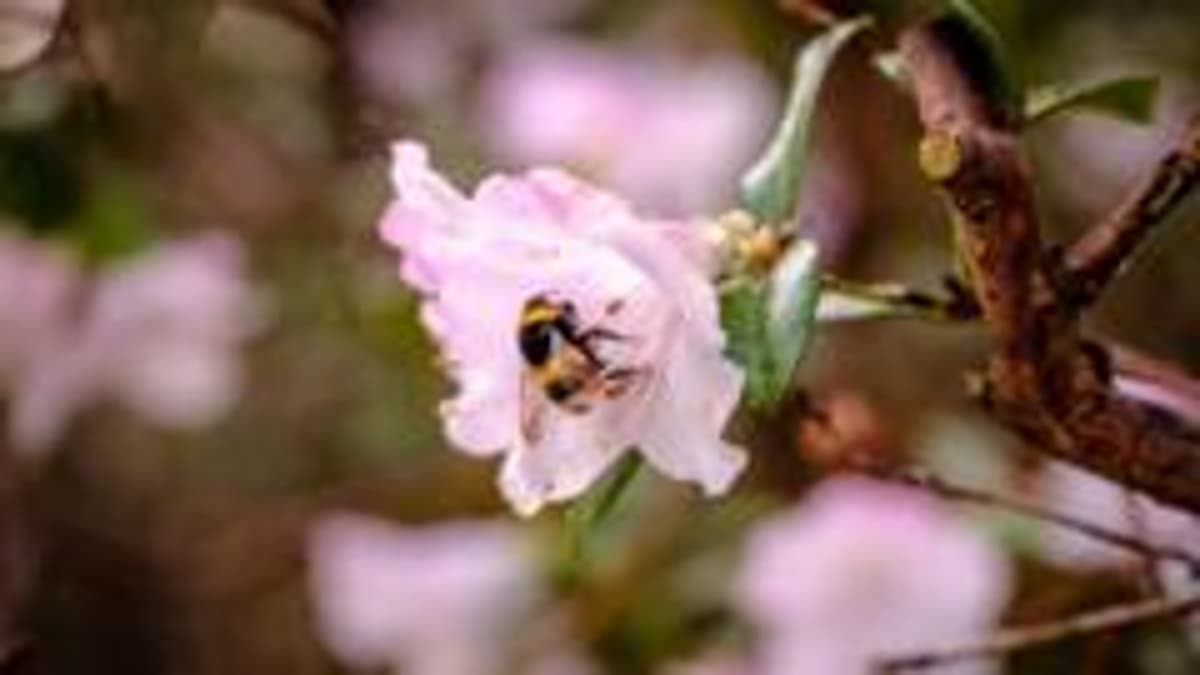
'Pioneering' Study to Boost Bee Numbers at Wakehurst
Why It Matters
The findings provide actionable insight for restoring pollinator habitats, directly supporting food security and biodiversity while guiding urban development toward nature‑positive design.
Key Takeaways
- •110 bee species recorded, exceeding Ireland's total
- •Bio‑acoustic sensors capture bee buzzes on trees
- •AI cameras monitor nocturnal foraging of bees and moths
- •Research guides developers on pollinator‑friendly planting
- •Ecosystem Observatory invites scientists and citizens to study habitats
Pulse Analysis
The Wakehurst botanical garden’s five‑year Nature Unlocked study arrives at a critical moment for pollinator conservation. Global bee populations have fallen dramatically, threatening crop yields and ecosystem resilience. By documenting 110 bee species—more than the entire island of Ireland—Wakehurst demonstrates that well‑managed semi‑natural habitats can sustain extraordinary biodiversity. The project’s emphasis on trees, rather than traditional meadow planting, adds a new dimension to pollinator research, highlighting the seasonal importance of arboreal pollen and nectar sources.
Technological innovation underpins the study’s breakthroughs. Bio‑acoustic monitors attached to trees record the distinctive buzz of visiting insects, providing continuous, non‑intrusive population data. Complementary AI‑powered camera arrays capture night‑time foraging behavior of both bees and moths, generating a rich dataset that links climate variables, such as heatwaves, to foraging patterns. This multi‑sensor approach yields granular insights that were previously unattainable, allowing scientists to model how pollinator communities respond to environmental stressors and to identify the most effective plant species for support.
Beyond academic value, Wakehurst’s findings have immediate practical applications. By translating research into planting recommendations for housing developers and landscape architects, the garden helps embed pollinator‑friendly corridors into urban growth. The newly opened Wakehurst Ecosystem Observatory invites citizen scientists to engage directly with the data, fostering public stewardship of biodiversity. As cities worldwide grapple with climate change and food security challenges, Wakehurst’s model offers a scalable blueprint for integrating nature‑based solutions into the built environment.
'Pioneering' study to boost bee numbers at Wakehurst
Comments
Want to join the conversation?
Loading comments...