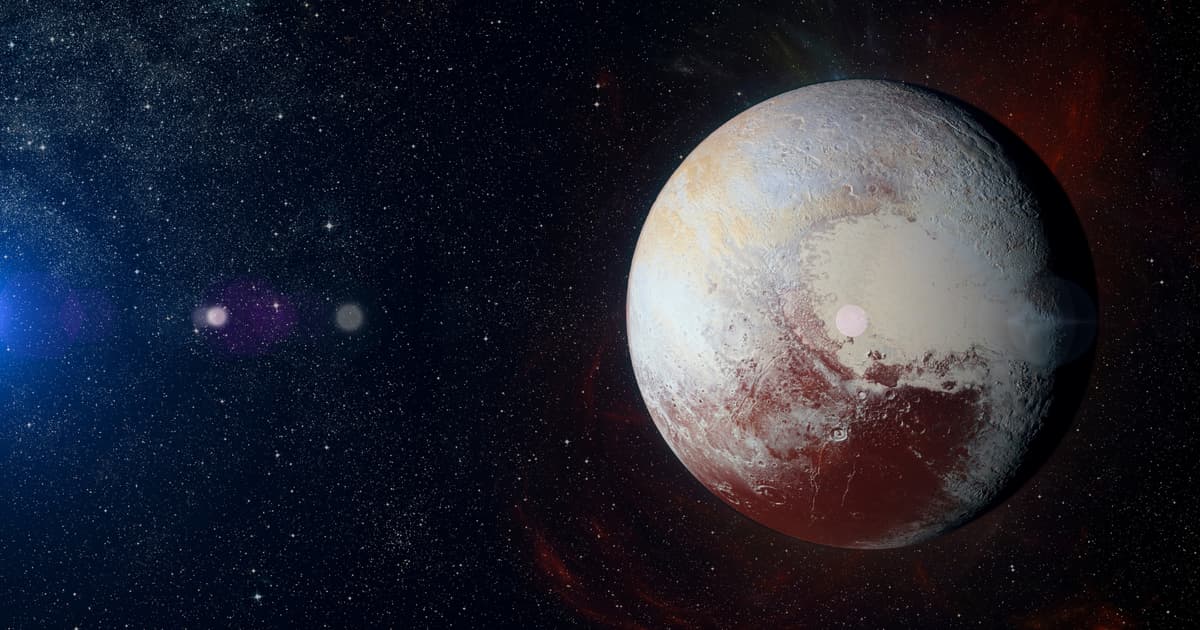
Pluto Has Glaciers, an Atmosphere, and Probably an Ocean. Why Isn’t It a Planet?
Why It Matters
Revising the planet definition aligns taxonomy with observable science, improving education and enabling consistent classification of the growing catalog of solar‑system and exoplanet worlds.
Key Takeaways
- •New Horizons revealed active glaciers, mountains, and a subsurface ocean on Pluto.
- •IAU’s 2006 “cleared orbit” rule fails for all eight planets.
- •Most planetary scientists ignore the IAU definition in research.
- •A geophysical definition would classify ~110 solar‑system bodies as planets.
- •Redefining planets eases exoplanet classification for future missions.
Pulse Analysis
The 2006 International Astronomical Union vote that demoted Pluto was driven by a political need to keep the planet count tidy after the discovery of Eris. Critics note that the "cleared the neighborhood" clause is distance‑dependent and, paradoxically, none of the eight recognized planets meet it when evaluated uniformly. Over the past two decades, planetary scientists have largely sidestepped the rule, publishing research that treats Pluto as a geologically active world regardless of its orbital crowding.
New Horizons’ 2015 flyby transformed Pluto from a frozen relic into a dynamic body. High‑resolution imaging uncovered nitrogen‑ice glaciers flowing across Sputnik Planitia, water‑ice mountains rivaling Earth’s Rockies, and towering cryovolcanoes such as Wright Mons. Spectroscopy confirmed a multi‑layered atmosphere extending over 200 km, while gravity data suggest a 100‑180 km liquid water ocean beneath the ice shell. These characteristics satisfy the geophysical criteria of hydrostatic equilibrium and internal activity that define planets in other contexts, making Pluto indistinguishable from Mars in terms of geological complexity.
Adopting a geophysical planet definition has far‑reaching implications. It would legitimize the classification of roughly 110 solar‑system bodies—including large Kuiper Belt objects, dwarf Ceres, and massive moons—while providing a scalable framework for the thousands of exoplanets being discovered by missions like JWST and the upcoming Habitable Worlds Observatory. A consistent, science‑first taxonomy also restores public confidence, turning the Pluto controversy from a nostalgic debate into a forward‑looking standard that supports education, research, and future exploration.
Pluto has glaciers, an atmosphere, and probably an ocean. Why isn’t it a planet?
Comments
Want to join the conversation?
Loading comments...