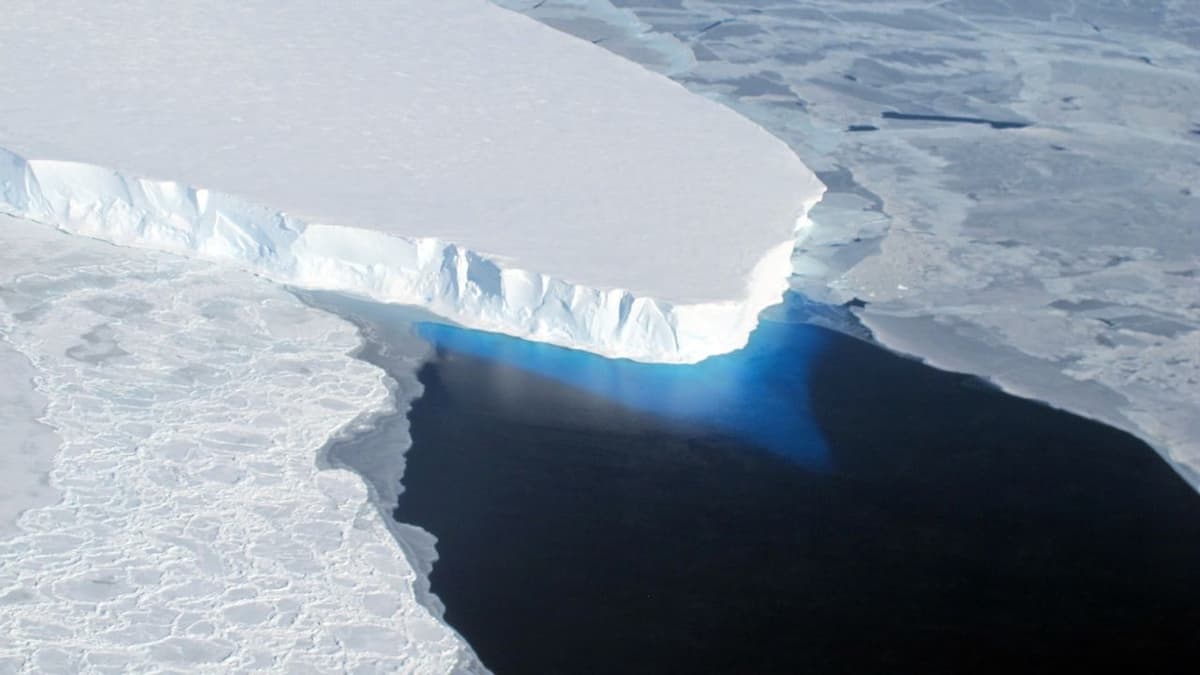
'Poised to Disintegrate': Antarctica's 'Doomsday Glacier' Is Set to Lose Its Ice Shelf This Year
Why It Matters
The imminent shelf disintegration speeds up Thwaites’ contribution to sea‑level rise, threatening coastal communities worldwide and highlighting a critical tipping point in the West Antarctic ice sheet.
Key Takeaways
- •Eastern ice shelf of Thwaites likely to detach by 2026
- •Collapse could add 2.1 ft (65 cm) to global sea levels
- •Warm, salty Southern Ocean water erodes glacier base, accelerating melt
- •Thwaites is a keystone of West Antarctic ice sheet stability
Pulse Analysis
The Thwaites Glacier, stretching roughly the size of Florida, has become a focal point for climate scientists because it acts as a linchpin for the stability of the West Antarctic Ice Sheet. Recent high‑resolution satellite imagery reveals that the glacier’s eastern ice shelf—its primary buttress—is fracturing along a submarine ridge and may disintegrate within the next few years. This observation aligns with a pattern seen at Pine Island Glacier, where ice‑shelf loss precipitated a rapid acceleration of ice discharge. The loss of the shelf removes a critical frictional barrier, allowing the glacier’s massive ice column, up to 2,000 m thick, to flow more freely into the ocean.
From a sea‑level perspective, Thwaites’ eventual collapse is a game‑changer. Even a partial disintegration would contribute roughly 2.1 feet (65 cm) to global sea levels, enough to inundate low‑lying megacities and strain coastal infrastructure. Full destabilization of the West Antarctic Ice Sheet could push sea‑level rise beyond 10 feet (3.3 m) over centuries, a scenario that would rewrite flood risk models worldwide. While climate models vary on timing, recent estimates suggest the glacier could be losing up to 200 billion tons of ice annually by 2067, underscoring the urgency of integrating these dynamics into long‑term planning.
The scientific community is converging on the role of warm, salty Circumpolar Deep Water that upwells onto the continental shelf, eroding the glacier’s base from below. This process is linked to shifting Southern Hemisphere westerlies, themselves a response to broader anthropogenic climate change. Policymakers must therefore prioritize enhanced satellite monitoring, international research collaborations, and aggressive emissions reductions to curb the underlying drivers. Investing in predictive modeling and early‑warning systems will be essential to mitigate the socioeconomic fallout of a Thwaites‑driven sea‑level surge.
'Poised to disintegrate': Antarctica's 'Doomsday Glacier' is set to lose its ice shelf this year
Comments
Want to join the conversation?
Loading comments...