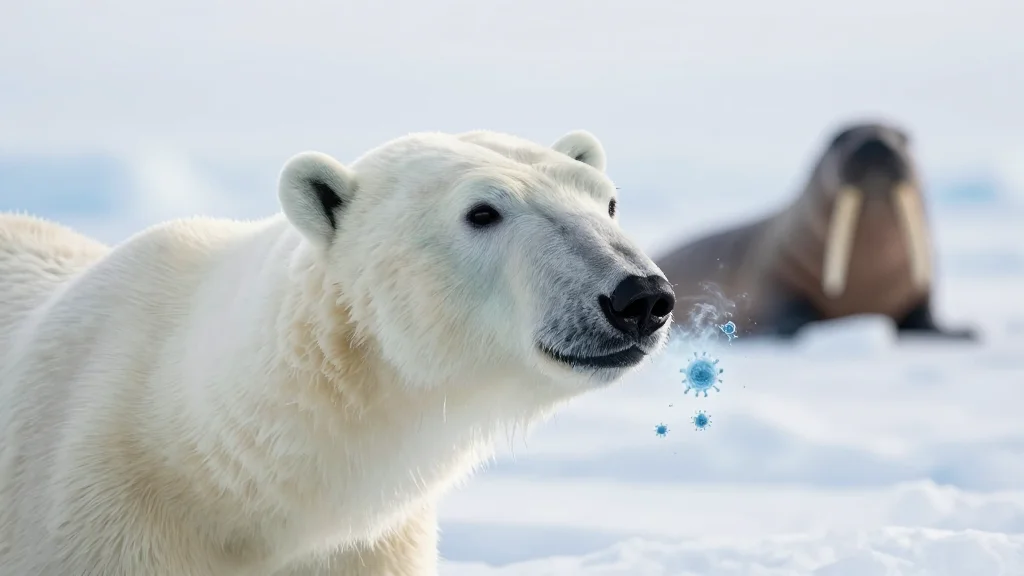
Polar Bear Death in Svalbard Linked to Highly Pathogenic Bird Flu
Why It Matters
The case highlights the vulnerability of a small, isolated polar bear subpopulation to emerging pathogens and underscores the need for systematic disease surveillance in the High Arctic, where climate‑driven habitat changes may amplify spillover risks.
Key Takeaways
- •H5N5 avian flu found in Svalbard polar bear and walrus brains.
- •First confirmed polar bear death from HPAI in Svalbard; second worldwide.
- •Svalbard’s bear population ~300, part of Barents subpopulation.
- •Disease monitoring relies on tourists and researchers reporting carcasses.
- •Climate‑driven habitat change may increase wildlife exposure to new pathogens.
Pulse Analysis
The detection of H5N5 in a Svalbard polar bear and walrus signals a worrying northward shift of highly pathogenic avian influenza. While HPAI has long plagued poultry, its incursion into Arctic mammals—first in seabirds, then in walruses, Arctic foxes, and now a top predator—demonstrates the virus’s capacity to cross species barriers in extreme environments. Scientists note that the virus likely entered the food web through predation or scavenging, a route that could accelerate if infected carcasses become more common as climate stress reshapes prey availability.
Monitoring in remote regions like Svalbard has traditionally relied on opportunistic reports from tourists, guides, and research teams. The recent deaths underscore the value of this informal network but also expose its limitations; there is no formal wildlife health surveillance comparable to mainland Norway. Experts advocate for a dedicated Arctic disease‑monitoring program that integrates systematic sampling, rapid diagnostics, and data sharing across national borders. Such infrastructure would improve early‑warning capabilities, protect both animal and human health, and inform management decisions for vulnerable species.
Beyond immediate disease concerns, the episode illustrates how climate‑induced sea‑ice loss intertwines with pathogen exposure. As polar bears spend more time on land and encounter new carrion sources, the probability of encountering infected mammals rises. Coupled with shrinking ice habitats that already threaten bear survival, disease adds a secondary stressor that could tip already fragile subpopulations toward decline. Proactive health monitoring, combined with aggressive climate mitigation, will be essential to safeguard the Arctic’s iconic predators in the coming decades.
Polar bear death in Svalbard linked to highly pathogenic bird flu
Comments
Want to join the conversation?
Loading comments...