Polyphosphate Synthesis Is Essential for Phosphate and ATP Homeostasis During Nutrient Upshift
Why It Matters
The work reveals polyP as a critical regulator of phosphate and energy balance during nutrient upshifts, reshaping our understanding of bacterial survival strategies and offering new targets for biotechnology and environmental management.
Key Takeaways
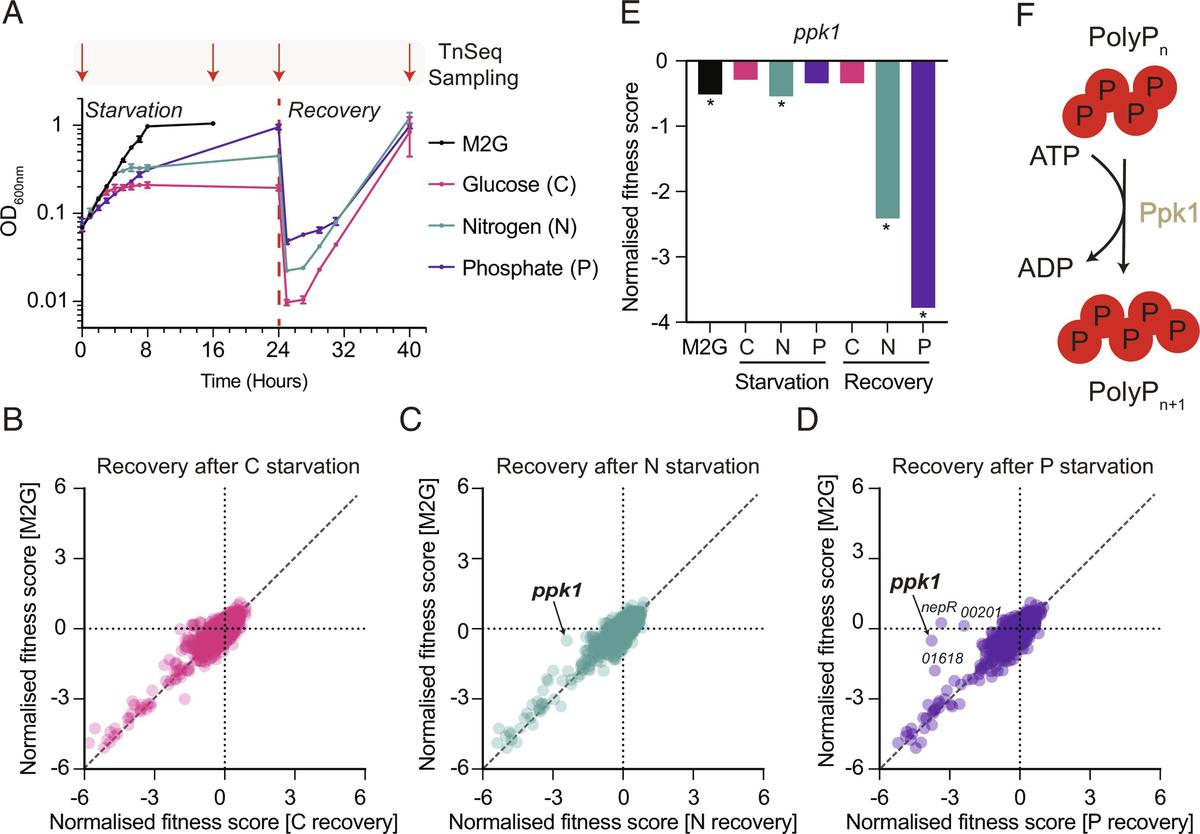
- •ppk1 deletion blocks recovery after phosphate starvation in Caulobacter
- •PolyP synthesis lowers cytoplasmic inorganic phosphate during phosphate refeeding
- •Excess ATP accumulation halts growth in ppk1 mutants
- •Reducing phosphate uptake suppresses the need for ppk1
- •PolyP acts as a buffer linking phosphate balance to ATP homeostasis
Pulse Analysis
Rapid shifts in nutrient availability are a hallmark of natural aquatic habitats, yet most bacterial research has focused on the response to starvation rather than the rebound phase. In a recent PNAS study, a bar‑coded transposon library (RB‑TnSeq) was deployed in Caulobacter crescentus to map fitness determinants across carbon, nitrogen, and phosphate fluctuations. The screen singled out ppk1, the gene encoding polyphosphate kinase, as uniquely essential for the transition from phosphate‑limited to phosphate‑rich conditions. This finding challenges the long‑standing view that polyP’s role is largely redundant, positioning it as a frontline buffer that modulates intracellular phosphate levels when external supplies surge.
Mechanistically, polyP synthesis draws excess inorganic phosphate (Pi) into polymeric stores, preventing a sudden spike in free Pi that would otherwise drive ATP synthesis beyond the cell’s capacity to utilize it. The authors showed that ppk1‑null mutants accumulate ATP to toxic levels, stalling cell division and causing growth arrest. Intriguingly, secondary mutations that diminish activity of the phosphate‑specific transport system (Pst) rescue the phenotype, confirming that polyP’s buffering capacity is the linchpin linking phosphate influx to energy homeostasis. These insights dovetail with prior work on (p)ppGpp and other second messengers, suggesting a coordinated network that balances nutrient uptake, storage, and metabolic output.
Beyond basic microbiology, the study has practical ramifications. PolyP management influences biotechnological processes such as wastewater treatment, where engineered microbes must tolerate fluctuating phosphate loads, and synthetic biology platforms that aim to harness bacterial metabolism for bio‑production. Understanding how polyP buffers intracellular Pi and ATP could inform the design of strains with improved resilience or tailored phosphate sequestration capabilities. Future research will likely explore polyP’s interplay with global stress responses and its potential as a target for antimicrobial strategies that disrupt bacterial energy balance.
Polyphosphate synthesis is essential for phosphate and ATP homeostasis during nutrient upshift
Comments
Want to join the conversation?
Loading comments...