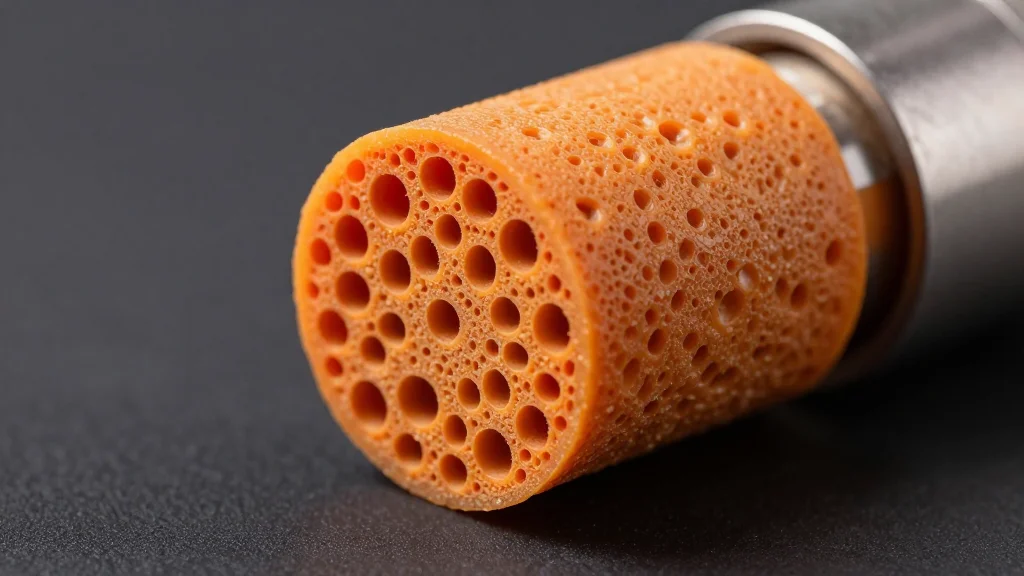
Pore Structure Engineering in Solid Oxide Cell Electrodes: Formation Mechanisms, Characterization Techniques, and Performance Implications
Why It Matters
Optimizing electrode porosity directly lifts SOC power density and lifespan, accelerating the transition to clean, distributed energy systems. The insights guide manufacturers toward cost‑effective, high‑performance cell designs.
Key Takeaways
- •Particle stacking, templating, freeze‑casting, phase‑inversion, 3D‑printing enable pore control
- •Optimized pores improve gas diffusion, reaction sites, and ionic conductivity
- •Graded and finger‑like architectures boost durability under thermal cycling
- •Advanced imaging (X‑CT, FIB‑SEM) quantifies pore size distribution accurately
- •Future research targets scalable manufacturing and in‑situ pore monitoring
Pulse Analysis
Solid oxide cells are gaining traction as high‑temperature electrochemical platforms that can both generate electricity from fuels and produce fuels from electricity. Their efficiency hinges on the electrode’s ability to simultaneously conduct ions and electrons while allowing rapid gas exchange. A well‑engineered porous scaffold provides the necessary triple‑phase boundaries, reduces concentration overpotentials, and absorbs mechanical stresses during thermal cycling, making pore architecture a decisive factor for commercial viability.
Researchers now have a toolbox of fabrication techniques to sculpt electrode porosity at multiple scales. Traditional particle‑stacking creates random interstices, whereas pore‑former templating introduces uniform voids by burning out sacrificial particles. Freeze‑casting aligns pores in a directional manner, enhancing gas flow, while phase‑inversion yields interconnected networks through polymer‑solvent exchange. Emerging additive manufacturing, especially ceramic 3D‑printing, offers unprecedented design freedom for graded or finger‑like structures that tailor conductivity and strength where needed. Each method balances processing cost, scalability, and microstructural control.
Accurate pore characterization is essential to link microstructure with performance. High‑resolution X‑ray computed tomography (X‑CT) and focused‑ion‑beam scanning electron microscopy (FIB‑SEM) generate three‑dimensional reconstructions, enabling quantitative metrics such as tortuosity, specific surface area, and pore‑size distribution. Coupled with electrochemical testing, these data reveal how subtle changes in pore geometry affect polarization resistance and degradation rates. Looking ahead, integrating AI‑driven image analysis and in‑situ monitoring during operation could accelerate iterative design, while scalable manufacturing routes will be critical for deploying SOCs in grid‑level renewable energy storage.
Pore Structure Engineering in Solid Oxide Cell Electrodes: Formation Mechanisms, Characterization Techniques, and Performance Implications
Comments
Want to join the conversation?
Loading comments...