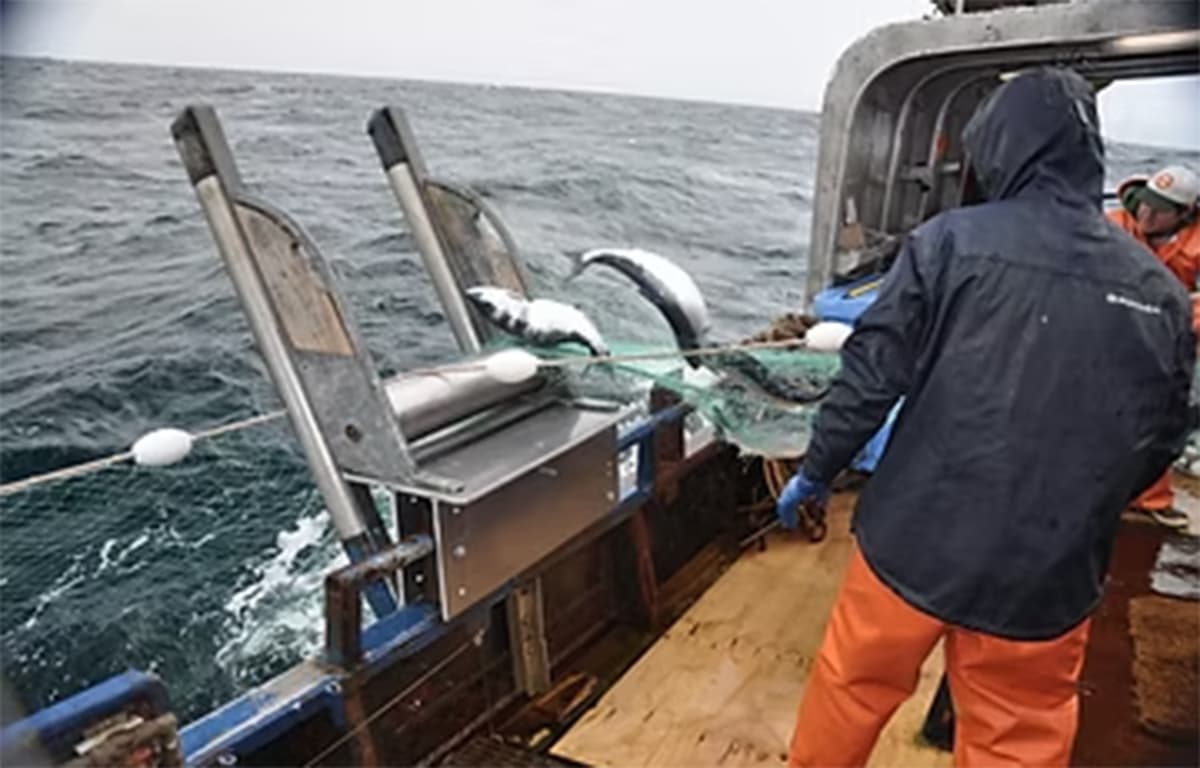
Port Moller Test Fishery Celebrates Scientific Achievements in Its 60th Year Examining Bristol Bay
Why It Matters
Full state funding would secure the long‑running scientific tool that underpins sustainable salmon management while freeing private money for other critical research, strengthening both the fishery economy and conservation efforts.
Key Takeaways
- •PMTF marks 60 years of salmon stock research in Bristol Bay
- •State may fully fund PMTF in FY2027 pending governor's approval
- •Genomic microscope cuts sample analysis from days to one day
- •Real‑time stock composition guides fishermen to optimal districts
- •BBSRI’s upgrades expand test sites and capture larger fish sizes
Pulse Analysis
The Port Moller Test Fishery has become a cornerstone of Bristol Bay’s salmon management, delivering daily insights that help align commercial effort with ecological reality. By sampling 13 stations along a 100‑mile transect each summer, the program provides granular data on water temperature, fish age, and genetic stock composition. This level of detail enables managers to predict which river districts will see the strongest runs, allowing vessels to adjust their targeting and reduce by‑catch. The integration of real‑time telemetry and rapid‑turnaround genetic analysis has transformed a historically slow process into a near‑instant decision‑support tool.
Technological upgrades spearheaded by BBSRI have amplified the fishery’s impact. A custom‑built Nikon microscope, paired with Starlink satellite connectivity, now captures high‑resolution images of fish scales on board, cutting the turnaround from 3‑3.5 days to roughly 24 hours. The addition of a dedicated genomic sequence scientist further refines stock identification, revealing the precise river origins of returning sockeye. These innovations not only improve data accuracy but also expand the range of fish sizes captured, ensuring that management decisions reflect the full spectrum of the salmon population.
Legislative developments could cement PMTF’s role for decades to come. If Governor Mike Dunleavy signs the pending bill, the fishery will transition to full state funding in fiscal year 2027, relieving industry sponsors of operational costs. This financial shift would free private capital for targeted Chinook salmon research, addressing a critical gap in the region’s fisheries science. By securing stable public support, the PMTF model demonstrates how sustained investment in science can drive both economic resilience and long‑term sustainability for one of the world’s most valuable salmon fisheries.
Port Moller Test Fishery celebrates scientific achievements in its 60th year examining Bristol Bay
Comments
Want to join the conversation?
Loading comments...