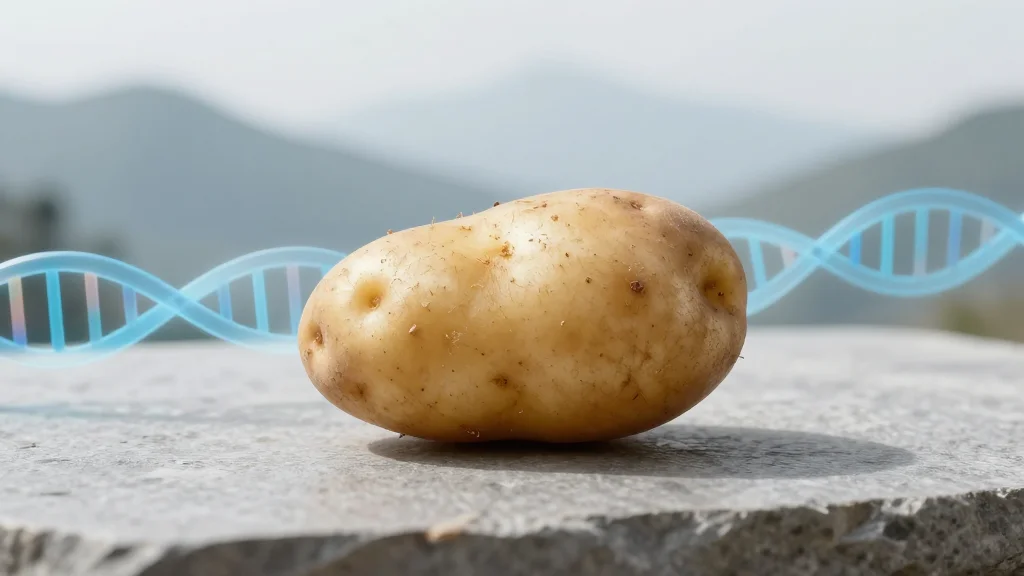
Potatoes May Have Given Indigenous Andeans Digestive Superpowers
Why It Matters
The discovery confirms that staple foods can drive rapid genetic adaptation, reshaping how scientists view nutrition’s role in human evolution and informing modern personalized diet strategies.
Key Takeaways
- •Indigenous Andeans average 10 AMY1 copies, four times typical enzyme count
- •Selection event occurred ~10,000 years ago, coinciding with potato adoption
- •Higher AMY1 copy number boosted starch digestion efficiency
- •Study estimates 1.24% survival advantage per extra AMY1 copy
- •Findings illustrate diet’s power to shape human genetics
Pulse Analysis
The AMY1 gene, which encodes salivary amylase, has long been a textbook example of copy‑number variation in humans. Earlier research linked higher AMY1 copies to societies with grain‑rich diets, but definitive proof of a direct dietary trigger remained elusive. UCLA’s new study leverages a massive dataset—over 3,700 genomes from 83 groups—to isolate the Andean signal. By comparing sequence patterns and ruling out demographic bottlenecks, researchers pinpointed a selective sweep that coincided with the domestication of potatoes, the Andean staple that transformed regional agriculture.
Beyond academic curiosity, the findings have practical implications for nutrition science and biotech. If extra AMY1 copies confer measurable digestive efficiency, modern populations with low copy numbers might experience reduced starch tolerance, informing personalized diet plans and enzyme‑supplement formulations. The research also underscores the importance of genetic diversity in public health: populations historically adapted to high‑starch foods may respond differently to low‑carb trends, affecting metabolic disease risk assessments. However, the advantage—estimated at a modest 1.24 % increase in reproductive success—highlights that genetic adaptation is often incremental, interacting with cultural, environmental, and socioeconomic factors.
The Andean case adds to a growing catalog of diet‑driven adaptations, joining lactase persistence in pastoralists and alcohol dehydrogenase variants in East Asian rice drinkers. It illustrates how agriculture can rewrite the human genome within a few thousand years, a pace that challenges traditional views of evolutionary timescales. As climate change reshapes crop viability, similar selective pressures may emerge, making this research a template for anticipating future genetic shifts. Continued interdisciplinary studies will be crucial for mapping how today’s food systems could sculpt the next generation of human biology.
Potatoes may have given Indigenous Andeans digestive superpowers
Comments
Want to join the conversation?
Loading comments...