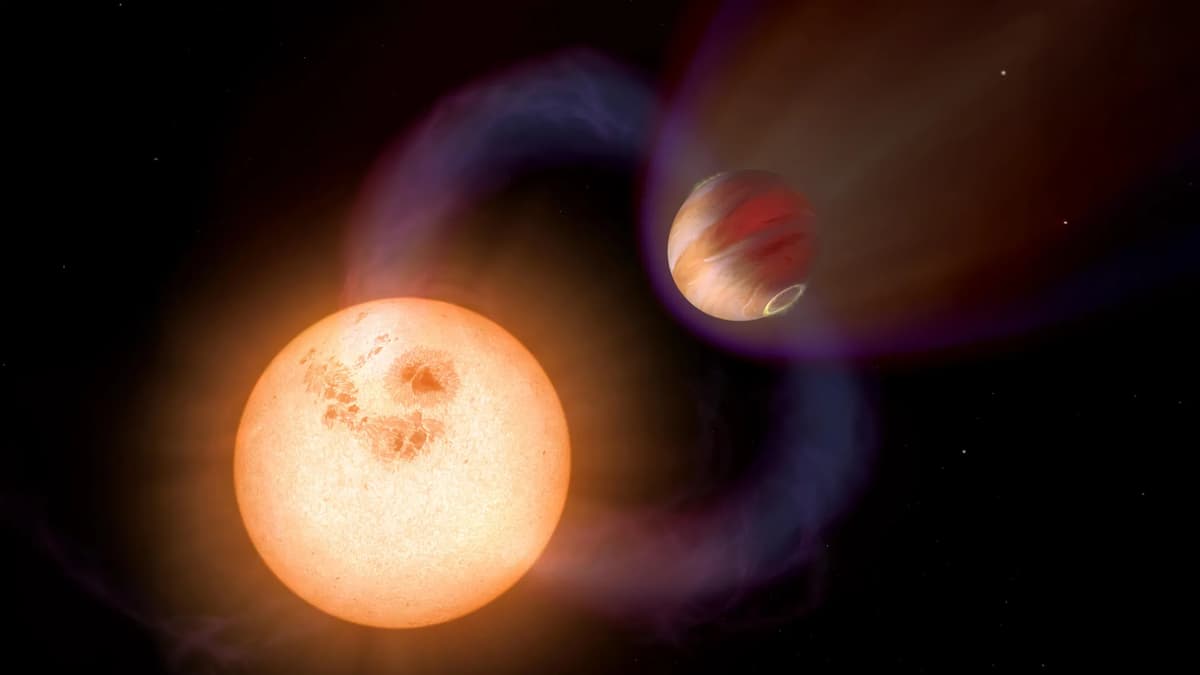
Powerful AI Finds 100+ Hidden Planets in NASA Data Including Rare and Extreme Worlds
Why It Matters
The findings sharpen planet‑occurrence estimates, guiding telescope target selection, while RAVEN showcases AI’s power to accelerate large‑scale astronomical surveys.
Key Takeaways
- •RAVEN validated 118 new exoplanets and 2,000 high‑quality candidates
- •9–10% of Sun‑like stars host close‑in planets
- •Neptunian‑desert planets occur around only 0.08% of Sun‑like stars
- •Ultra‑short‑period planets orbiting in under 24 hours were discovered
- •Interactive catalog released for community follow‑up observations
Pulse Analysis
The launch of NASA’s Transiting Exoplanet Survey Satellite (TESS) created a flood of photometric data, but extracting reliable planet signals from millions of light curves remains a bottleneck. Warwick’s RAVEN pipeline tackles this by coupling realistic simulations with deep‑learning classifiers that sift out eclipsing binaries, instrumental noise, and other impostors in a single automated workflow. In its first application, RAVEN scanned more than 2.2 million stars, confirming 118 new exoplanets and flagging roughly 2,000 high‑quality candidates. The system’s end‑to‑end design cuts manual vetting time dramatically, setting a new standard for large‑scale astronomical surveys.
The validated sample provides a statistically robust view of short‑period worlds. By focusing on orbital periods under 16 days, the team measured that roughly 9–10 % of Sun‑like stars host at least one close‑in planet, tightening Kepler‑era estimates by an order of magnitude. Equally striking is the quantification of the “Neptunian desert,” where only 0.08 % of comparable stars harbor planets in the size‑and‑temperature regime previously thought to be barren. These figures sharpen models of planetary migration and atmospheric loss, offering concrete constraints for theorists probing how gas giants and super‑Earths evolve near their host stars.
Beyond the science, RAVEN’s open‑source catalog and analysis tools invite the broader community to prioritize targets for ground‑based spectroscopy and upcoming space missions such as ESA’s PLATO and NASA’s Roman Telescope. The ability to correct detection biases in real time means future surveys can produce cleaner occurrence rates without extensive post‑processing. As AI continues to mature, astronomers anticipate even deeper integration—automated classification, adaptive observation scheduling, and on‑the‑fly hypothesis testing—accelerating the pace at which humanity maps its planetary neighborhood.
Powerful AI finds 100+ hidden planets in NASA data including rare and extreme worlds
Comments
Want to join the conversation?
Loading comments...