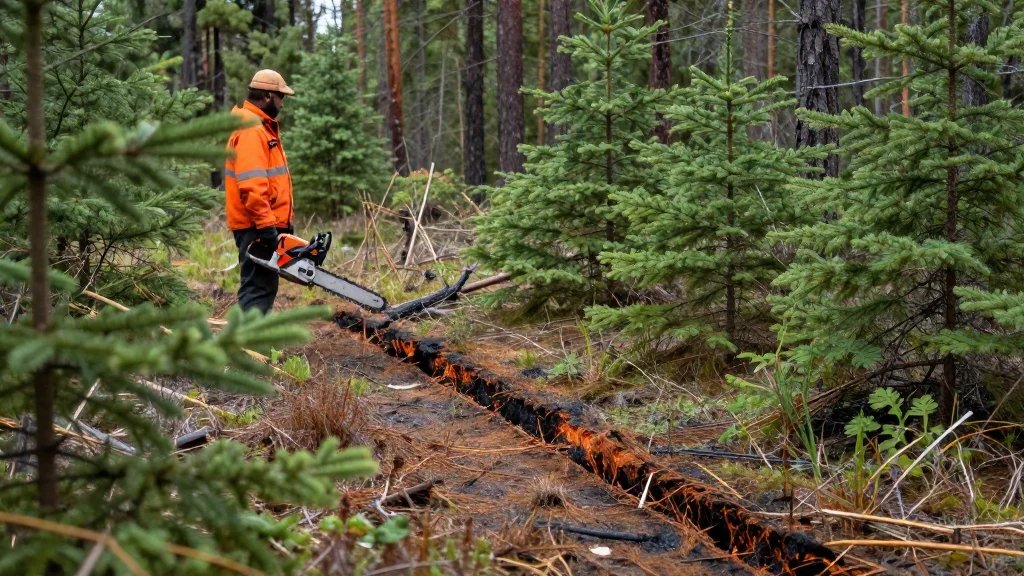
Prescribed Burns and Forest Thinning Averted Millions of Tons of Emissions and Billions in Damages
Why It Matters
The study quantifies the health and economic returns of proactive fuel management, making a compelling case for scaling prescribed burns to mitigate climate‑driven wildfire costs.
Key Takeaways
- •2.7 million tons CO₂ avoided by fuel treatments
- •$2.8 billion in damages prevented, 60 lives saved
- •$1 invested returns $3.73 in benefits
- •Burn area cut by 152,000 acres
- •U.S. Forest Service targets 50 million acres for treatment
Pulse Analysis
Wildfire risk in the American West has surged as drought, heat waves and low snowpack create tinderbox conditions. While media focus often lands on emergency suppression, the UC Davis analysis highlights that targeted fuel treatments—prescribed burns and mechanical thinning—act as a front‑line defense, curbing emissions and protecting communities before flames ignite. By removing excess vegetation, these interventions not only lower the intensity of future fires but also generate measurable climate benefits, a critical factor as policymakers grapple with the carbon budget.
The economic calculus presented in the study is striking: every dollar allocated to fuel management yields $3.73 in avoided damages, translating into billions of dollars saved when scaled across the 285 wildfires examined. Health outcomes improve as well, with fine‑particle pollution reduced by more than 25,000 tons, preventing nearly 60 premature deaths. Such figures provide concrete evidence for legislators and budget officials that prevention delivers a higher return on investment than reactive firefighting, which often appears more visible but is far less cost‑effective.
Looking ahead, the U.S. Forest Service’s commitment to treat over 50 million acres—roughly the size of Utah—signals a strategic shift toward large‑scale mitigation. Yet challenges remain: public perception, smoke concerns, and the logistical complexity of safely conducting burns in populated areas can slow implementation. Continued research on optimal treatment intensity, regional best practices, and transparent communication will be essential to unlock the full economic and environmental upside of fuel management as the West braces for an increasingly volatile fire season.
Prescribed Burns and Forest Thinning Averted Millions of Tons of Emissions and Billions in Damages
Comments
Want to join the conversation?
Loading comments...