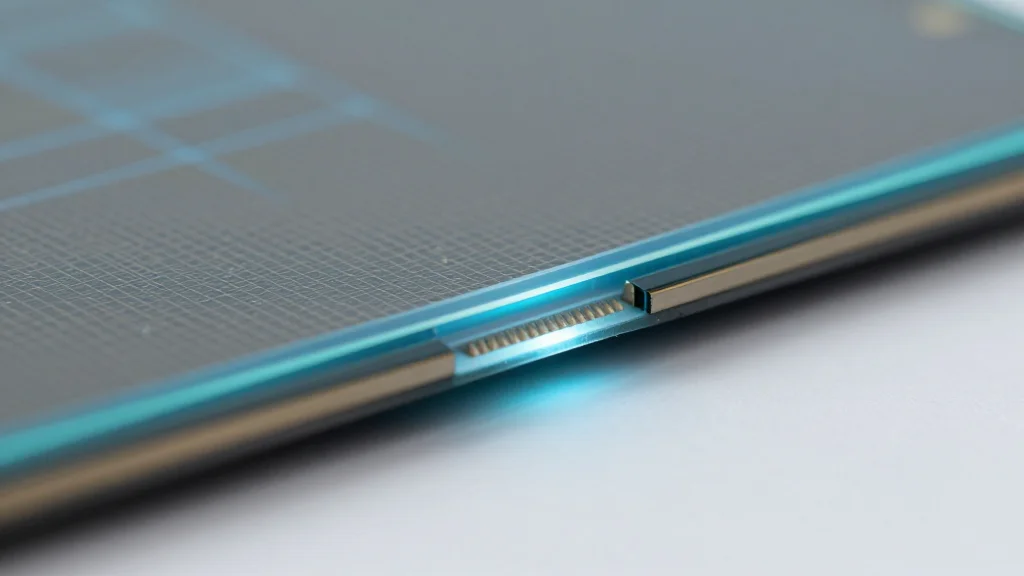
Printed Oxygen 'Highways' Shatter 2D Transistor Speed Limit
Why It Matters
The breakthrough cuts energy loss and heat in 2D transistors, unlocking faster, more efficient chips for next‑generation electronics. Its low‑temperature, printable approach paves the way for cost‑effective, high‑volume manufacturing.
Key Takeaways
- •3.6 nm GaOx layer yields 296 cm²·V⁻¹·s⁻¹ mobility, record for WS₂
- •Contact resistance drops to 2.38 kΩ·µm, 100× lower than buffered contacts
- •Room‑temperature liquid‑metal printing enables scalable, low‑heat manufacturing
- •Devices stay stable for three months in ambient air without packaging
- •Team plans to apply process to full‑wafer semiconductor production
Pulse Analysis
Two‑dimensional semiconductors such as WS₂ promise ultra‑thin, high‑performance electronics, but their adoption has been hampered by the "Schottky barrier" that forms when conventional metal contacts touch the atomically thin layer. This barrier creates a resistance wall that throttles current flow and generates excess heat, forcing designers to use ultra‑thin insulating buffers that are difficult to fabricate reliably at sub‑nanometer scales. Overcoming this bottleneck is essential for translating laboratory‑scale 2D devices into commercially viable products.
The Chinese team’s solution leverages a 3.6 nm gallium oxide (GaOx) film printed via a room‑temperature liquid‑metal process. By engineering a high density of oxygen vacancies, the GaOx acts as an electrically transparent tunnel barrier, allowing electrons to hop across the interface with a mere 3.7 meV barrier height. The resulting electron mobility of 296 cm²·V⁻¹·s⁻¹ and contact resistance of 2.38 kΩ·µm represent order‑of‑magnitude improvements over traditional buffered contacts, delivering faster switching speeds while consuming less power.
Beyond performance, the printable, low‑heat methodology addresses the manufacturing challenge that has stalled 2D transistor scaling. Demonstrating over 30 functional devices on a single chip and three‑month ambient stability shows the process is ready for pilot‑line adoption. As the researchers target full‑wafer integration, the technology could enable mass‑produced, energy‑efficient chips for mobile, IoT, and edge‑computing markets, reshaping the semiconductor supply chain and accelerating the transition to next‑generation electronics.
Printed oxygen 'highways' shatter 2D transistor speed limit
Comments
Want to join the conversation?
Loading comments...