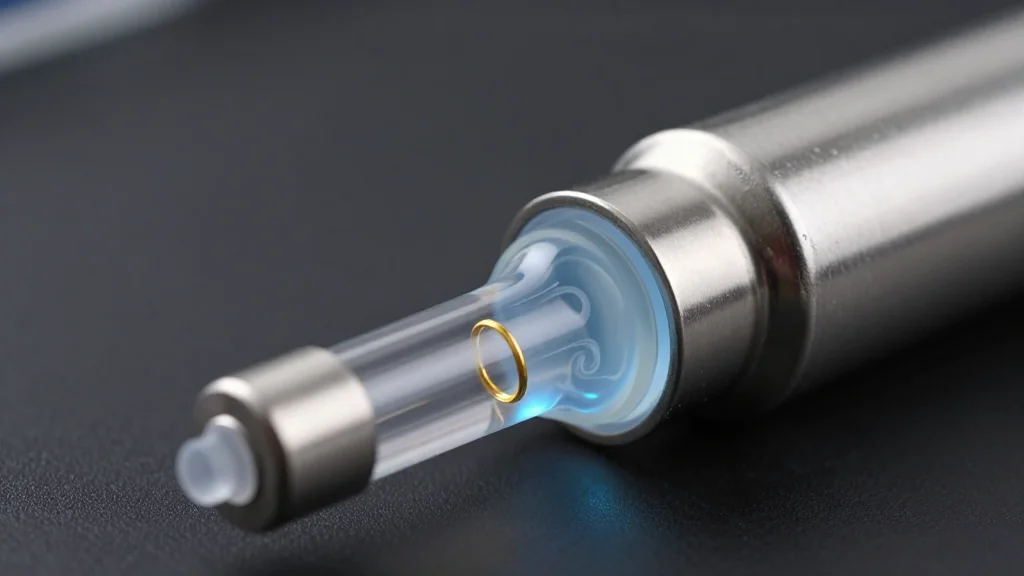
Profile of John Clarke, Michel H. Devoret, and John M. Martinis: 2025 Nobel Laureates in Physics
Why It Matters
The prize validates macroscopic quantum effects as a practical platform, accelerating the development of superconducting qubits and reinforcing the physics‑industry pipeline that underpins the emerging quantum computing market.
Key Takeaways
- •2025 Nobel Prize honors macroscopic quantum tunneling discovery
- •Experiments conducted in mid‑1980s at UC Berkeley
- •Findings enabled superconducting qubits for modern quantum computers
- •Work linked Josephson junction physics to macroscopic engineering
- •Clarke, Devoret, Martinis’ papers cited over 10,000 times
Pulse Analysis
The 2025 Nobel recognition of John Clarke, Michel H. Devoret and John M. Martinis spotlights a seminal chapter in condensed‑matter physics. Their 1985 experiments showed that the phase difference across a Josephson junction—a macroscopic electrical variable—can tunnel through an energy barrier, a phenomenon previously thought confined to microscopic particles. By capturing quantized energy levels and tunneling rates in superconducting circuits, the trio proved that quantum mechanics governs devices visible to the naked eye, reshaping theoretical expectations and experimental techniques across low‑temperature physics.
Beyond pure science, the laureates’ findings seeded the superconducting qubit architecture that powers today’s quantum computers. Companies such as IBM, Google and Rigetti rely on Josephson‑junction‑based transmons, whose coherence and controllability trace directly to the macroscopic quantum tunneling principles demonstrated in the mid‑1980s. The Nobel award underscores how foundational research can translate into a multibillion‑dollar industry, accelerating investment in cryogenic engineering, error‑correction protocols, and scalable chip fabrication. As quantum processors edge toward fault‑tolerant operation, the original experiments serve as a benchmark for device performance and a reminder of the importance of deep, curiosity‑driven inquiry.
Looking forward, the prize reinforces a broader narrative: macroscopic quantum phenomena are not curiosities but viable engineering tools. Researchers are now probing quantum behavior in mechanical resonators, optomechanical systems and topological circuits, extending the legacy of Clarke, Devoret and Martinis. The Nobel accolade is likely to inspire renewed funding for interdisciplinary labs that blend materials science, microwave engineering and quantum theory, ensuring that the bridge between the microscopic and macroscopic continues to expand, driving both scientific discovery and commercial innovation.
Profile of John Clarke, Michel H. Devoret, and John M. Martinis: 2025 Nobel laureates in Physics
Comments
Want to join the conversation?
Loading comments...