Promoting Electroreduction of Nitrate to Ammonia in Neutral Media via the Synergistic Effect of Atomically Dispersed Fe, Cu, and Pd Sites
Why It Matters
The breakthrough offers a scalable, energy‑efficient method to clean nitrate‑laden water while producing ammonia, a key feedstock for fertilizers and renewable energy, addressing two critical environmental and industrial challenges simultaneously.
Key Takeaways
- •Fe/Cu/Pd SAC achieves up to 98% NH3 Faradaic efficiency at 0.5 M nitrate
- •Cu sites reduce nitrate to nitrite; Fe sites convert nitrite to ammonia
- •Pd atoms control hydrogen evolution, improving selectivity
- •Catalyst remains effective in low‑concentration, neutral‑pH conditions
Pulse Analysis
Nitrate contamination of groundwater and surface water poses a growing public‑health risk, while the demand for sustainable ammonia production intensifies as the fertilizer and clean‑energy sectors expand. Conventional nitrate removal methods—biological denitrification or ion exchange—are energy‑intensive or generate secondary waste, and traditional ammonia synthesis relies on fossil‑fuel‑derived hydrogen. Electrochemical nitrate reduction (NO3‑RR) promises a dual benefit: pollutant remediation coupled with on‑site ammonia generation, but achieving high selectivity under neutral pH and dilute conditions has remained elusive due to competing hydrogen evolution and multiple kinetic barriers.
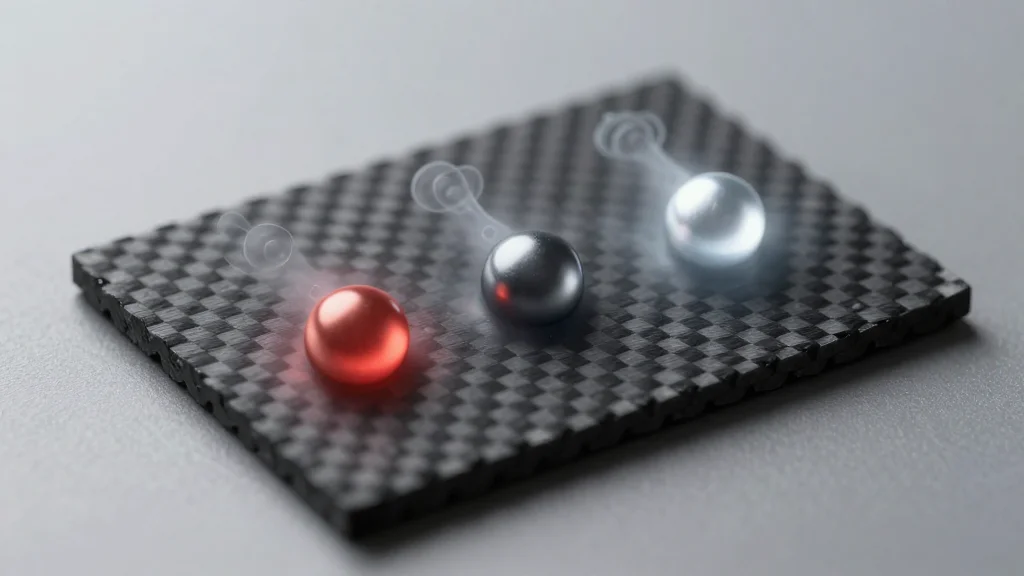
The Fe/Cu/Pd‑N‑C single‑atom catalyst reported in the study overcomes these hurdles through a meticulously engineered tandem mechanism. Copper atoms act as the first‑stage active sites, efficiently converting nitrate to nitrite, which then migrates to iron atoms where strong adsorption facilitates rapid nitrite‑to‑ammonia conversion. Palladium atoms serve a regulatory role, moderating the generation and consumption of active hydrogen species, thereby suppressing the hydrogen evolution reaction that typically erodes Faradaic efficiency. The result is a remarkable 98% ammonia Faradaic efficiency at 0.5 M nitrate, with still‑high efficiencies of 95% and 82% at 0.1 M and 0.01 M respectively, even in neutral electrolytes. Stability tests confirm the catalyst’s durability and resistance to common interferents, underscoring its practical viability.
Beyond the laboratory, this catalyst architecture signals a shift toward modular, multifunctional electrocatalysts that can be tailored for diverse aqueous chemistries. For industries grappling with nitrate‑laden effluents—such as agriculture, food processing, and municipal water treatment—the technology offers a pathway to convert a liability into a valuable commodity. Moreover, the ability to generate ammonia without high‑temperature steam reforming aligns with global decarbonization goals, potentially lowering the carbon footprint of fertilizer production. Future work will likely focus on scaling electrode designs, integrating renewable electricity sources, and exploring other metal combinations to further enhance activity and cost‑effectiveness.
Promoting Electroreduction of Nitrate to Ammonia in Neutral Media via the Synergistic Effect of Atomically Dispersed Fe, Cu, and Pd Sites
Comments
Want to join the conversation?
Loading comments...