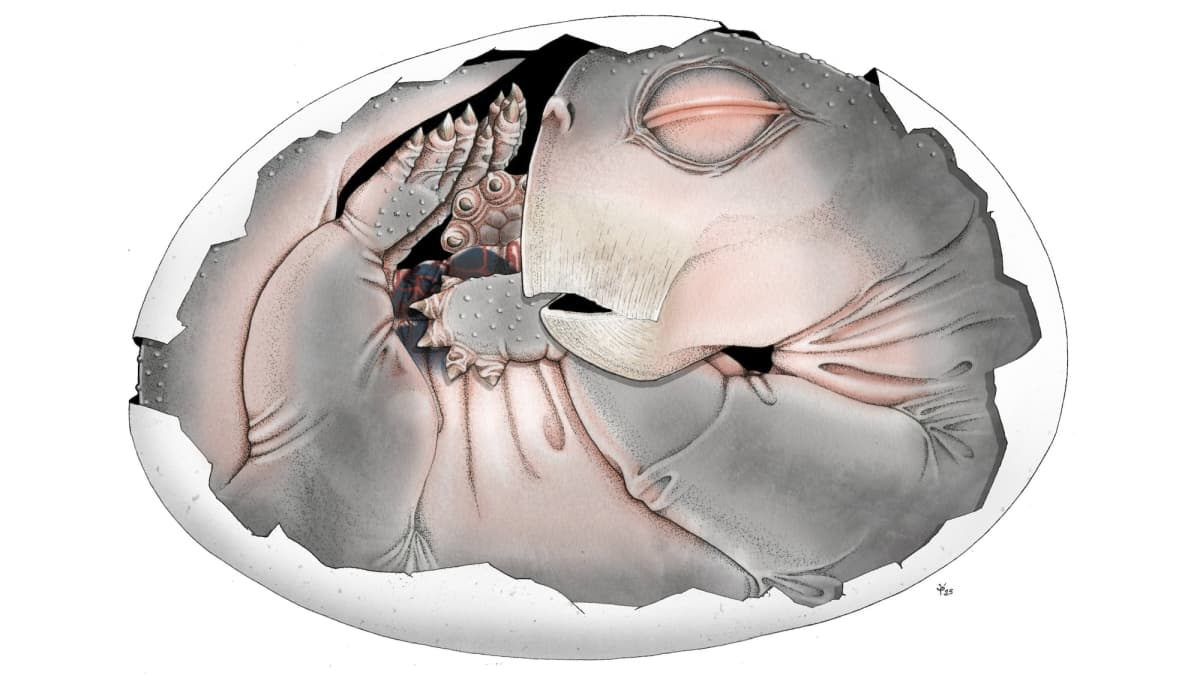
Proto-Mammals Laid Eggs, Paleontologists Finally Confirm
Why It Matters
The finding rewrites the early evolutionary timeline of mammals, showing oviparity preceded viviparity and offering insights into species resilience during climate crises. It underscores the importance of advanced imaging for uncovering hidden paleontological data.
Key Takeaways
- •250‑million‑year‑old Lystrosaurus egg confirms proto‑mammal oviparity
- •Synchrotron X‑ray CT revealed unfused jaw, proving embryo stage
- •Soft‑shell eggs suggest nutrient‑rich yolk for rapid post‑hatch development
- •Finding links mammalian resilience to post‑extinction climate stress
- •Opens new avenues for studying early vertebrate reproductive evolution
Pulse Analysis
The recent publication in PLOS ONE provides the first unequivocal evidence that the earliest mammalian ancestors reproduced by laying eggs. Researchers examined a 250‑million‑year‑old fossil from South Africa’s Karoo Basin using synchrotron X‑ray computed tomography at the European Synchrotron Radiation Facility. The scan revealed an unfused mandibular symphysis, a hallmark of an embryo that had not yet begun feeding, confirming the specimen was a hatchling still inside its shell. This technological breakthrough resolves a decades‑long debate among evolutionary biologists about whether proto‑mammals were oviparous or viviparous.
The egg, likely soft‑shelled and relatively large for the animal’s size, would have contained ample yolk to sustain development in the harsh post‑Permian environment. Soft shells are less prone to desiccation, a critical advantage during the arid, high‑temperature climate that followed the End‑Permian mass extinction. By hatching as self‑sufficient juveniles, Lystrosaurus could evade predators and reproduce quickly, traits that helped the lineage survive while many contemporaries vanished. This finding reshapes our understanding of early synapsid reproductive biology and suggests that egg‑laying was a successful strategy that preceded the evolution of live birth in mammals.
Beyond filling a phylogenetic gap, the discovery offers a deep‑time analogue for how species may adapt to rapid environmental change. Modern scientists can draw parallels between the resilience of Lystrosaurus and today’s fauna facing climate‑driven habitat loss, informing conservation strategies that emphasize reproductive flexibility. The study also demonstrates the value of advanced imaging techniques in paleontology, opening the door to re‑examining other ambiguous fossils. As more ancient specimens are scanned, we can expect further revisions to the narrative of mammalian origins and a richer picture of life’s response to planetary crises.
Proto-mammals laid eggs, paleontologists finally confirm
Comments
Want to join the conversation?
Loading comments...