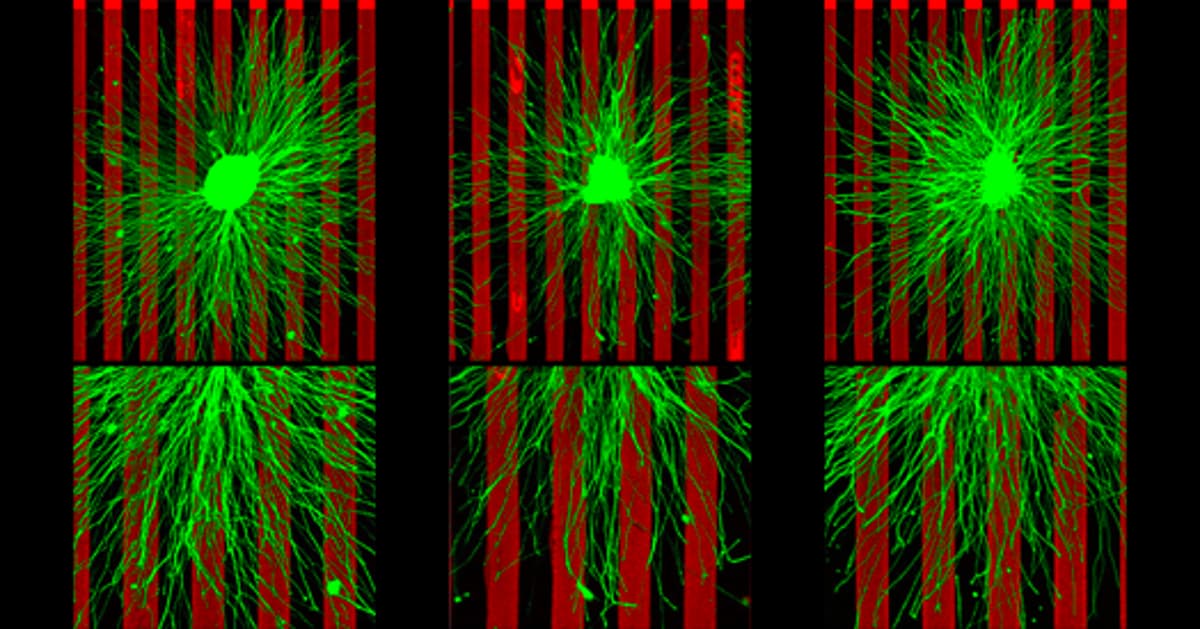
‘Push-Pull’ Recipe for Neural Wiring Used in Multiple Brain Regions
Why It Matters
Identifying a universal molecular code for neural circuit assembly clarifies how the brain builds precise sensory maps and offers a potential target for interventions in neurodevelopmental conditions.
Key Takeaways
- •TEN3 and LPHN2 form a push‑pull system guiding axon targeting.
- •The pair operates in hippocampus, visual, auditory, cerebellum, basal ganglia, spinal cord.
- •Mice lacking either protein show diffuse, miswired projections and distorted body maps.
- •Opposing expression gradients match auditory frequency maps across the cochlear axis.
- •Research may connect autism sensory issues to disrupted TEN3/LPHN2 signaling.
Pulse Analysis
The brain’s astonishing wiring precision has long puzzled scientists, given that only a few thousand adhesion molecules are available to guide trillions of synapses. Recent mouse studies demonstrate that the duo of teneurin‑3 (TEN3) and latrophilin‑2 (LPHN2) provides a versatile "push‑pull" mechanism: TEN3 offers attractive cues while LPHN2 delivers repulsive signals. By arranging these proteins in complementary gradients, neurons receive a binary code that directs growing axons toward appropriate targets, effectively reusing the same molecular toolkit across multiple circuits.
Across the central nervous system, the TEN3‑LPHN2 system proves remarkably adaptable. In the hippocampus it stabilizes synaptic contacts, whereas in the auditory pathway it creates opposing expression bands that correspond to low‑ and high‑frequency sound processing. Knock‑out mice lacking either protein exhibit broadly scattered axonal projections and altered somatotopic maps in the spinal dorsal horn, leading to behavioral deficits such as misdirected pain responses. These phenotypes underscore the pair’s essential role in sculpting both topographic and functional maps, bridging the gap between molecular cues and large‑scale brain architecture.
Beyond basic neuroscience, the findings carry translational weight. Many autism‑linked genes encode transcription factors that could modulate TEN3 or LPHN2 expression, suggesting that dysregulated push‑pull signaling may contribute to the sensory overload experienced by some patients. As researchers plan to probe auditory map alterations in autism mouse models, the TEN3‑LPHN2 axis emerges as a promising therapeutic foothold. Understanding how this simple molecular pair orchestrates complex wiring could eventually inform strategies to repair or rewire faulty circuits in neurodevelopmental and injury contexts.
‘Push-pull’ recipe for neural wiring used in multiple brain regions
Comments
Want to join the conversation?
Loading comments...