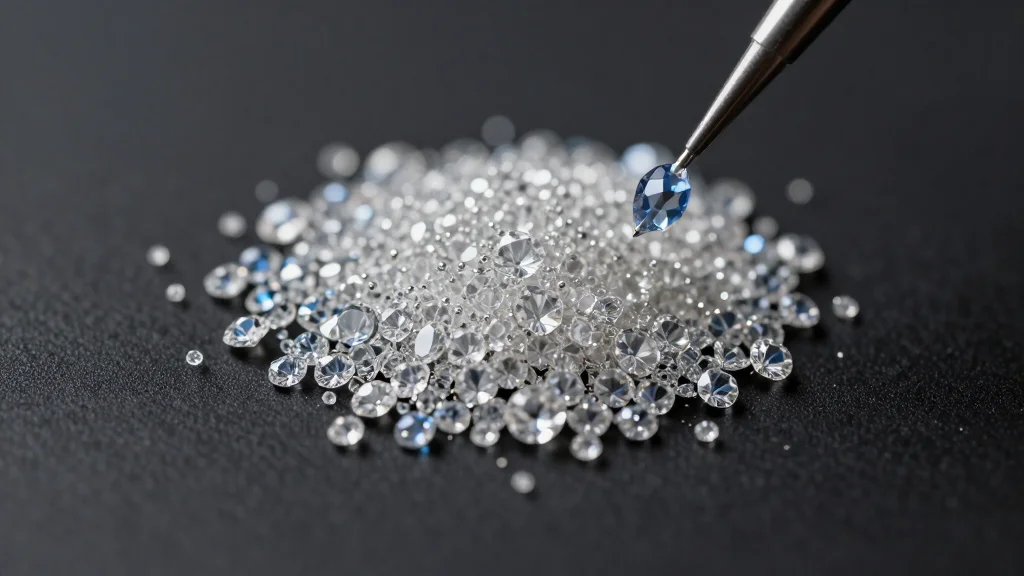
Put a Nanodiamond Under Intense Pressure and It Becomes Flexible
Why It Matters
Understanding size‑dependent elasticity transforms nanodiamonds from brittle curiosities into viable building blocks for next‑generation quantum hardware and resilient sensors, potentially accelerating commercialization of these high‑performance materials.
Key Takeaways
- •4‑nm nanodiamonds are ~30% softer than bulk diamond
- •Softness originates from a subsurface interfacial zone, not surface atoms
- •Flexibility enables durable components for quantum computers and nanosensors
- •Researchers used TEM compression with atomic‑resolution imaging and simulations
- •Future work will test temperature and surface‑treatment effects
Pulse Analysis
The discovery that nanodiamonds soften as they shrink challenges the long‑standing view of diamond as an immutable superhard material. At the nanoscale, carbon bonds in a thin interfacial region become elongated, reducing their strength and allowing the crystal lattice to flex under pressure. This subsurface mechanism, captured through real‑time atomic imaging and corroborated by simulations, explains why a 4‑nanometer particle can absorb strain without fracturing—a property absent in bulk diamonds used in jewelry or cutting tools.
From a commercial perspective, the newfound elasticity could be a game‑changer for quantum computing architectures that rely on diamond‑based qubits. Flexible nanodiamonds can endure the mechanical stresses of cryogenic cycling and integration with photonic circuits, extending device lifetimes and reducing failure rates. Likewise, nanoscale sensors that monitor gases or viral particles benefit from a material that combines hardness with shock‑absorption, ensuring consistent performance in harsh environments. These advantages position nanodiamonds as a premium alternative to silicon or graphene in high‑precision, durability‑critical applications.
The research also outlines clear next steps: probing how temperature variations and surface functionalization influence the elastic response. If engineers can tune the interfacial zone through chemical treatments, they could tailor nanodiamond stiffness for specific market needs, from flexible wearables to robust aerospace components. As the field moves toward scalable synthesis, investors and manufacturers will watch closely, anticipating a new class of nanomaterials that merge diamond’s renowned thermal conductivity with unprecedented mechanical resilience.
Put a nanodiamond under intense pressure and it becomes flexible
Comments
Want to join the conversation?
Loading comments...