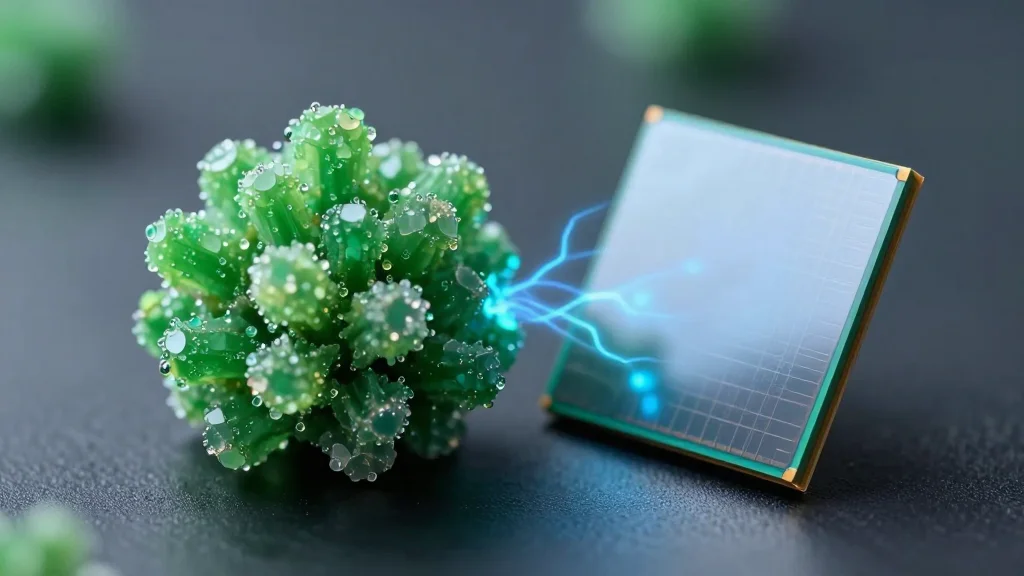
Quantum Modelling of Hydroxyl Topology Control of the Stokes-Induced Stark Effect in Hybrid Flavonoid–Semiconductor Interfaces
Why It Matters
Understanding how hydroxyl topology controls SISE gives engineers a concrete tool to tailor electric fields in hybrid optoelectronic devices, accelerating the development of more efficient solar cells, sensors, and photonic components.
Key Takeaways
- •SISE strength directly linked to hydroxyl topology via ESIPT
- •Descriptor Ω_OH predicts field magnitude for flavonoid series
- •Global ΔE ∝ Ω_OH²; local ΔE ∝ Ω_OH^(2/3)
- •B‑ring pyrogallol layout maximizes SISE among tested flavonoids
Pulse Analysis
Hybrid molecular‑semiconductor interfaces rely on localized electric fields to boost charge separation and photoconversion efficiency. The newly identified Stokes‑Induced Stark Effect (SISE) offers a route to generate such fields without external bias, but its magnitude has been difficult to predict. By focusing on excited‑state intramolecular proton transfer (ESIPT) in flavonoid chromophores, researchers have uncovered a direct link between molecular hydroxyl arrangement and transient dipole amplification, providing a mechanistic foundation for field generation at the nanoscale.
The quantum‑mechanical framework employs a Rosen‑Morse II potential to describe both bound‑state and strong‑field regimes, introducing the Ω_OH descriptor that aggregates excited‑state dipole change, molecular orientation, and interfacial spacing. Applied to myricetin, quercetin, kaempferol, luteolin and curcumin, the model reveals two distinct scaling laws: a quadratic dependence in the global confinement regime and a two‑thirds power law in the local, field‑driven regime. Notably, flavonoids featuring a B‑ring pyrogallol motif produce the largest Ω_OH values, confirming this structural motif as optimal for maximizing SISE.
These insights translate into actionable design rules for next‑generation optoelectronic devices. Engineers can now select or synthesize flavonoid derivatives with targeted hydroxyl patterns to fine‑tune interfacial electric fields, improving charge extraction in photovoltaic cells, enhancing sensitivity in photodetectors, and enabling field‑responsive switches. The quantitative structure‑field relationship also opens avenues for computational screening of large molecular libraries, accelerating material discovery. Future work will likely explore integration with perovskite and silicon platforms, as well as dynamic control of ESIPT through external stimuli, further expanding the practical impact of SISE in commercial technologies.
Quantum Modelling of Hydroxyl Topology Control of the Stokes-Induced Stark Effect in Hybrid Flavonoid–Semiconductor Interfaces
Comments
Want to join the conversation?
Loading comments...