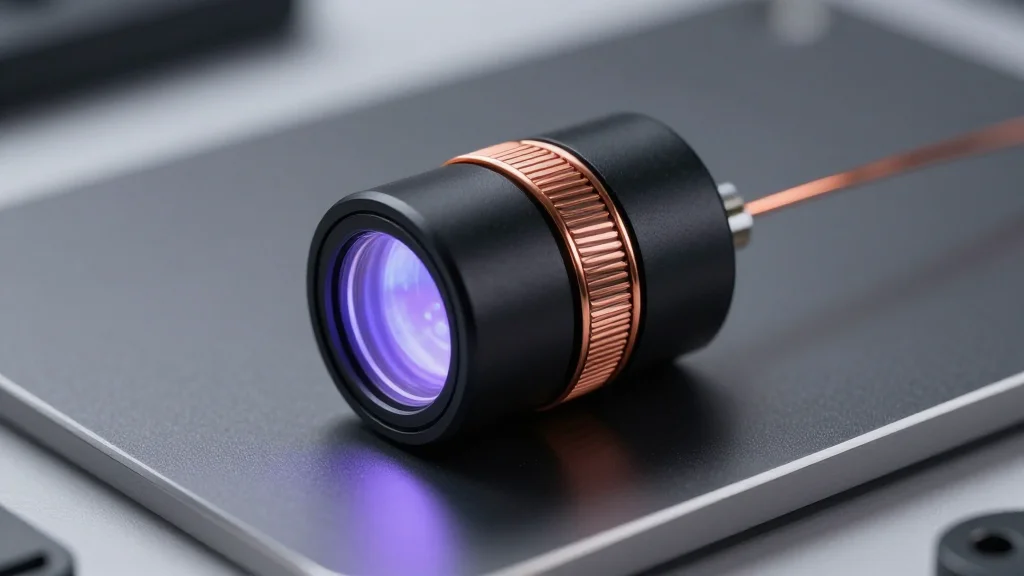
Quantum Sensor Overcomes Major Obstacle in Search for Dark Matter and Gravitational Waves
Why It Matters
The breakthrough removes the primary technical barrier to scaling atom‑interferometer networks, enabling next‑generation observatories to hunt for primordial gravitational waves and exotic dark‑matter signatures. This could open new discovery windows for fundamental physics and drive cross‑Atlantic collaboration in quantum‑sensing infrastructure.
Key Takeaways
- •Prototype atom interferometer cancels laser phase noise under realistic conditions
- •Differential measurement recovers signals even when individual interferometers are noise‑dominated
- •Demonstration validates core technology for future AION, MAGIS, and AICE detectors
- •Scalable quantum sensor could detect early‑universe gravitational waves and dark‑matter fields
- •Collaboration spans UK universities and US labs, accelerating large‑scale quantum experiments
Pulse Analysis
Atom interferometry has emerged as a leading quantum‑sensing technique for measuring minute accelerations and spacetime distortions. By splitting clouds of ultracold atoms with laser pulses, these devices can detect variations far smaller than a proton’s diameter, making them ideal for probing gravitational waves from the early universe or subtle forces from dark‑matter fields. However, the same lasers that drive the interferometers introduce phase noise orders of magnitude larger than the target signals, a problem that has long limited the scalability of long‑baseline detectors.
The Imperial team addressed this hurdle with a tabletop prototype that houses two spatially separated ^87Sr interferometers interrogated by a single ultrastable clock laser. Deliberately injecting excess phase noise, they demonstrated that differential comparison cancels the shared noise, allowing a simulated gravitational‑wave‑like oscillation to be recovered at the quantum‑limited sensitivity. The experiment also showcased a titanium‑sapphire cavity source delivering ultra‑pure red light, a critical component for future multi‑kilometer facilities such as the AION network, MAGIS at Fermilab, and the proposed AICE experiment at CERN.
Validating laser‑noise cancellation under realistic conditions removes the principal technical bottleneck for building continent‑scale atom interferometers. With this capability, next‑generation observatories could explore frequency bands inaccessible to LIGO‑type detectors, potentially unveiling signatures of inflationary gravitational waves or ultralight dark‑matter particles. The result also strengthens transatlantic partnerships, aligning UK‑led AION with US‑based MAGIS and attracting investment in quantum‑hardware infrastructure. As governments prioritize quantum technologies, the demonstrated scalability may spur commercial spin‑offs in precision metrology, navigation, and sensing, expanding the market beyond fundamental physics.
Quantum sensor overcomes major obstacle in search for dark matter and gravitational waves
Comments
Want to join the conversation?
Loading comments...