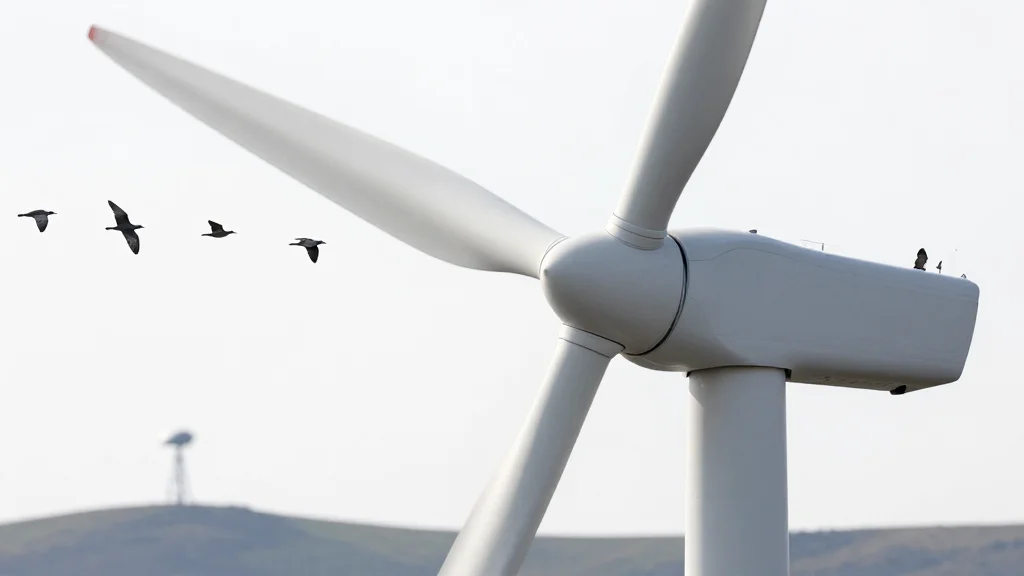
Radar Data Can Help Protect Birds From Wind Turbines
Why It Matters
The approach offers a low‑cost, scalable solution to protect declining bird populations without jeopardizing Europe’s renewable‑energy targets, addressing a key sustainability trade‑off.
Key Takeaways
- •Weather radars track bird flocks across Europe every 15 minutes
- •800 birds per turbine were at risk in 2018
- •Collision‑risk shutdown cuts electricity loss to 1.2%–7.6%
- •25,000 new turbines could raise bird deaths without mitigation
- •Cross‑border regulation needed to align renewables with bird protection
Pulse Analysis
Wind farms are central to Europe’s decarbonisation agenda, yet their rotating blades have long been a hidden hazard for migratory birds. Traditional mitigation—such as blanket curtailments during peak migration—often sacrifices valuable generation capacity. By repurposing existing weather‑radar networks, which already scan the atmosphere for precipitation, researchers can now monitor avian traffic in near real‑time across national borders. This granular visibility transforms a blunt instrument into a precision tool, allowing operators to intervene only when bird densities exceed scientifically defined thresholds.
The WSL team’s scenario modelling demonstrates that a risk‑based shutdown protocol can achieve up to a 90% reduction in potential collisions while limiting energy loss to under 8%, and in the most efficient case to just 1.2%. Such modest efficiency penalties are attractive to turbine owners, who face increasing pressure to demonstrate environmental stewardship. Moreover, the methodology scales effortlessly: the same radar feeds that serve meteorology can be integrated into turbine control systems with minimal hardware upgrades, turning a data source into a cost‑effective conservation asset.
Policy makers and industry leaders should view this development as a blueprint for harmonising renewable expansion with biodiversity goals. Cross‑border data sharing agreements and standardized collision‑risk thresholds could enable a continent‑wide bird‑safe grid, preserving migratory pathways while meeting climate commitments. As Europe plans to install roughly 25,000 new turbines, embedding radar‑driven curtailment into licensing frameworks could become a decisive factor in securing public support and safeguarding fragile ecosystems.
Radar data can help protect birds from wind turbines
Comments
Want to join the conversation?
Loading comments...