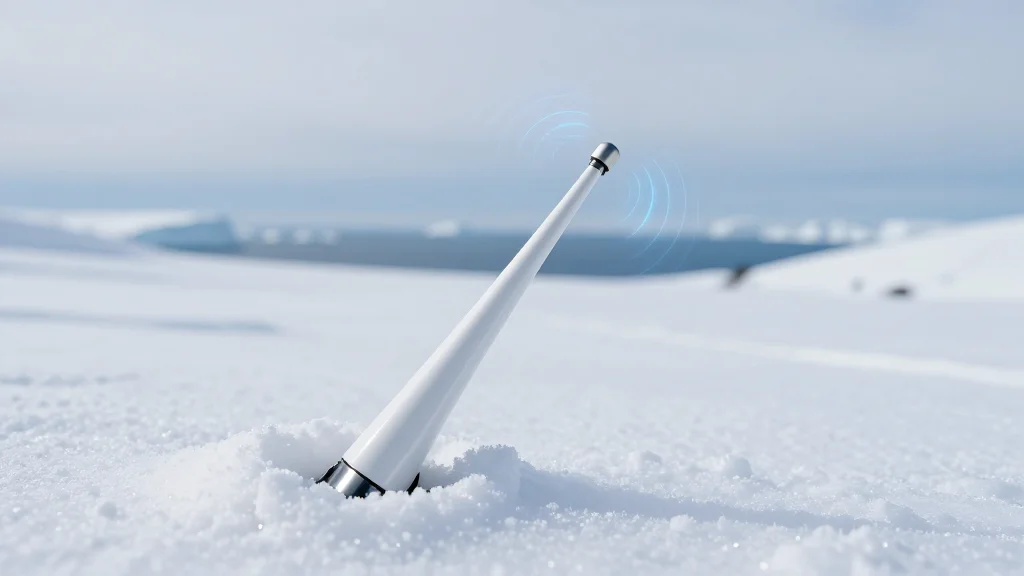
Radio Blips in the Ice Are Promising Sign for Neutrino Hunt
Why It Matters
Demonstrating reliable in‑ice radio detection opens a path to instrumenting the vast Antarctic volume needed for ultra‑high‑energy neutrino astronomy, complementing optical detectors like IceCube. Successful scaling could reveal rare astrophysical sources that are invisible to current observatories.
Key Takeaways
- •ARA detected 13 in‑ice radio events from cosmic‑ray showers
- •Statistical significance exceeds 5σ, probability <1 in 3.5 million
- •Proof of concept for Askaryan radio detection of ultra‑high‑energy neutrinos
- •Background noise sources successfully filtered using advanced simulations
- •Full five‑station dataset may yield up to seven neutrino candidates
Pulse Analysis
Detecting ultra‑high‑energy neutrinos has long been a bottleneck for multi‑messenger astrophysics. Traditional optical Cherenkov detectors, such as IceCube, struggle beyond the exa‑electron‑volt (EeV) regime because the required instrumented volume becomes prohibitively large. The Askaryan effect—coherent radio emission from a charge‑excess particle cascade—offers a solution: radio waves travel kilometers through ice with minimal attenuation, allowing a sparse array of antennas to monitor a vastly greater target mass. The recent ARA results provide the first experimental verification that this mechanism works in polar ice, turning a theoretical promise into a practical tool.
The ARA experiment consists of five stations spaced roughly two kilometres apart, each housing dozens of dipole antennas buried 150–200 m below the surface. During a 208‑day campaign in 2019, the team focused on a single station and, after painstakingly eliminating interference from the South Pole research base, aircraft radar, and snow‑induced discharges, identified 13 radio pulses consistent with cosmic‑ray‑induced Askaryan radiation. Advanced Monte‑Carlo simulations, only recently feasible, enabled the researchers to model the expected signal morphology and quantify the background probability at less than one‑in‑3.5 million, corresponding to a 5.1 σ detection. This rigorous approach demonstrates that in‑ice radio arrays can achieve the signal‑to‑noise ratios required for scientific discovery.
Looking ahead, the full five‑station ARA dataset—spanning several years—could contain up to seven neutrino candidates, according to the collaboration. If confirmed, these events would mark the first neutrino observations in the EeV band, opening a new window onto the most energetic phenomena in the cosmos, such as active galactic nuclei and cosmogenic neutrinos from ultra‑high‑energy cosmic‑ray interactions. The technique also complements IceCube by extending the observable energy range and providing independent cross‑checks. Continued funding and deployment of additional stations will be crucial to scale the effective volume to the hundreds of cubic kilometres needed for statistically robust neutrino astronomy, potentially reshaping our understanding of the high‑energy universe.
Radio Blips in the Ice Are Promising Sign for Neutrino Hunt
Comments
Want to join the conversation?
Loading comments...