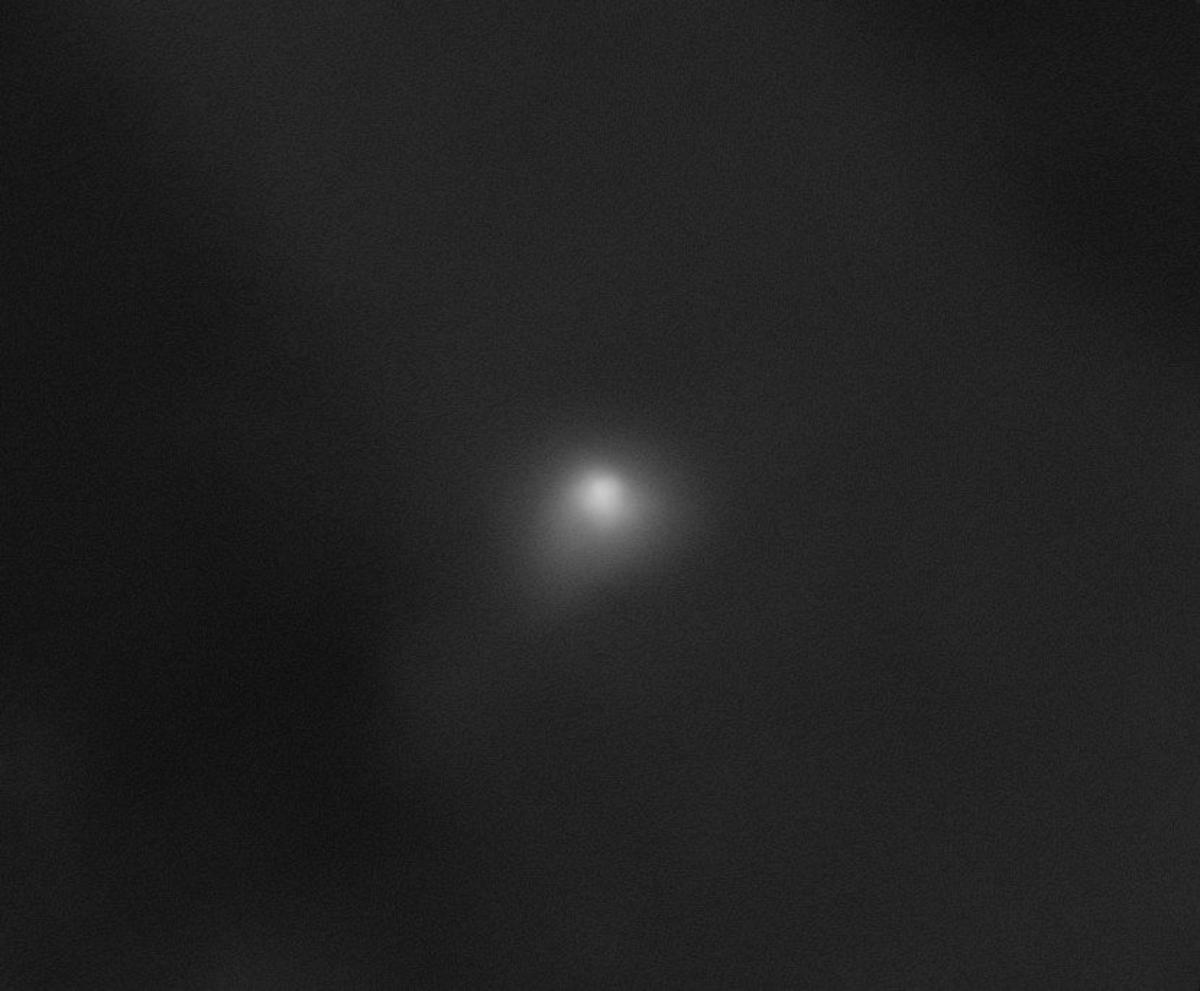
Radio Scans Find No Evidence of Alien Tech From Interstellar Comet 3I/Atlas
Companies Mentioned

NASA
Why It Matters
Demonstrating that existing radio telescopes can effectively screen interstellar visitors for artificial signals validates current technosignature strategies and informs future SETI priorities.
Key Takeaways
- •SETI scanned 74 million radio signals from comet 3I/Atlas.
- •Only ~200 signals remained, all traced to Earth or satellites.
- •3I/Atlas is the third confirmed interstellar object, natural origin.
- •Comet size ranges 440 m to 5.6 km, possibly 11 billion years old.
- •Findings prove current tech can detect technosignatures on fast‑moving objects.
Pulse Analysis
Interstellar objects have become a focal point for both planetary science and the search for extraterrestrial intelligence. Since the discovery of ’Oumuamua in 2017 and comet 2I/Borisov in 2019, astronomers have cataloged only three visitors from beyond the Sun’s gravitational sphere. 3I/Atlas, detected last summer, offered a rare chance to test whether such fleeting bodies could carry detectable technosignatures. Its trajectory, skimming Mars at 19 million miles and Earth at 167 million miles, placed it within the observational reach of ground‑based radio facilities, prompting a rapid response from SETI.
SETI’s radio array in Northern California conducted more than seven hours of observations, sweeping a broad frequency range for narrow‑band emissions—signals that would stand out against natural astrophysical noise. The team cataloged roughly 74 million candidate signals, a testament to the sheer data volume involved in modern technosignature searches. After rigorous filtering for terrestrial interference and orbital motion, only a few hundred candidates remained, all of which were conclusively linked to Earth‑originating sources such as satellites or ground‑based transmitters. This outcome highlights both the sensitivity of current instrumentation and the challenges of distinguishing genuine extraterrestrial signals from the cacophony of human-made radio traffic.
The broader implication is clear: our existing radio infrastructure can effectively probe even brief, high‑velocity interstellar passages for artificial emissions. Moreover, the study reinforces the concept that future probes like Voyager, now drifting toward interstellar space, could eventually become detectable technosignatures for other civilizations. As the catalog of interstellar interlopers grows, systematic monitoring will be essential, and the 3I/Atlas case provides a valuable benchmark for refining detection algorithms, allocating observation time, and justifying continued investment in SETI initiatives.
Radio scans find no evidence of alien tech from interstellar comet 3I/Atlas
Comments
Want to join the conversation?
Loading comments...