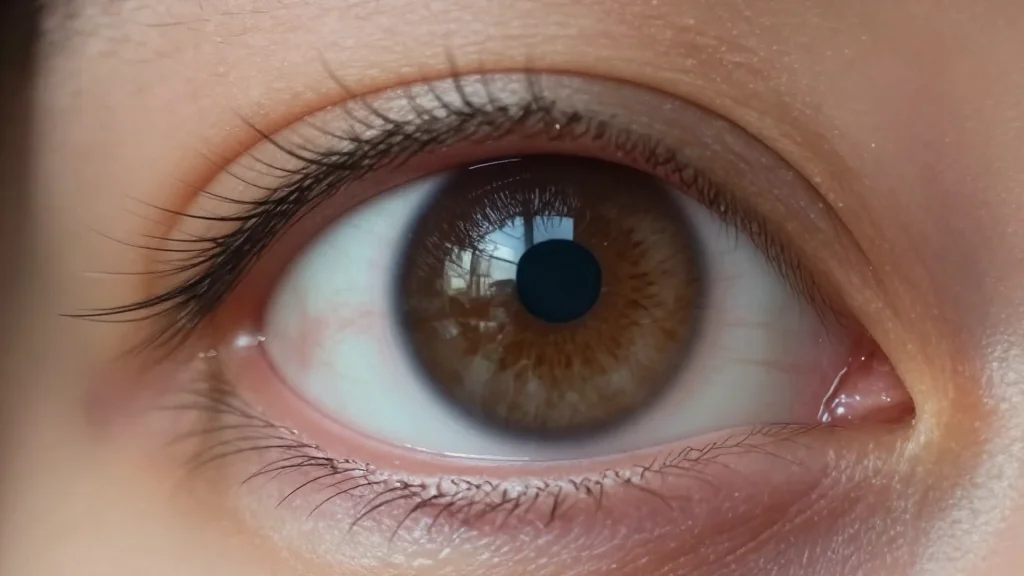
Rapid Eye Movements Enhance Information Acquisition
Why It Matters
Understanding drift’s role clarifies fundamental limits of human visual acuity and informs the design of eye‑tracking, AR/VR, and visual‑prosthetic technologies.
Key Takeaways
- •Drift converts spatial image variation into a time‑varying signal
- •Optimal information capture occurs when stimulus scale matches diffusion distance
- •Excessively fast drift reduces visual signal strength
- •Model reframes some neural‑processing findings as mechanical effects
Pulse Analysis
Fixational eye movements, often dismissed as noise, are now recognized as a critical component of visual perception. When we stare at a static scene, photoreceptors on the retina quickly adapt, causing the image to fade. The Glasgow team’s model demonstrates that the minute, random drift of the eye continuously shifts photoreceptor positions, injecting temporal variation into the visual input and preventing adaptation. By mathematically coupling stimulus spatial frequency with the diffusion constant of drift, the researchers provide a clear framework for why the visual system remains responsive during prolonged fixation.
The model’s core insight is that information capture is maximized when the spatial scale of the visual scene aligns with the distance photoreceptors travel during the retina’s adaptation window. In practical terms, this means that certain textures or patterns are inherently easier to perceive because they resonate with the eye’s natural jitter. Conversely, when drift becomes too rapid—whether due to physiological factors or external perturbations—the temporal smearing outweighs the benefit, leading to diminished signal quality. This nuanced view reconciles previously contradictory experimental results, suggesting that many performance variations attributed to higher‑order neural processing may simply stem from the physics of eye movement.
Beyond basic science, these findings have immediate relevance for emerging technologies. Eye‑tracking systems, augmented‑reality displays, and visual prosthetics can leverage the model to optimize stimulus design, ensuring that presented content aligns with the eye’s drift dynamics for maximal clarity. Moreover, the work opens new avenues for diagnosing visual disorders linked to abnormal microsaccades, offering a quantitative benchmark for healthy drift patterns. As researchers integrate these principles into hardware and software, we can expect sharper, more stable visual experiences across consumer and clinical applications.
Rapid Eye Movements Enhance Information Acquisition
Comments
Want to join the conversation?
Loading comments...