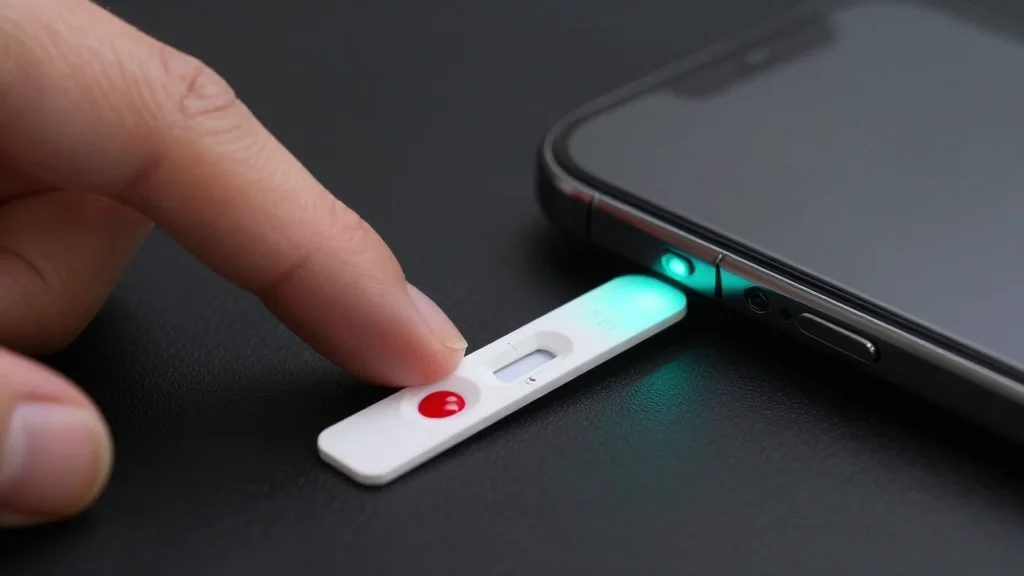
Rapid Melatonin Test Can Help Astronauts and Others Easily Monitor Their Biological Rhythm
Why It Matters
Rapid, on‑site melatonin measurement lets space crews and shift workers manage circadian disruption, directly supporting safety and performance. It also opens a new market for wearable health diagnostics beyond aerospace.
Key Takeaways
- •15‑minute melatonin assay uses paper strip and smartphone reader
- •Sensitivity reaches 10 pg/mL, matching laboratory gold standard
- •Designed for astronauts, shift workers, and other round‑the‑clock professions
- •Europium nanoparticles provide strong fluorescence for low‑level detection
- •Future goal: continuous melatonin monitoring akin to glucose sensors
Pulse Analysis
Circadian rhythm disturbances are a hidden threat in environments where natural light cues are absent, such as the International Space Station or 24‑hour manufacturing plants. Traditional melatonin testing requires venous draws, refrigerated transport, and specialized labs, creating delays that limit actionable insight. By delivering a quantitative readout within minutes, the new WSU test empowers crews to adjust lighting, work schedules, or pharmacologic interventions in real time, reducing cognitive lapses that could jeopardize mission outcomes or industrial safety.
The core of the technology is a lateral‑flow immunoassay that leverages europium‑based fluorescent nanoparticles—renowned for their intense, stable emission. Integrated into a 3‑D printed cartridge, the strip aligns with a smartphone’s camera and a custom app, converting fluorescence intensity into precise melatonin concentrations. Achieving a detection limit of 10 pg/mL places the assay on par with high‑performance laboratory instruments, yet it costs a fraction of the price and fits in a pocket. Validation studies using plasma from WSU’s Sleep and Performance Research Center confirm reliability across varied physiological states.
Beyond spaceflight, the test’s portability and speed address a growing demand for point‑of‑care circadian monitoring in healthcare, transportation, and emergency services. Continuous melatonin tracking could complement existing wearables, offering clinicians a hormone‑based metric to personalize shift rotations, treat circadian‑related sleep disorders, and even predict performance degradation. As regulatory pathways for digital diagnostics mature, the market potential for such nanotech‑enabled, smartphone‑driven health tools is poised to expand rapidly, positioning this innovation at the intersection of aerospace medicine and consumer health technology.
Rapid melatonin test can help astronauts and others easily monitor their biological rhythm
Comments
Want to join the conversation?
Loading comments...